California Lawsuit Hits Workday: AI Hiring System Accused of Hidden Discrimination and Blocking Job Opportunities
A federal court fight over Workday’s AI-powered job screening tools has become one of the most important legal tests for the future of hiring in the United States. The case is not simply about one rejected applicant or one software company. It is about whether automated hiring systems can be challenged when job seekers believe an algorithm pushed them out before a human recruiter ever gave them a fair review.
At the center of the lawsuit is a proposed class action accusing Workday Inc. of providing artificial intelligence and algorithmic screening tools that allegedly rejected or ranked job applicants in ways that violated anti-discrimination laws. The plaintiffs claim the tools may have disadvantaged applicants based on protected characteristics such as race, age, disability, and other legally protected traits. Workday denies wrongdoing and says its technology is not designed to make final hiring decisions or automatically reject candidates.
The newest ruling matters because the court allowed major parts of the case to continue. That means the lawsuit will move deeper into the difficult question now facing employers across the country: when a company uses AI to screen resumes, rank candidates, match skills, or filter applicants, who is legally responsible if the system produces discriminatory results?
Why the Workday AI Bias Case Matters to Job Seekers Across the U.S.
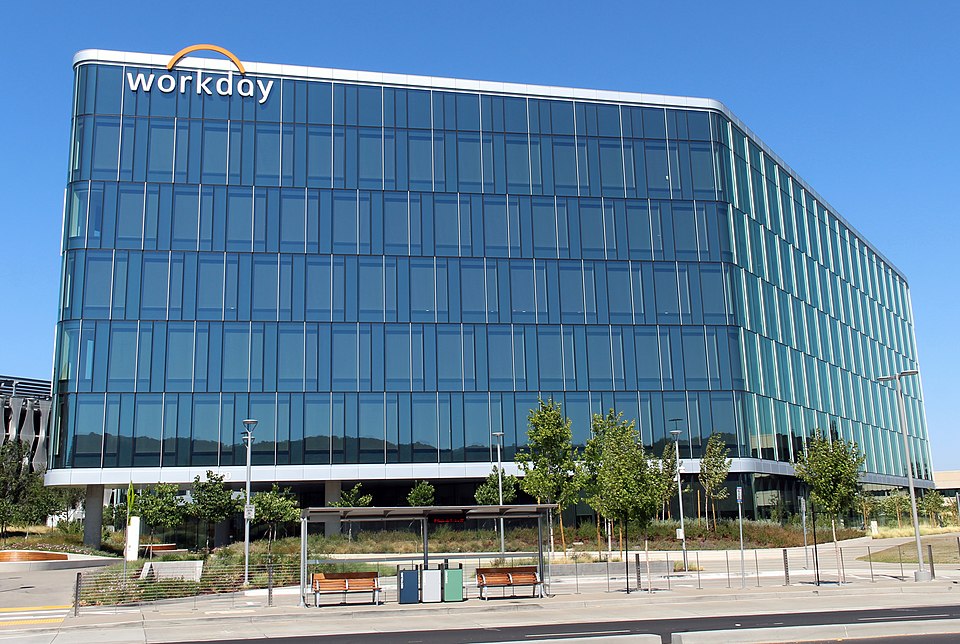
For years, job applicants have complained about applying to dozens or even hundreds of openings without ever knowing whether a person reviewed their resume. Many candidates now suspect that automated systems screen them out long before an interview. This lawsuit gives those concerns a legal spotlight.
Workday is one of the best-known enterprise software companies in the human resources market. Many large employers use Workday products to manage recruiting, payroll, finance, talent, and workforce operations. Because of that reach, a lawsuit involving Workday’s recruiting technology has broader significance than an ordinary employment dispute.
The case raises a sharp question for modern hiring: if an employer uses software to evaluate, rank, recommend, or screen job candidates, can the software vendor be held liable when applicants allege discrimination? The plaintiffs argue that Workday’s tools did more than passively organize applications. They claim the technology played a meaningful role in deciding who moved forward and who did not.
That distinction is crucial. If AI tools merely store resumes, the legal risk may look very different. But if AI tools influence which candidates are surfaced, scored, recommended, or rejected, courts may examine whether those tools function like part of the hiring process itself.
California Law Becomes a Key Battleground in the Workday Hiring Bias Lawsuit
One of the most important issues in the case is whether California’s anti-discrimination law can apply to alleged conduct involving applicants and jobs outside California. Workday argued that California’s Fair Employment and Housing Act should not apply in certain out-of-state situations. The court rejected that argument at this stage, allowing key California claims to move forward.
That decision is important because Workday is based in California, and the plaintiffs allege that the company designs, develops, and operates parts of its hiring technology from California. The court’s reasoning suggests that a company cannot automatically avoid California employment discrimination law simply because a job applicant or employer customer is located somewhere else.
For employers and HR technology vendors, this is a serious development. California already plays a major role in shaping workplace regulation, privacy law, consumer protection, and technology accountability. If California courts become a central venue for AI hiring disputes, companies across the U.S. may need to pay closer attention to how their recruiting tools work, how they are tested, and how much control they give to automated systems.
The Core Allegation: Can AI Screening Tools Create Hidden Bias?
The plaintiffs allege that Workday’s screening tools may rely on patterns, data points, or proxy indicators that appear neutral but can produce unfair outcomes. This is one of the central concerns in AI bias litigation.
An algorithm does not need to openly use race, age, disability, or gender to create a discriminatory effect. Bias can appear through indirect signals. Employment gaps, graduation years, career interruptions, job title patterns, address history, or certain skill keywords may look neutral on the surface but can sometimes correlate with protected traits.
For example, an employment gap could be connected to disability, caregiving, military service, illness, childbirth, economic hardship, or a layoff. A graduation year could reveal age. A career path that does not match traditional patterns could reflect unequal access to past opportunities. If an algorithm is trained on historical hiring data, it may learn the preferences of past decision makers and repeat old patterns under a new technological label.
That is why this lawsuit is being watched closely. It asks whether automated tools can reproduce discrimination even when no human recruiter openly intends to discriminate.
Workday’s Defense: The Company Says Humans Remain in Control
Workday has strongly denied the allegations. The company says its AI recruiting tools do not make final employment decisions, do not automatically reject candidates, and are not trained to identify protected characteristics. Workday has also said its customers retain control and human oversight during their hiring processes.
That defense goes to the heart of the case. Workday’s position is that it provides technology to employers, while the employers make the actual hiring decisions. In that view, Workday is a software provider, not the company deciding whether an individual applicant gets an interview or a job.
The plaintiffs see the issue differently. They argue that if Workday’s tools materially influence hiring outcomes, then Workday may be acting as more than a neutral technology vendor. The court has not ruled that Workday discriminated. It has allowed the plaintiffs to continue pursuing claims and testing their allegations through litigation.
This distinction matters for every employer that uses third-party recruiting software. The old defense of “the vendor did it” may not be enough. At the same time, vendors may not be able to simply say “the employer made the final decision” if their tools shaped the candidate pool before a human review.
Why the ADA Claim Adds Another Layer of Risk
The court also allowed claims connected to disability discrimination to continue under the Americans with Disabilities Act. This is especially important because AI hiring tools may evaluate applicants in ways that create barriers for people with disabilities.
A resume gap, nontraditional work history, lower keyword density, delayed application timing, or lack of conventional career progression can be misread by automated systems. Some people with disabilities may have career pauses, medical interruptions, or different work patterns that do not reflect their actual ability to perform a job.
The ADA requires employers to avoid discriminatory screening practices and to consider reasonable accommodations where appropriate. If automated systems screen applicants without context, qualified candidates may be excluded before they can explain their background, request accommodations, or demonstrate their abilities.
That is why disability rights advocates are closely watching AI hiring lawsuits. The concern is not only whether AI makes a bad decision. The concern is whether AI removes the human judgment that anti-discrimination law often requires.
The Case Could Reshape How Employers Use AI in Recruiting
This lawsuit is already sending a message to companies that rely on automated recruiting systems. Employers may need to know far more about the tools they use. It may no longer be enough to buy popular HR software and assume the vendor has handled every legal risk.
Companies may need to ask sharper questions before using AI in hiring. They may need to know what data the tool uses, how candidates are ranked, whether the system has been tested for disparate impact, whether protected groups are being screened out at higher rates, and whether human recruiters can override automated recommendations.
The biggest risk is blind reliance. If an employer cannot explain why one candidate advanced and another did not, the hiring process becomes harder to defend. A black box may be efficient, but in court, efficiency is not the same as fairness.
Why AI Bias Claims Are Difficult to Prove
Even as the lawsuit moves forward, AI discrimination cases remain difficult. Applicants often do not know which tool evaluated them, what data was used, how their score was calculated, or whether a human ever saw their resume. That lack of visibility makes it hard for job seekers to prove what happened.
At the same time, employers and vendors may argue that hiring decisions involve many factors, including qualifications, location, timing, salary expectations, role requirements, and recruiter judgment. They may also argue that algorithmic tools are designed to improve consistency, not create bias.
That is why discovery becomes so important. Plaintiffs need access to information about how the system works, how it was tested, and what outcomes it produced. Defendants often fight to protect proprietary models, confidential customer data, and privileged bias testing materials. The result is a legal battle not only over discrimination, but over transparency itself.
What Job Applicants Should Watch For When Applying Through AI Hiring Platforms
For job seekers, the Workday lawsuit highlights the need to be more strategic when applying online. Applicants should keep records of job titles, application dates, rejection times, employer names, and the platforms used. If a rejection arrives unusually fast, that may be worth noting. If the same platform appears across many rejected applications, that pattern may also matter.
Candidates should also tailor their resumes carefully to match the actual job description. AI systems often rely heavily on keywords, skills, titles, certifications, and role-specific language. A qualified applicant may be overlooked if the resume uses wording that differs from the screening system’s expectations.
However, the burden should not fall only on applicants. Hiring systems must be built and used responsibly. A fair hiring process should not require job seekers to guess how an invisible algorithm reads their lives.
What Employers Should Learn From the Workday Lawsuit
Employers using AI in hiring should treat this case as a warning. Automated tools may save time, but they can also create legal exposure if they are not monitored. Every company using AI for recruiting should understand the tool’s purpose, limits, data inputs, scoring logic, audit history, and human review process.
A strong compliance program should include regular bias audits, clear documentation, recruiter training, vendor accountability, and applicant notice where required. Employers should also avoid using AI systems as a substitute for judgment. Technology can support hiring, but it should not become an unreviewable gatekeeper.
The safest approach is not to abandon technology. The safer approach is to use technology with accountability. When AI affects someone’s chance to work, fairness cannot be optional.
A Legal Turning Point for AI, Workday, and the Future of Hiring
The Workday AI bias lawsuit is bigger than one company. It is part of a larger national reckoning over how artificial intelligence is changing employment. Companies want faster hiring. Recruiters want fewer repetitive tasks. Applicants want a fair chance. Courts are now being asked to decide where convenience ends and legal responsibility begins.
If the plaintiffs succeed, the case could reshape how AI vendors design hiring tools and how employers deploy them. If Workday ultimately defeats the claims, the case may still leave behind a new playbook for litigation, compliance, and AI governance in recruitment.
Either way, the message is clear: AI hiring tools are no longer operating in the shadows. They are being questioned by applicants, examined by regulators, tested by courts, and watched by employers who understand that the future of hiring will be judged not only by speed, but by fairness.
This case is still ongoing, and the allegations have not been proven in court.