Arizona Keeps Rejecting MAGA Candidates. Andy Biggs Is Betting He Won’t Be Next
Arizona Republicans have repeatedly chosen hard-line MAGA candidates in primary elections, only to watch them struggle when the entire state gets a vote.
Now Rep. Andy Biggs is asking the party to take that chance again.
Biggs entered the Republican race for governor with President Donald Trump’s endorsement, strong support from conservative activists and years of credibility with the party’s most loyal voters.
His leading rival, Rep. David Schweikert, is offering Republicans a different argument: ideological loyalty may be enough to win a primary, but it does not guarantee victory in a politically divided state.
That makes the contest about more than selecting a challenger to Democratic Gov. Katie Hobbs.
It is a test of whether Arizona Republicans believe their recent statewide defeats were caused by flawed candidates, unusual election conditions or a political brand that excites the conservative base while pushing away too many independents.
Biggs is betting he can succeed where Kari Lake, Blake Masters and other Trump-backed candidates fell short.
Arizona voters may soon decide whether that confidence represents a comeback strategy or another expensive political gamble.
The MAGA formula has worked in primaries but failed statewide
Arizona’s recent election history gives Republicans several reasons to be cautious.
In 2022, Lake lost the governor’s race to Hobbs. Masters lost his U.S. Senate campaign. Mark Finchem lost the race for secretary of state, while Abe Hamadeh narrowly lost the attorney general contest.
All four candidates had Trump’s endorsement and strong support from the Republican base. None won statewide office.
Lake tried again in 2024, this time running for the U.S. Senate. She lost to Democrat Ruben Gallego.
Yet Arizona did not reject Trump himself. He carried the state in the 2024 presidential election, complicating the claim that Arizona voters have completely turned against the MAGA movement.
That distinction could define Biggs’ campaign.
Trump has demonstrated an ability to attract voters who do not always support candidates attempting to copy his style, message or political grievances. His personal coalition does not automatically transfer to every Republican who receives his endorsement.
That leaves Biggs facing the question that has followed Arizona Republicans through several election cycles: Can a candidate dominate the conservative base without becoming unacceptable to enough moderate and independent voters to lose in November?
Biggs wants voters to see more than a Trump loyalist
Biggs has never tried to hide his conservative record.
He previously chaired the House Freedom Caucus, has remained one of Trump’s most dependable congressional allies and has built his political identity around border security, lower taxes, reduced spending and resistance to Democratic policies.
Those positions make him difficult to defeat in a Republican primary.
They could also give Democrats a clear general-election strategy.
Hobbs and her allies can portray Biggs as another uncompromising MAGA candidate in a state where similarly positioned Republicans have repeatedly lost.
Democrats would likely frame the race as a choice between steady government and another attempt to bring confrontational national politics into Arizona’s governor’s office.
Biggs appears to understand that danger.
On the campaign trail, he has highlighted his experience in the Arizona Legislature and pointed to moments when he worked with members of the opposing party.
He has also referenced his work with the late Sen. John McCain on legislation involving emergency alerts for missing Native American children.
The McCain reference is politically significant.
McCain represented an older Arizona Republican tradition built around military service, institutional experience and occasional willingness to challenge his own party.
Trump repeatedly criticized McCain, and many MAGA voters viewed the senator’s style of Republican politics as something the party needed to leave behind.
Biggs connecting himself to McCain’s record therefore looks like more than a campaign story.
It suggests that a candidate can speak like a movement conservative during the primary while preparing a broader identity for the general election.
The risk is obvious.
Moderate voters may see the shift as political reinvention. Hard-line supporters may become suspicious if Biggs moves too far toward the center.
Schweikert is turning electability into the real issue
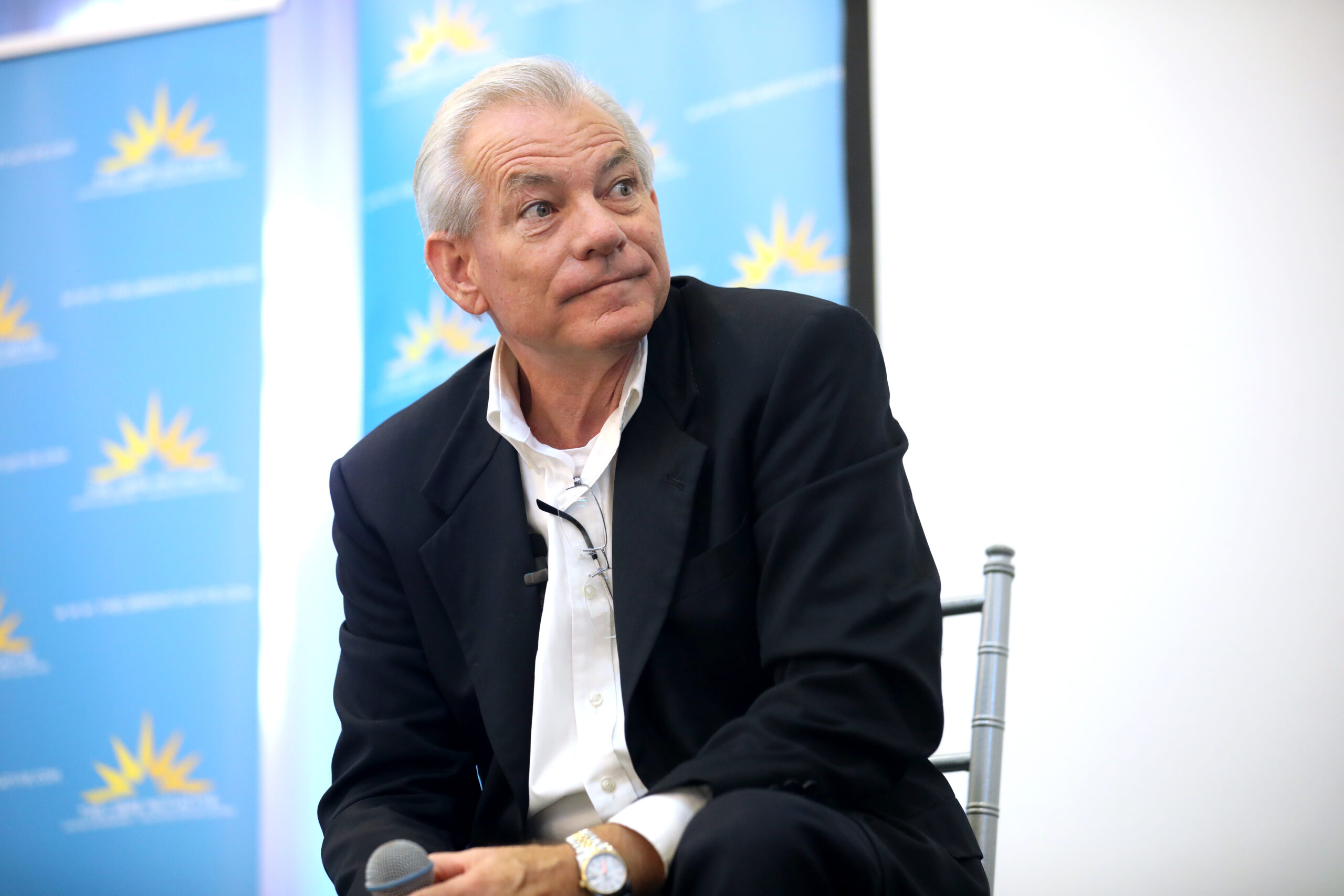
Gage Skidmore from Surprise, AZ, United States of America, CC BY-SA 2.0, via Wikimedia Commons Licensed under David Schweikert in 2024
Schweikert’s campaign is asking Republicans to think beyond primary day.
Rather than trying to out-MAGA Biggs, Schweikert has emphasized fiscal policy, business issues and his ability to attract support outside the party’s most committed base.
His argument is built around electoral arithmetic.
Arizona has a large number of independent voters. A Republican candidate cannot rely entirely on conservative enthusiasm and assume it will be enough to win a close statewide race.
Schweikert’s problem is that electability arguments often struggle in party primaries.
Republican voters may agree that November matters while still choosing the candidate who most closely reflects their beliefs.
Biggs, meanwhile, can argue that previous Trump-backed candidates lost because of their own weaknesses, not because conservative populism is automatically unelectable.
He can also point to Trump’s 2024 Arizona victory as evidence that the state remains open to an aggressive conservative message.
Both arguments contain some truth.
Arizona remains competitive. Republicans have not disappeared, and Democrats have not established permanent control.
But statewide races are often decided by narrow margins. Candidate discipline, personal appeal and the support of independents can determine the outcome.
Hobbs may benefit most from the Republican battle
While Republicans fight over which direction gives them the best chance, Hobbs can prepare for the general election without facing the same level of internal conflict.
That gives her campaign time to preserve resources, study the Republican field and develop attacks against whoever wins the nomination.
Biggs would give Hobbs a familiar political target.
She could argue that Arizona has already rejected similar candidates and that electing Biggs would bring more national political conflict into state government.
Biggs would respond by focusing on border security, housing costs, inflation, taxes and dissatisfaction with Democratic leadership.
He would likely present Hobbs as disconnected from voters concerned about affordability and public safety.
The race could become one of the clearest tests of whether the MAGA movement can thrive in a major swing state without Trump himself at the top of the ticket.
If Biggs wins the Republican nomination and defeats Hobbs, his supporters will argue that the movement’s losing streak was never about MAGA politics.
They will say previous candidates simply lacked the experience, discipline, or appeal needed to carry the message successfully.
If Biggs wins the primary but loses the general election, Arizona Republicans will face a more uncomfortable conclusion.
Their primary voters may be repeatedly choosing candidates who inspire the base but cannot attract enough support to win statewide.
That possibility is what makes the governor’s race bigger than one candidate or one election.
Biggs is not simply running against Schweikert or Hobbs.
He is running against Arizona’s recent political history.
He is asking Republican voters to place the same bet again and believe that this time, the candidate will be stronger, the campaign will be sharper and the ending will finally be different.