8 Body Language Signs That Someone Doesn’t Trust You
They say all the right things. They smile, they nod, and they tell you they are glad you came. But something feels off, and you cannot quite put your finger on it.
Often, that feeling comes from body language. People can choose their words carefully, but their eyes, hands and posture tend to give away more than they realize. When someone is uneasy around you or unsure whether to trust you, those signals can leak out in small ways.
Before we dig in, one important note. Body language experts are clear that no single gesture proves anything, and context matters a lot. Here are eight body language signs that someone may not fully trust you, along with what the experts say to keep in mind.
1. They Block Their Eyes
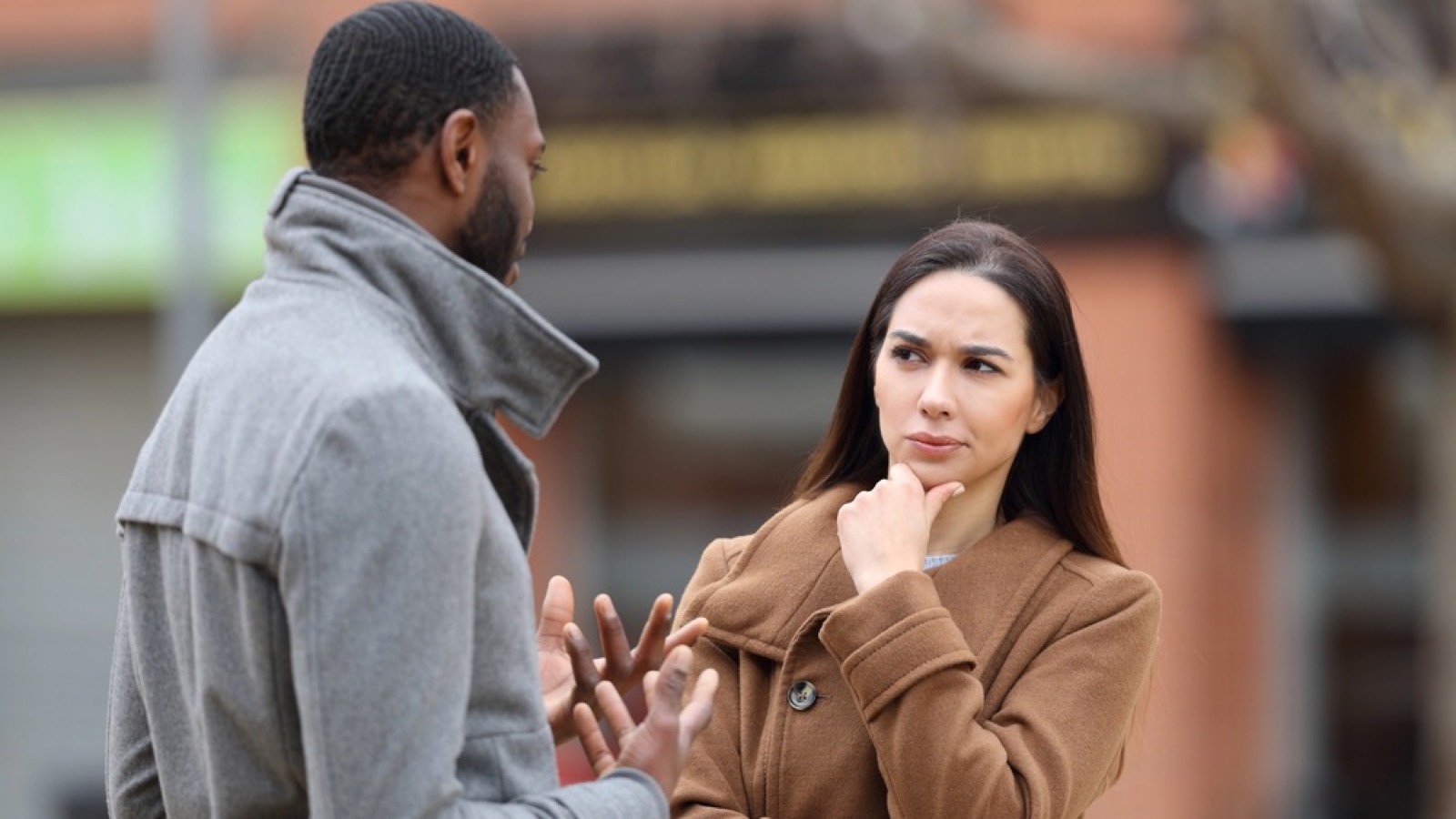
Watch what happens when you say something they do not like. Some people rub their eyes, cover them briefly with a hand, or close them for a long moment. It can look like tiredness, but it often happens right after a certain comment.
Joe Navarro, a former FBI agent who spent his career studying nonverbal behavior, writes in Psychology Today that eye blocking often signals stress or discomfort. He notes that even children who were born blind cover their eyes when they hear something unpleasant. If someone keeps blocking their eyes when a certain topic comes up, that topic may be where the trust problem lives.
2. They Narrow Their Eyes
Squinting is another eye signal people rarely notice in themselves. When someone hears something that troubles them, their eyes may narrow for just a second. Navarro calls this the “Clint Eastwood effect,” after the actor’s famous squint.
In the same article, Navarro says narrowed eyes can signal discomfort, concern or even anger. He describes using it in negotiations to spot which contract terms bothered the other side. If you see a quick squint every time you mention a certain plan or promise, that person may have doubts about it.
3. A One-Sided Smirk
A real smile tends to spread across both sides of the face. A smirk that lifts only one corner of the mouth is a different thing. Researchers who study facial expressions link that half-smile to contempt, a feeling that mixes doubt with a sense of superiority.
Humintell, a group that trains people to read facial expressions, explains that the contempt expression usually involves movement on just one side of the mouth. Relationship researchers take it seriously, too. The Gottman Institute calls contempt the single greatest predictor of divorce among the four patterns it studies, so a smirk that keeps showing up is worth noticing.
4. Their Hand Goes to Their Neck
When people feel uneasy, they often touch their neck, collar or throat. Women may reach for a necklace, and men may adjust a tie or rub the back of the neck. It is the kind of gesture people make without thinking.
Navarro has described this move, sometimes called “clutching pearls,” as a defensive motion left over from our earliest ancestors. In an interview with Florida Trend, he linked the instinct to early humans watching out for predators. If someone reaches for their neck every time you make a promise, they may not be sure you will keep it.
5. Their Body Turns Away From You
Pay attention to where someone’s chest and feet are pointing. When people feel comfortable, they tend to face the person they are talking to. When they feel uneasy, their shoulders, hips or feet may slowly angle away, often toward the door.
This is one of the signs body language experts mention most often because it is hard to fake. A person can keep a friendly face while the rest of their body is quietly heading for the exit. If someone turns their whole body away as soon as you start talking, they may want distance from you more than they are letting on.
Of course, people also turn away for ordinary reasons, like checking on a grandchild or keeping an eye on the stove. What matters is the pattern. If they turn back toward everyone else in the room but stay angled away from you, that is the moment worth noticing.
6. Their Lips Press Together
Watch the mouth when you are explaining something. Some people press their lips together so tightly that they almost disappear. It often happens right after they hear something they are unsure about.
Experts caution that pressed lips do not mean someone is lying. More often, they show tension, worry or holding something back. If you notice someone pressing their lips together while saying “Sure, that sounds fine,” the lips may be closer to how they really feel.
7. They Stop Mirroring You
When two people get along, they often copy each other without realizing it. One leans forward, the other leans forward. One picks up a coffee cup, and the other does too a moment later.
Psychologists Tanya Chartrand and John Bargh called this the “chameleon effect” in a well-known 1999 study, listed in Chartrand’s Duke University publications. They found that this kind of mimicry makes conversations go more smoothly and increases liking between people. So when someone who usually mirrors you suddenly stops, it may be a sign that the easy, trusting feeling between you has cooled.
8. They Put Something Between You
People who feel guarded often create a small barrier without thinking about it. A purse moves onto the lap, a coffee mug stays held in front of the chest, or a pillow ends up hugged on the couch. Crossed arms can be part of this, too.
But this one comes with a big warning. Crossed arms might just mean someone is chilly or comfortable sitting that way. Look for a change from how the person usually acts, like suddenly folding their arms the moment a certain subject comes up. Body language is a lot like the way people talk with their hands, since everyone has their own style.
Do Not Jump to Conclusions
It is tempting to read these signs as proof, but experts urge caution. In the Florida Trend interview, Navarro said there is “not one single behavior that indicates deception.” Body language can tell you someone is uncomfortable, but it cannot tell you why.
He also busts a popular myth. In his Psychology Today article, Navarro notes that looking away is not evidence of lying, and he cites research suggesting liars may actually make more eye contact, not less. The best approach is to learn how a person normally acts and then notice when something changes.
Trust Is Built Slowly
If you spot several of these signs in someone you care about, it does not mean the relationship is broken. It may just mean they need more time, more reassurance, or a real conversation. Trust usually grows through small actions repeated over and over, not grand speeches.
And it works both ways. Paying attention to your own body language can help you come across as more open, too. Have you ever noticed one of these signs in someone, and did your gut turn out to be right?