The True Cost of Crime: What Police, Courts, and Legal Services Really Spend After Every Reported Incident
Every Reported Crime Comes With a Hidden Price Tag
A single reported crime doesn’t just trigger sirens, investigations, and court files—it sets off a full financial chain reaction across the justice system that most people never see. From the moment police are dispatched to a scene, public money begins to move through multiple agencies, each absorbing part of the workload.
Officers respond, evidence is collected, reports are written, and investigations begin. If an arrest follows, prosecutors, public defenders, and court staff all enter the process. Each stage carries labor costs, administrative expenses, and operational spending that are ultimately funded by taxpayers. What looks like a single event on the surface quickly becomes a multi-layered public expenditure behind the scenes.
What “Crime Response Cost” Actually Means in Practice

When experts refer to the “cost of responding to crime,” they are describing the total public spending required to process a crime after it has been reported to authorities. This includes the work of police officers, detectives, prosecutors, public defenders, judges, clerks, and administrative personnel who collectively move a case through the justice system.
These costs apply only to the official response. They do not include broader consequences such as victim losses, medical expenses, property damage, or long-term economic disruption. Instead, they capture the operational cost of running the justice system in response to reported criminal activity, making it a direct measure of how crime affects government budgets.
The Justice System Chain Reaction That Follows Every Reported Crime
Once a crime is reported, it rarely stays confined to a single department. Instead, it moves through a structured system that expands with each step. Police officers are usually the first to respond, securing the scene, interviewing witnesses, gathering evidence, and preparing detailed reports. If the investigation leads to an arrest, the case shifts into a more complex legal process.
At that point, prosecutors review the evidence, determine charges, and begin preparing the case. Public defenders may be assigned to represent defendants who cannot afford private counsel. The court system then becomes involved, scheduling hearings, managing filings, and assigning judicial time. Depending on how the case progresses, it may be resolved quickly through a plea agreement or extend into a full trial requiring significant court resources and legal preparation.
Each stage increases the total cost, not just financially but also in terms of human labor and system capacity.
Why Police Response Costs Are Not the Same for Every Crime
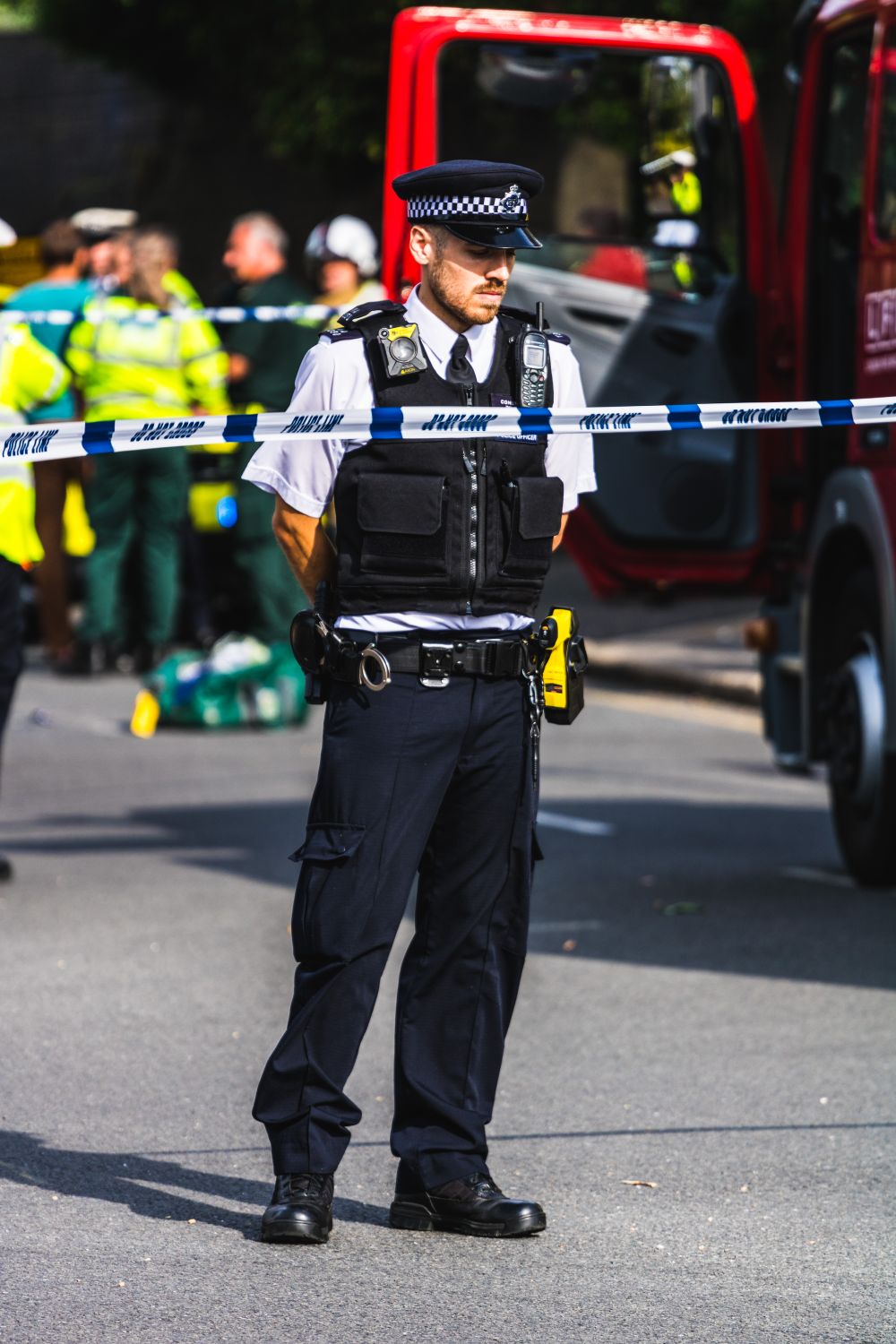
Police response costs vary widely because no two crimes demand the same level of attention or resources. A minor property offense may require only a short investigation and documentation, while a violent felony can involve extensive detective work, forensic analysis, multiple interviews, and follow-up court appearances.
These differences are shaped by several factors, including the severity of the crime, the complexity of the investigation, the amount of time officers spend on the case, and the level of administrative work required afterward. Local conditions also matter, as wage levels, staffing structures, and available resources all influence how much a police response ultimately costs the public.
How Court and Legal Systems Turn Cases Into Public Spending

Once a case enters the court system, costs can escalate quickly depending on how far it progresses. Court expenses are driven by the time judges spend on hearings, the workload of clerks processing filings, and the operational costs of maintaining courtroom facilities. Legal services add another layer, as prosecutors build cases while public defenders prepare legal strategies for defendants.
Some cases resolve quickly and require minimal court involvement. Others move through multiple hearings, motions, and potentially a full trial, significantly increasing the total cost. The more complex the case, the more time and personnel are required across both prosecution and defense, making legal proceedings one of the most resource-intensive parts of crime response.
Why Crime Response Costs Differ Across States and Regions
The cost of responding to crime is not uniform across the country. States differ in wages, staffing levels, legal procedures, and overall justice system structure, all of which affect the cost of processing a reported crime. Urban areas often deal with higher case volumes and denser populations, while rural areas may face longer travel times and fewer available resources.
These differences mean that a higher cost in one state does not automatically signal inefficiency, just as a lower cost does not necessarily indicate stronger performance. Instead, it reflects the unique economic, geographic, and institutional conditions shaping each justice system.
The Role of Uncertainty in Estimating Crime Costs
Crime response costs are not fixed numbers because real-world justice systems are complex and unpredictable. To account for this uncertainty, researchers use simulation methods that test a wide range of possible scenarios. This approach produces cost ranges rather than single values, offering a more realistic picture of the extent of public spending.
These ranges reflect variations in case complexity, arrest likelihood, court involvement, and staffing costs. By embracing uncertainty rather than ignoring it, these estimates provide a more accurate foundation for understanding how crime affects public budgets.
Where the Money Goes After a Crime Is Reported
When a crime enters the justice system, taxpayer money is distributed across multiple layers of government. Police departments absorb the costs of patrol operations, investigations, staffing, vehicles, fuel, and equipment. Courts manage expenses related to judges, clerks, facilities, and case-processing systems. Legal services allocate funds to prosecutors and public defenders who handle the legal arguments and courtroom proceedings.
Each agency plays a distinct role, but together they form a connected system where a single reported crime can trigger spending across multiple departments simultaneously.
Why Crime Prevention Can Reduce System Pressure
When crime is prevented, the benefits extend beyond public safety. Fewer reported crimes mean fewer police investigations, fewer court cases, and reduced pressure on prosecutors and public defenders. This does not always translate into immediate budget cuts, but it does free up capacity within the justice system.
Resources that would have been used responding to crime can instead be redirected toward improving efficiency, addressing serious cases, or supporting other public safety initiatives. In this way, prevention functions as both a safety strategy and a long-term budget management tool.
Why Lower Costs Do Not Always Mean Better Outcomes

A justice system with lower response costs is not automatically more effective. In some cases, lower spending may reflect limited investigations, fewer prosecutions, or constrained court operations. Conversely, higher costs may indicate more thorough investigations, stronger legal representation, or higher wages that reflect local labor markets.
For this reason, cost figures should always be interpreted alongside outcomes such as case resolution quality, fairness, public trust, and overall safety performance. Cost alone cannot define effectiveness.
The Bigger Picture Behind Every Reported Crime
Behind every police report lies a system of coordinated institutions working to respond, process, and resolve criminal activity. What appears as a single incident often requires the combined effort of multiple professionals, each contributing time and resources funded by the public.
Crime response costs reveal the hidden infrastructure of justice, one that operates continuously, quietly, and at a significant scale. Understanding these costs provides a clearer view of how public safety systems function and why they require sustained investment to operate effectively.
Crime Carries a Public Price Beyond the Headlines
Every reported crime creates more than just a legal case; it generates a measurable financial impact across the justice system. From police response to courtroom proceedings, each stage adds to the total cost borne by taxpayers.
Understanding this hidden cost structure is essential for smarter policy decisions, better budgeting, and more effective prevention strategies. Because behind every headline, there is not just a story of crime, but a story of public resources in motion.