Empire State Building Rooftop Climb: A High-Risk Engagement Stunt That Turned Into a Multi-Layer Security Breach
We expand this case beyond a viral arrest into a layered account of performance, infrastructure vulnerability, and modern attention-seeking risk behavior unfolding at one of New York City’s most heavily monitored landmarks.
What appeared at first to be a romantic proposal at extreme altitude quickly evolved into a coordinated unauthorized ascent of the Empire State Building’s restricted spire, triggering emergency response protocols, aviation monitoring, and a full-scale NYPD intervention.
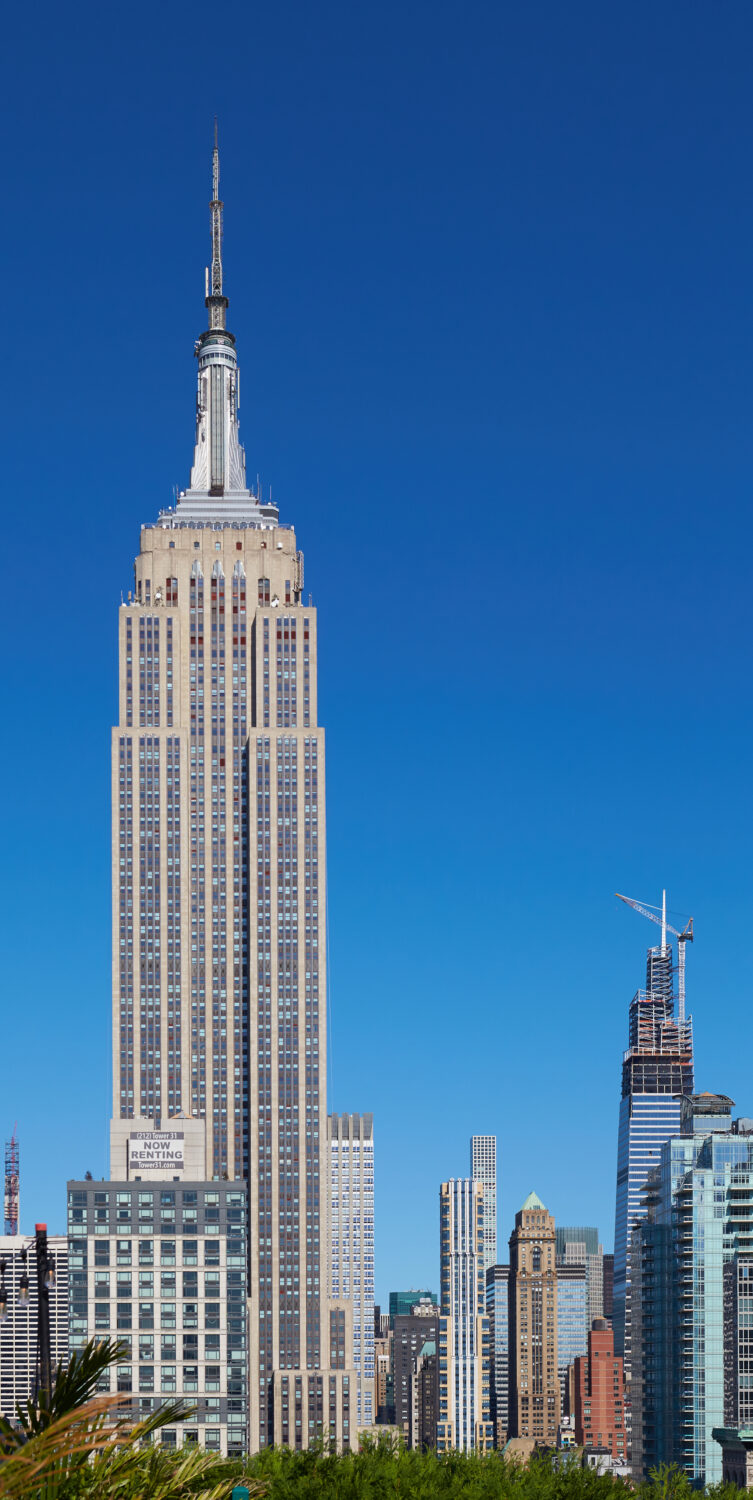
The Empire State Building As A Vertical Stage For Extreme Expression
We recognize the Empire State Building not only as architecture but as a recurring cultural platform where ambition, symbolism, and spectacle repeatedly converge.
From cinematic depictions like King Kong to authorized publicity climbs, the structure has long carried a dual identity: a functioning broadcast tower and a global storytelling icon.
In this incident, that symbolic identity appears to have been deliberately activated. The banner unfurled at the summit was not random messaging. It was a curated statement positioned at one of the most visible vertical points in New York City.
The message itself, often attributed to Jimi Hendrix, reinforced a thematic framing of emotional rebellion against institutional power, amplifying the performative tone of the ascent.
A Structured Climb Through Restricted Infrastructure Layers
We break down the likely physical progression through the building’s upper architecture, based on preliminary law-enforcement reporting and the known structural layout.
The Empire State Building’s upper zone is divided into tightly controlled layers:
- Public access ends at the 102nd-floor observation level.
- The 103rd floor functions primarily as a service and maintenance transition space
- Above that lies restricted mechanical access leading into the spire and broadcast infrastructure
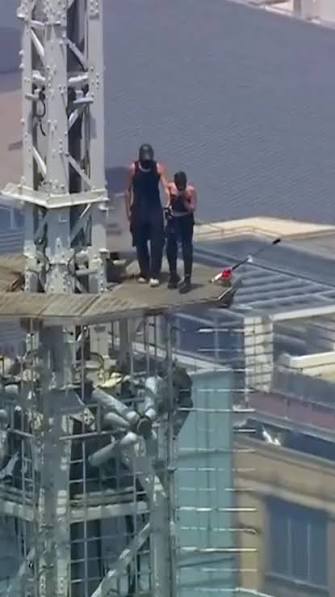
Investigators believe the climbers entered through a maintenance hatch associated with water tower servicing infrastructure. From there, they appear to have navigated through secured service corridors that are not designed for public passage.
This is a critical detail: the ascent did not begin as a traditional “climb” but as a transition through industrial access architecture that normally requires authorization credentials and internal clearance.
The Transition Point: From Structure To Spire Exposure
We highlight a key structural threshold at which the incident escalated from unauthorized entry to an extreme exposure risk.
Once past internal access layers, the climbers reached the external transmission framework. This area is not designed for human occupation without professional safety systems in place. It contains:
- Narrow steel latticework
- Broadcast antenna proximity zones.
- Electrical transmission pathways
- Wind-exposed structural beams at over 1,400 feet
At this point, any loss of grip or misstep would result in a fatal fall with no protective buffer zone.
It is within this environment that the banner was deployed, transforming the structure into a visible public stage broadcast across Manhattan.
Social Media As Real-Time Amplification Layer
We observe that the incident was not only physically carried out but also digitally broadcast in parallel.
Reports indicate that at least one participant posted content from the structure during the climb. This introduces a modern behavioral pattern increasingly associated with high-risk urban exploration: real-time validation loops through social media engagement.
This creates a feedback cycle:
Risky physical action
Immediate digital documentation
External audience validation
Escalation of behavior for visibility
The Empire State Building, in this case, became both stage and signal tower for its own breach narrative.
The Engagement Event At Altitude: Emotional Climax Under Constraint
We document a striking contradiction in the timeline.
After the initial descent began under pressure from law enforcement response, one individual reportedly stopped at a lower structural platform and initiated a marriage proposal.
The emotional act occurred under conditions of active containment risk, where emergency units were already responding to the scene.
This created a rare dual-reality moment:
- Emotional framing: commitment and intimacy
- Operational framing: active law enforcement intervention
The engagement was followed immediately by physical contact, descent continuation, and eventual detainment.
The sequence transformed the narrative from a romantic stunt into a procedural arrest within minutes.
NYPD Emergency Response: Vertical Containment Operation
We outline the operational complexity of the NYPD response, which required the coordinated deployment of vertical access.
The response included:
- Emergency Services Unit deployment with climbing gear
- Controlled rooftop and spire access through secured maintenance routes
- Airspace monitoring via a police helicopter.
- Temporary street-level perimeter closures
Officers reached elevated structural points using protective equipment designed for industrial-height operations, rather than standard urban patrol procedures.
This type of response is classified as a high-risk vertical containment scenario due to the combination of elevation, exposure, and structural instability.
Structural Security Gap Analysis: How Access Layers Were Bypassed
We identify a key architectural tension in legacy skyscraper design.
The Empire State Building was constructed long before modern layered intrusion modeling. While retrofitted with advanced security systems, its upper maintenance architecture still relies on:
- Physical locks and keyed access points
- Internal service corridors are shared with operational maintenance teams.
- Mechanical hatches that require procedural enforcement rather than automated restriction
The incident suggests a breakdown not in digital systems but in the continuity of physical access control across maintenance layers.
This is a critical distinction in modern skyscraper security analysis.
The Risk Economy Behind High-Altitude Stunts
We contextualize the event within a broader global pattern of “attention-risk exchange.”
In this framework, individuals convert physical danger into digital visibility. The higher the perceived risk, the greater the potential amplification across social platforms.
The Empire State Building represents one of the highest-value “attention surfaces” in the world:
- Global recognition
- Instant media pickup
- Symbolic architectural status
- High emotional resonance for audiences
This creates a powerful incentive structure for extreme acts designed to be seen rather than merely performed.
Historical Echoes: When Iconic Buildings Become Narrative Platforms
We place the incident within a continuum of symbolic use of the Empire State Building.
Previous moments include:
- Authorized celebrity climbs for promotional campaigns.
- Fictional destruction in film and media
- Architectural lighting events tied to global causes
- Documented security breaches in earlier decades
This latest event adds a new layer: a hybrid of romance, subculture climbing, and real-time digital broadcasting under unauthorized conditions.
When Symbolism, Structure, and Risk Collide
We conclude that the incident involving the Empire State Building climbers represents more than a security breach or a viral engagement moment. It reflects a modern convergence of physical architecture, digital visibility culture, and extreme symbolic performance.
A landmark designed as a controlled public experience briefly became an uncontrolled vertical stage for personal expression, subcultural behavior, and high-risk documentation.
The result was not only an arrest but a case study in how iconic infrastructure can be reinterpreted as narrative space in the age of social amplification.