Massachusetts Could Lose 10,000 Haitian TPS Workers, as the Ripple Effect Will Hit Everyday Life, Homes, and Jobs
Massachusetts is facing a labor shock that could quietly ripple through daily life before many residents fully understand what happened. The issue is Temporary Protected Status (TPS) for Haitians. The policy has allowed many Haitian nationals to live and work legally in the United States because returning to Haiti has been considered unsafe.
Now, after a Supreme Court ruling cleared the way for the federal government to end protections for Haitians and Syrians, thousands of Massachusetts families, employers, patients, shoppers, and school communities are bracing for the fallout.
The numbers are not small. Massachusetts has an estimated 19,000 Haitian TPS holders, including about 10,000 workers. Those workers help generate about $481 million in annual economic contributions, plus $88 million in federal and payroll taxes and $59 million in state and local taxes.
The impact may start in ordinary places
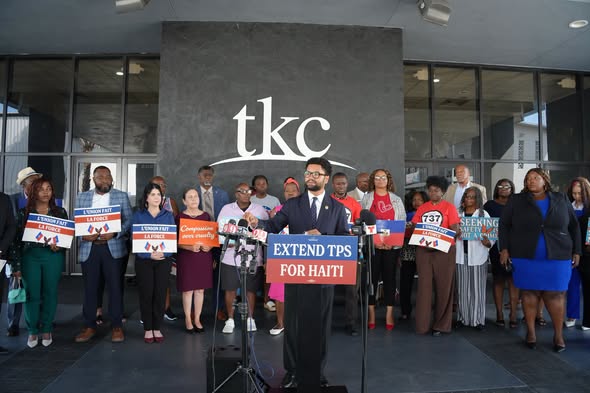
This is not just an immigration story. It is a grocery store story, a nursing home story, a warehouse story, a child care story, and a family-budget story. Haitian TPS workers in Massachusetts are employed in jobs that keep daily life moving: retail staff, nursing assistants, stockers, packers, and other service roles.
The loss of even part of that workforce could leave employers scrambling, especially in industries already struggling with staffing gaps. For families, the effect could feel less like a headline and more like longer waits, fewer available workers, higher labor pressure, and more instability in neighborhoods where Haitian immigrants have built lives over many years.
A parent who stocks shelves overnight may also be the one paying the household rent. A nursing assistant may be the steady hand helping an elderly resident get through the morning. A retail worker may be the person customers barely notice until the checkout line suddenly gets longer.
Health care and elder care could feel the pressure
Massachusetts officials have warned that TPS holders fill critical roles in health care and elder care, two areas where workforce shortages already affect families. That matters because elder care is not abstract. It is someone’s mother waiting to be helped out of bed. Someone’s father needs medication on time. Someone’s grandparent depends on a familiar caregiver who knows their routine.
If workers lose authorization, employers may not simply replace them overnight. Training takes time. Certification takes time. Trust takes even longer. In care settings, turnover is not just inconvenient; it can be disruptive for vulnerable people who depend on consistency.
Families face the deepest uncertainty
Behind the workforce numbers are households trying to plan for school, rent, car payments, groceries, and legal fees.
TPS does not create a direct path to permanent residency. It allows eligible people from designated countries to remain temporarily in the U.S. and work legally while their home country is deemed unsafe. Haiti’s designation traces back to the 2010 earthquake and years of repeated extensions and legal fights.
For many Haitian families in Massachusetts, “temporary” has stretched across childhoods, careers, mortgages, church communities, and local businesses. Children have grown up here. Parents have built routines here. Employers have built schedules around workers who have shown up for years.
That is why the possible loss of TPS protections lands with such force. It is not only about whether someone can keep a job. It is about whether a family can stay together, whether children remain in the same school, and whether a household can survive the sudden loss of income.
Businesses may feel it next
Small businesses could be hit especially hard. Many local employers do not have the luxury of endless applicants waiting outside the door. Losing trained workers can mean fewer open hours, slower service, delayed orders, and pressure on remaining employees. In industries with thin margins, even a modest staffing disruption can turn into a bigger financial problem.
The broader economic numbers show why the issue reaches beyond immigrant communities. Haitian TPS holders contribute hundreds of millions of dollars to the Massachusetts economy each year. They earn wages, pay taxes, rent homes, buy groceries, use transportation, support local shops, and help sustain the service economy around them. When workers disappear from payrolls, money disappears from communities too.
The legal picture is still confusing for workers
The Supreme Court decision did not instantly answer every practical question for families and employers. Employment authorization documents for Haiti and Syria TPS holders were briefly extended through July 10, 2026, while lower courts addressed next steps following the ruling.
That short window may offer paperwork breathing room, but not emotional relief. Workers still face uncertainty over what happens next. Employers face compliance questions. Families face the possibility that decisions made in Washington could quickly reshape their lives in Boston, Brockton, Randolph, Everett, Lynn, and other communities with strong ties to Haiti.