Russia Accuses Ukraine of Rejecting Ceasefire as Fight Over Kostiantynivka Turns Bitter
Russia has accused Ukraine of refusing a short local ceasefire around Kostiantynivka, a fiercely contested town in eastern Ukraine, where Moscow says it wanted to hand over the bodies of fallen Ukrainian soldiers. The claim adds another layer of tension to a battle already clouded by competing battlefield narratives, humanitarian pressure, and political theater.
Moscow said it proposed a six-hour pause in fighting in and around Kostiantynivka on Monday, July 6, from 12 p.m. to 6 p.m. Moscow time. The stated purpose was to allow the transfer of Ukrainian servicemen’s bodies. Russia said Kyiv had until noon Moscow time on Sunday, July 5, to respond.
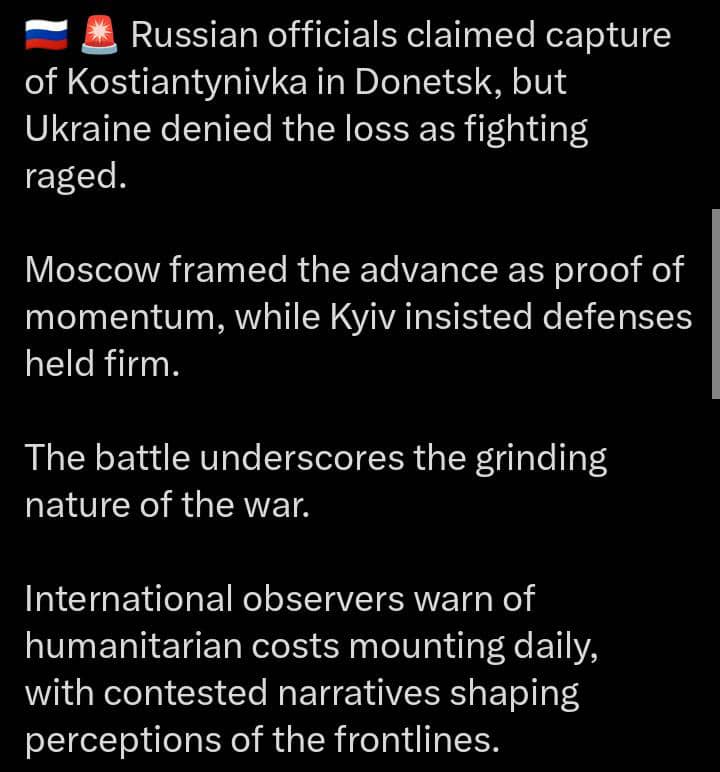
But there is a major catch: the same town at the center of this proposed handover is also at the center of a much bigger dispute. Russia says it has captured Kostiantynivka. Ukraine says that is false.
A Ceasefire Claim Inside a Much Bigger Battlefield Fight
Russia’s Defense Ministry said Ukraine refused to halt shelling so the handover could take place. At the time of the report, Ukraine’s Defense Ministry and General Staff had not immediately responded to a request for comment on that specific accusation.
That matters because, without a public Ukrainian response to the allegation of a ceasefire, the safest way to read the story is to read it carefully: Russia is making the claim, but Ukraine has not publicly confirmed Moscow’s version.
What Ukraine has strongly rejected is Russia’s broader claim that Kostiantynivka has fallen. Ukrainian officials said the town remains under the control of Ukraine’s defense forces, even while acknowledging that the situation is difficult and that small Russian infantry groups have infiltrated parts of the area.
Major Andrii Kovalov, a spokesperson for Ukraine’s General Staff, said Russian forces carried out 11 assaults in the area on July 3 but achieved no success. He accused Russia of spreading “blatant disinformation,” while saying Ukrainian defenders continued to hold their positions.
That is why the ceasefire claim is more than a simple logistics dispute. It lands directly in the middle of a propaganda fight over who controls the town, who is telling the truth, and who gets to frame the next chapter of the war in Donetsk.
Why Kostiantynivka Matters So Much
Kostiantynivka is not just another battered dot on the map. It sits in Donetsk, a region Moscow has long tried to bring fully under its control. The town is part of a wider defensive network that helps shield key Ukrainian positions around Sloviansk and Kramatorsk.
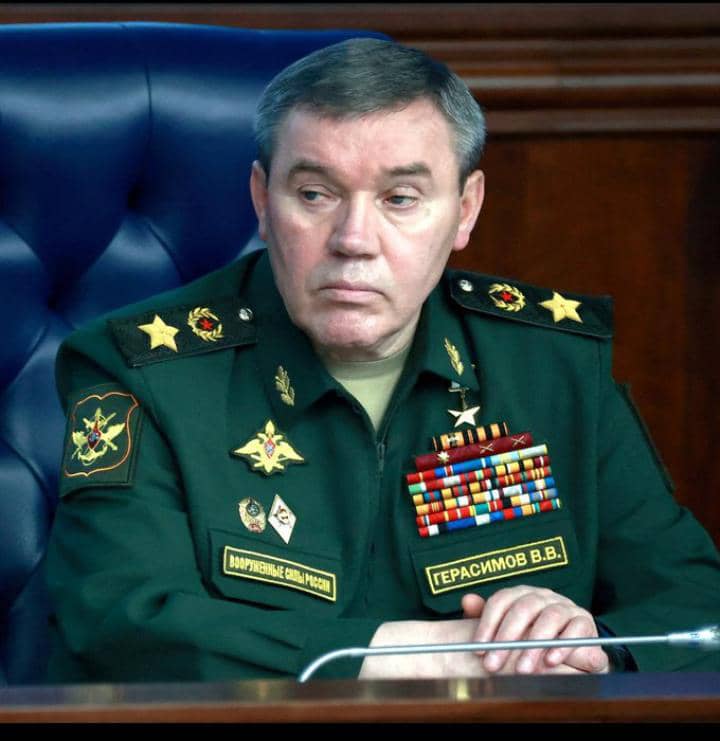
Russian President Vladimir Putin has described Kostiantynivka as a city of “key transport” and industrial importance in Donbas. Gen. Valery Gerasimov, Russia’s chief of the General Staff, claimed Russian troops had taken what he called one of Ukraine’s main defensive hubs in the area.
Ukraine has pushed back hard. President Volodymyr Zelensky dismissed Putin’s claim as false and mocked the idea that Russia fully controlled the city. “If Kostiantynivka were currently under Russian control,” Zelensky said, Putin should have no problem meeting him there to discuss ending the war.
That sharp response shows how symbolic the town has become. For Moscow, claiming Kostiantynivka would help sell the idea that Russian forces are still advancing toward their wider Donbas goal. For Kyiv, holding the town, or even proving that Russia has not fully taken it, is a way to challenge Moscow’s narrative of momentum.
The reality on the ground appears messy. Ukrainian officials say Russian sabotage and infantry groups have entered some areas, but that Ukrainian forces are still defending the city and its approaches. That means Kostiantynivka may be less a clean “captured” or “not captured” story than a grinding urban fight where both sides are trying to shape the outside world’s understanding of what is happening.
Bodies, Deadlines, and the War of Narratives
The issue of soldiers’ bodies gives this story a grim emotional weight. Russia says it wanted a short humanitarian pause to return fallen Ukrainian service members. The proposed window was narrow, and the deadline for Kyiv’s answer was strict.
But in wartime, even humanitarian gestures can become part of the messaging battle. If Russia says it offered a ceasefire and Ukraine refused, Moscow can present itself as the side pushing a humanitarian action. Ukraine, meanwhile, may view any Russian proposal inside a disputed battlefield zone through the lens of security, optics, and military risk.
What is verified is limited but important. Russia says it proposed the pause. Russia says Ukraine rejected it. Ukraine has not publicly confirmed that version in the report. Ukraine has separately denied Russia’s claim that Kostiantynivka is under Moscow’s control. Those details should not be blended into a single story, because each carries a different level of confirmation.
The timing also adds pressure. The ceasefire proposal came shortly after Russian commanders told Putin that Moscow’s forces had taken the town. Ukraine then countered by saying the city remained under Ukrainian control. That sequence makes the body-handover claim part of a larger struggle over credibility.
For now, Kostiantynivka remains a flashpoint where military reality, official claims, and public messaging are colliding. Russia wants the world to see a captured city and a rejected humanitarian pause. Ukraine wants the world to see a difficult but ongoing defense and another exaggerated Russian claim.
The bodies of fallen soldiers should be treated with dignity. But the dispute around this handover shows how little in this war stays separate from the battlefield narrative. Even a six-hour ceasefire can become a test of trust, control, and political messaging.
What happens next will depend on more than whether guns briefly fall silent. It will depend on whether either side can prove its version of events in a town that has become both a military prize and a symbol of the wider fight for Donetsk.