835 Canadian Wildfires Darken U.S. Skies as Hazardous Smoke Reaches Millions
More than 800 wildfires are burning across Canada, but the flames are only part of the emergency. The smoke is now crossing the border, turning skies orange, forcing evacuations and pushing air quality into dangerous territory across large sections of the United States.
Canada was battling 835 active wildfires on Wednesday, July 15, including 112 fires classified as out of control. The fires had already burned approximately 1.9 million hectares, or 4.7 million acres, with much of the activity concentrated in Ontario, Manitoba, and Saskatchewan.
For Americans living from Minnesota to New York, those figures are no longer distant statistics. Smoke pouring out of Canadian forests has traveled hundreds of miles south, creating unhealthy air across the Upper Midwest, the Great Lakes, the Northeast, and parts of the Mid-Atlantic.
Thousands Flee as 17 Minnesota Fires Spread
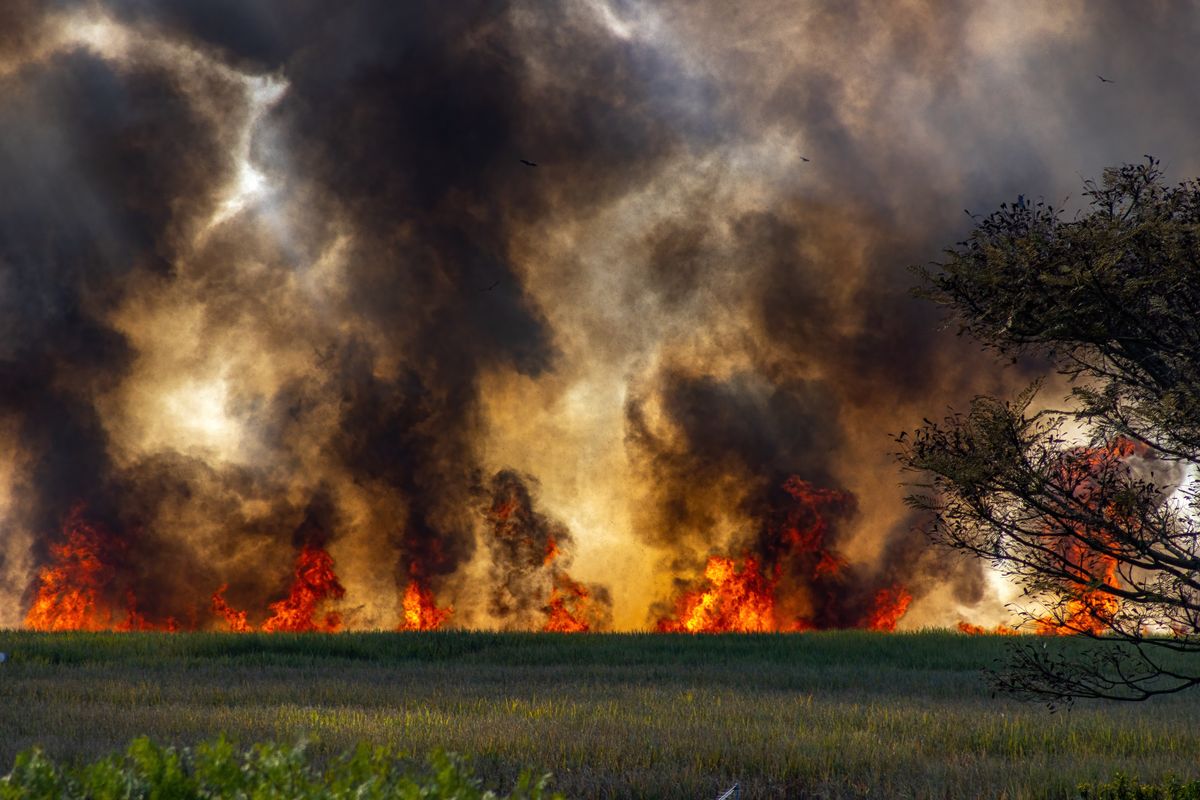
The most dramatic U.S. emergency unfolded in Minnesota’s Boundary Waters Canoe Area Wilderness, where approximately 17 lightning-sparked fires forced authorities to close a remote recreation area covering 1.1 million acres. Rangers estimated that between 6,000 and 10,000 campers were inside when evacuation efforts began.
By Wednesday, officials said roughly 90% of the campers had been removed without any reported deaths or serious injuries. Rangers traveled across lakes and portage routes to find visitors who could only leave by canoe, boat, or hours of hiking through an area nearly the size of Delaware.
One family said conditions changed in about 2 hours, from light smoke on the horizon to flames burning on both sides of their escape route. Canadian authorities also helped rescue 2 groups of young campers who had crossed the international border, including one group trapped on an isolated sandbar.
Hazardous Air Spreads Across Minnesota and Wisconsin
In northeast and east-central Minnesota, air-quality alerts warned that the Air Quality Index could reach the maroon (hazardous) category, with values above 300. Northwest Minnesota was expected to reach the purple (very unhealthy) range of 201 to 300, where smoke can affect everyone.
The warnings remained in effect until 11 a.m. Friday, with trace amounts of ash possible in some areas. Central and southeastern Minnesota were expected to experience red-level air between 151 and 200, while parts of northwest Wisconsin faced unhealthy to hazardous conditions through the workweek.
The smoke arrived alongside temperatures in the 90s, with heat-index readings approaching 100 degrees in the Twin Cities. That combination created a difficult choice for households without cooling because opening windows could bring dangerous particles indoors, while keeping them closed could intensify heat exposure.
New York Air Quality Reaches Unhealthy Levels
After passing through the Great Lakes, the smoke reached western and north-central New York, where forecasters expected AQI readings between 151 and 200. At that level, everyone may begin experiencing health effects, while children, older adults, and people with heart or lung conditions face greater risks.
New York City ranked No. 5 among major global cities for poor air quality on Wednesday, while Toronto ranked first. Environment Canada recorded an Air Quality Health Index of 10+, its highest risk category, as thick smoke covered Canada’s largest city.
The timing created another concern for the New York metropolitan area. More than 80,000 spectators were expected at Sunday’s World Cup final in an open-air stadium in New Jersey, while another 50,000 people were preparing to attend a public viewing event in Manhattan’s Central Park.
Toronto had already canceled 2 major soccer-related events, including its FIFA Fan Festival and an England-Argentina watch party, because of the air-quality emergency. U.S. organizers were watching forecasts closely as meteorologists warned that smoke could remain over the region through Thursday night or later.
Both Countries Reach Preparedness Level 4
The smoke crisis is unfolding while wildfire crews on both sides of the border are already under heavy pressure. Canada was operating at National Preparedness Level 4, a designation indicating significant fire activity and elevated demand for firefighters, aircraft, and equipment.
The United States was also at Preparedness Level 4 on July 15. The National Interagency Fire Center reported 48 uncontained large fires, 108 new initial-attack fires, 4 new major incidents, and 16 committed incident-management teams across the country.
That creates a broader challenge than a single drifting smoke plume. About 4 dozen large U.S. fires were burning across 15 states, including California, Oregon, Idaho, Utah, Colorado, North Carolina, and Minnesota, meaning firefighting resources were already being pulled in several directions.
The scale is especially striking because Canada said its overall 2026 fire season remained below the 5-year average in early July. The contrast shows how quickly conditions can deteriorate when extreme heat, drought, lightning, and strong winds ignite multiple regions simultaneously.
The Greatest Threat Is Smaller Than 2.5 Micrometers
The most dangerous part of wildfire smoke is often invisible. Fine particulate matter known as PM2.5 measures 2.5 micrometers or smaller, allowing the particles to travel deep into the lungs and, in some cases, enter the bloodstream.
These particles can trigger coughing, shortness of breath, fatigue, and dizziness, and worsen asthma, heart disease, and other chronic conditions. During the Canadian smoke emergency of June 2023, CDC researchers examined asthma-related visits across 134 New York emergency departments outside New York City after AQI levels reached unhealthy or very unhealthy categories.
The 2023 smoke event also exposed more than 86 million Americans to fine-particle pollution above the federal health standard, according to NOAA. That figure illustrates why smoke from hundreds of distant fires can become a national health emergency even when no flames are visible nearby.
An N95 Can Help, but Indoor Air Matters More
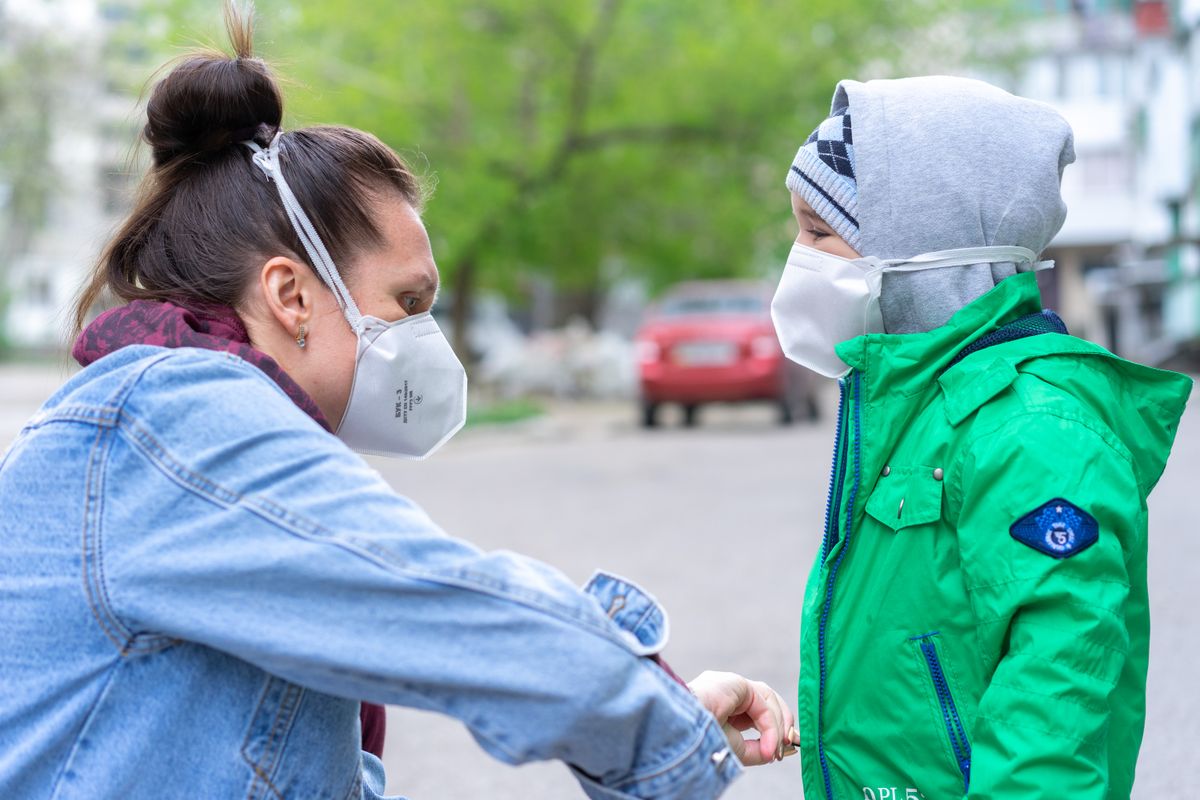
When AQI rises above 150, residents should reduce prolonged or intense outdoor activity. At values above 200, the risk increases for everyone, and readings above 300 are classified as hazardous emergency conditions.
A properly fitted NIOSH-approved N95 or P100 respirator can reduce exposure when going outside is unavoidable. Loose surgical masks, scarves, and single-strap coverings do not provide the same protection because they do not form a tight seal around the face.
Inside homes, the EPA recommends closing windows, setting air-conditioning systems to recirculate, and using a MERV 13 or higher filter when the HVAC system can safely handle it. Running the system’s fan continuously can increase filtration, while candles, smoking, frying food and vacuuming can add more particles to already polluted indoor air.
The immediate smoke plume will eventually shift, but the larger warning will remain. With 835 Canadian fires, 48 uncontained U.S. fires and air-quality alerts stretching across thousands of miles, wildfire smoke is becoming more than a Western or Canadian problem. It is increasingly a summer reality for American cities that once considered themselves safely removed from the flames.
This version keeps the numerical hooks tied to reported or official data rather than adding unsupported statistics.