Bishop Sparks Debate After Calling Europe’s Migration Crisis an “Invasion” and Warning of Cultural Change
A controversial statement from Catholic Bishop Athanasius Schneider has reignited one of Europe’s most heated debates: how the continent should respond to migration and changing demographics.
In remarks that quickly spread online, Schneider argued that the arrival of large numbers of migrants, particularly Muslims, should not be viewed simply as a refugee movement. He described it as something far more serious, saying, “They are not refugees, they are invaders who want to Islamize Europe. They want to destroy historical culture in Europe.”
The comments have drawn strong reactions from supporters who say European nations must protect their cultural and religious traditions, while critics argue the language risks painting entire communities with the same brush.
The debate reflects a much larger conversation happening across Europe about immigration, national identity, integration, and the future role of Christianity in a rapidly changing society.
Bishop Schneider’s Warning About Europe’s Future
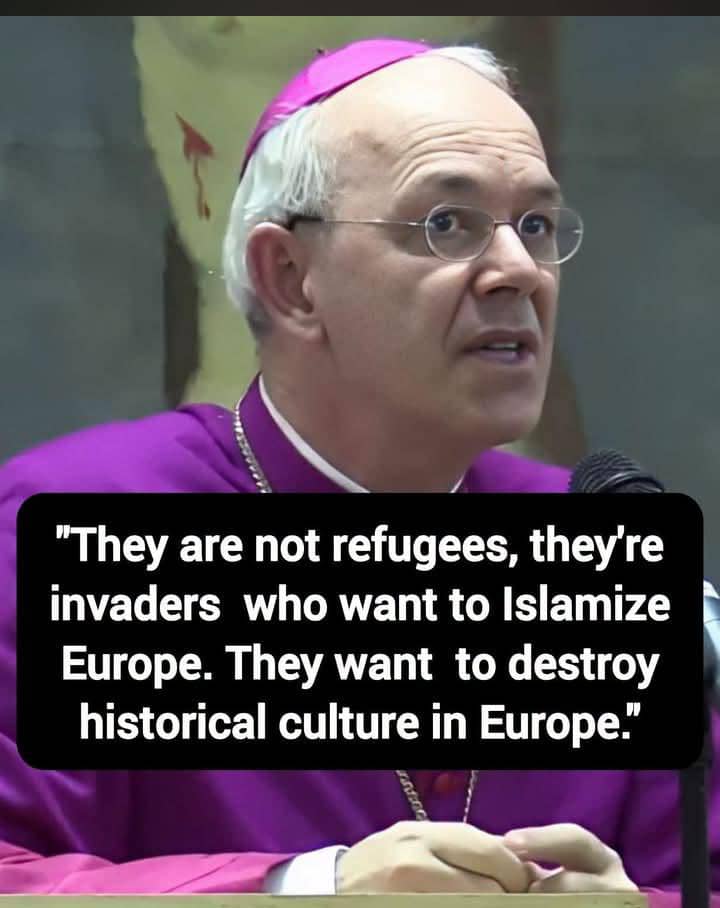
Bishop Athanasius Schneider, an auxiliary bishop from Kazakhstan, has become known for his traditional views on religion, culture, and social issues. In his remarks, he said Europe was facing a cultural and religious transformation linked to decades of migration.
“This is very serious. Now we are observing an invasion,” Schneider said, according to the recording of his comments. He added that he believed Europe was experiencing “the maximum Islamization” of the continent.
The bishop also argued that Europe’s declining birth rates among native populations and higher birth rates among some immigrant communities could change the continent’s religious balance over time. He suggested that demographic trends could have major consequences for Christianity’s influence in Europe.
However, these claims remain part of a broader political and cultural debate. Demographers and migration experts have repeatedly noted that population changes are influenced by many factors, including birth rates, economic conditions, citizenship patterns, and intergenerational integration.
Europe has experienced significant migration movements in recent decades, including people fleeing war, persecution, and economic hardship. The arrival of refugees from conflicts such as the Syrian civil war created major political disagreements among European governments over border policies, asylum systems, and integration.
For Schneider and others who share his concerns, the issue is not only about immigration numbers but also about preserving Europe’s historic Christian identity.
Migration Debate Divides Europe
Schneider’s comments come during a period when migration remains one of the most politically sensitive issues across Europe.
Many European countries have struggled to balance humanitarian responsibilities with concerns about housing, public services, security, and social integration. Political parties on both the left and right have debated different approaches, from expanding refugee protections to tightening border controls.
Supporters of stricter immigration policies often argue that rapid demographic change can place pressure on national traditions and social systems. They say governments have a responsibility to protect cultural heritage while managing migration.
On the other side, many humanitarian organizations and political leaders argue that migrants and refugees should not be treated as a threat simply because of their religion or background. They emphasize that many people arriving in Europe are escaping violence, conflict, and difficult living conditions.
The World Health Organization’s Director-General Tedros Adhanom Ghebreyesus criticized Schneider’s remarks, calling for compassion toward migrants and warning against portraying migration as a religious conflict.
The Catholic Church itself has also historically emphasized care for migrants. Previous church leaders, including Pope Francis, have called on European nations to respond to refugees with compassion while also recognizing the challenges communities face.
This difference in approach highlights a major tension in discussions about migration: whether the issue should be viewed primarily through the lens of security and cultural preservation or through the lens of humanitarian responsibility.
A Debate Over Christianity, Identity, and Change

At the heart of Schneider’s comments is a question that has become increasingly important across Europe: what does it mean to preserve a nation’s identity in a changing world?
For many Europeans, Christianity remains closely connected to history, traditions, architecture, holidays, and cultural practices. Some believe declining religious participation and increased immigration threaten that connection.
Others argue that European identity has always evolved through movement, exchange, and cultural mixing. They point out that Europe’s history includes centuries of migration, changing borders, and interactions between different civilizations.
The discussion has also raised questions about the difference between protecting cultural traditions and making broad claims about religious groups.
While Schneider has focused on concerns about Islam’s growing presence in Europe, millions of Muslims living across the continent are citizens, workers, and members of local communities. Their experiences vary widely depending on country, generation, and social background.
The controversy surrounding Schneider’s remarks shows how deeply emotional the migration debate remains. Questions about faith, culture, and national identity continue to shape elections, public conversations, and government policies across Europe.
Regardless of political views, the debate reflects a major challenge facing modern Europe: how to preserve historical traditions while responding to the realities of a changing population.