Pete Buttigieg Reportedly Weighs 2028 Presidential Bid as Early Polls Put Him Out Front
Pete Buttigieg is not officially running for president. He is, however, making it increasingly difficult for anyone to believe that another White House campaign is far from his mind.
The former transportation secretary has returned to politically important states, campaigned for Democratic candidates and repeatedly declined opportunities to shut down speculation about 2028. Most recently, when a reporter asked whether he would rule out another presidential campaign, Buttigieg delivered a remarkably efficient answer: “Nope.”
That single word does not amount to a campaign announcement. Combined with his travel schedule, political endorsements, fundraising network and strong early polling, however, it explains why Democratic insiders and voters are already treating him as a serious potential contender.
Buttigieg Is Leaving the Door Deliberately Open
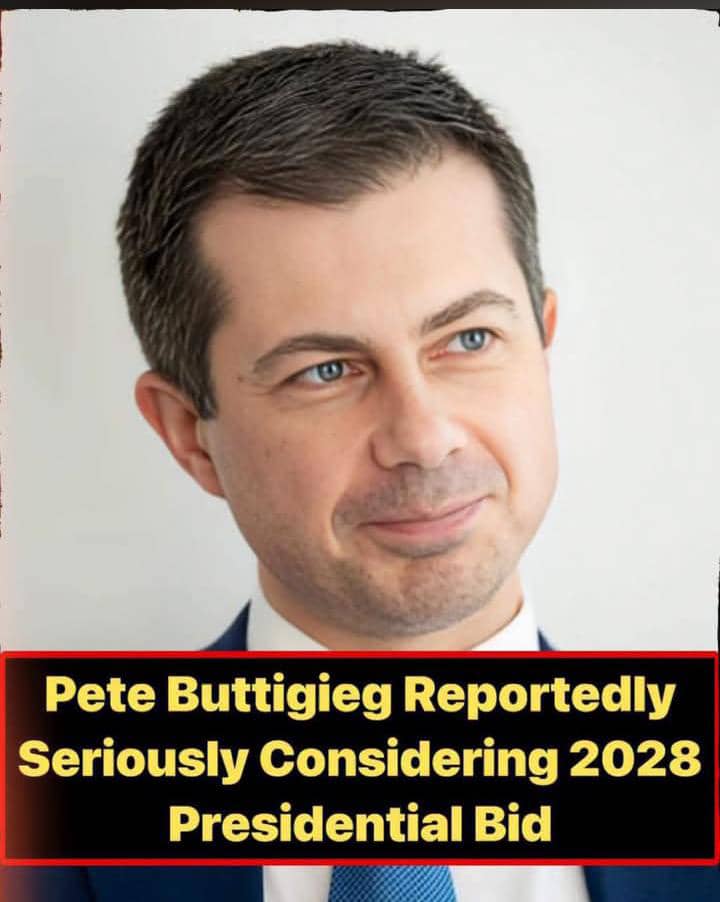
Buttigieg’s latest teasing came during a July visit to Iowa, the state that transformed him from the relatively unknown mayor of South Bend, Indiana, into a national political figure during the 2020 Democratic presidential contest.
After helping congressional candidate Sarah Trone Garriott rally phone bank volunteers in Des Moines, Buttigieg was asked directly whether he would rule out running for president in 2028. His one-word response quickly became the headline.
He then steered the conversation back toward the upcoming midterm elections.
“I’m super focused on this year’s election,” Buttigieg said, adding that “the future will come” after Democrats deal with the important elections immediately in front of them.
It was classic political choreography. Buttigieg did not announce anything, promise anything or commit himself to a deadline. He also did not close the door.
That was not his first carefully delivered hint. During an April appearance at the National Action Network convention, the Rev. Al Sharpton asked whether he should reserve another table at Sylvia’s restaurant, where the pair had met during Buttigieg’s first presidential campaign.
“You save me a seat. I’ll be there,” Buttigieg replied as the audience cheered. A spokesperson later said there was nothing to add beyond his remarks.
While campaigning for Michigan gubernatorial candidate Jocelyn Benson in July, Buttigieg offered another line that caught the attention of presidential campaign watchers. Referring to the White House, he told supporters, “There’s only so much we can do about that at the moment, but believe me, I’m working on that.”
One teasing remark can be dismissed as a joke. Several of them, delivered during stops around the country, begin to look more like a strategy.
Early Polls Give Buttigieg Something to Think About
There is another reason Buttigieg may be seriously considering the race. At this very early stage, Democratic voters appear willing to give him a close look.
An Emerson College Polling survey released on July 23 placed Buttigieg at the top of a hypothetical 2028 Democratic primary field with 19 percent support. California Gov. Gavin Newsom followed with 17 percent, while Sen. Jon Ossoff and Rep. Alexandria Ocasio-Cortez each received 13 percent. Former Vice President Kamala Harris registered 8 percent, and 13 percent of Democratic primary voters remained undecided.
The poll was conducted from July 19 to July 20 among 1,100 likely voters. The Democratic primary figures represent an early snapshot, not a prediction of an election still more than two years away.
Still, Buttigieg’s position is not based on a single lucky survey. Emerson’s May poll also placed him first, with 18 percent, ahead of Newsom at 16 percent.
Those results suggest Buttigieg has maintained much of the national profile he built during his 2020 campaign and his four years leading the Department of Transportation under President Joe Biden.
His first campaign demonstrated both his appeal and his limitations. Buttigieg performed strongly in Iowa, but the chaotic reporting process prevented The Associated Press from declaring an official winner. He later struggled to build comparable support among Black voters, a weakness that would receive intense scrutiny in any second campaign.
Buttigieg would also enter a potentially crowded Democratic primary. Newsom, Harris, Ocasio-Cortez, Pennsylvania Gov. Josh Shapiro, Kentucky Gov. Andy Beshear and other prominent Democrats have all generated varying levels of 2028 speculation.
At the National Action Network convention, Harris was more direct than most when Sharpton asked about her own plans.
“I might,” Harris said. “I’m thinking about it.”
In other words, Buttigieg may be leading some early polls, but he is certainly not standing alone at the starting line.
A Second Campaign Would Be Very Different
Buttigieg would begin a 2028 race with advantages he did not possess when he launched his long-shot campaign in 2019.
He now has Cabinet-level experience, a national donor network, millions of social media followers and years of practice defending Democratic positions on television, including during appearances on conservative outlets. The Associated Press has described him as one of the party’s strongest communicators, particularly when explaining complicated policies in ordinary language.
He has also kept himself available. In March 2025, Buttigieg declined to run for Michigan’s open Senate seat, a decision that left him free to prepare for a possible national campaign rather than become tied to another election and office.
However, greater recognition brings greater baggage. Republicans would connect him directly to the Biden administration and scrutinize his handling of aviation disruptions, infrastructure spending, rail safety and other transportation controversies. Democratic rivals would likely question whether a former mayor and Cabinet secretary has enough executive experience for the presidency.
He would also need to show that he can build a broader coalition than he assembled in 2020. Strong television performances and early polling numbers can create excitement, but Democratic nominees need durable support across racial, ideological, geographic and generational groups.
For now, Buttigieg is concentrating publicly on helping Democrats in the 2026 midterms. In an April interview with the Harvard Political Review, he said the best thing he could do was make himself useful to campaigns and causes he believes in, regardless of what his next personal step might be.
That answer allows Buttigieg to travel, raise money, strengthen political relationships and test messages without behaving like a declared presidential candidate.
No paperwork has been filed, no campaign staff has been announced, and no official decision has been made. But when a politician visits early battlegrounds, skips other major races, leads national primary polling and repeatedly refuses to rule out the presidency, speculation is hardly surprising.
Pete Buttigieg may not be running for president yet. He is certainly making sure Americans remember that he could.