Abdul El-Sayed’s Michigan Senate Victory Signals a New Battle Over Israel Policy, Progressive Politics and the Future of the Democratic Party
The political landscape in Michigan shifted dramatically after voters delivered a major upset in the Democratic Senate primary, propelling Abdul El-Sayed to victory over Rep. Haley Stevens in a race that became a national spotlight for debates over Israel policy, grassroots power, and the influence of outside political spending.
The image of voters casting ballots in Dearborn, Michigan, carried special significance. Dearborn is known for having one of the largest Muslim populations by proportion of any U.S. city, making it a closely watched community during a campaign where the war in Gaza and U.S. policy toward Israel became central issues.
El-Sayed’s projected victory was not simply another primary result. It represented a deeper struggle inside the Democratic Party between its progressive wing and its more traditional establishment, with questions about foreign policy, campaign money, and voter priorities shaping the entire contest.
A Primary Race That Became a National Political Test
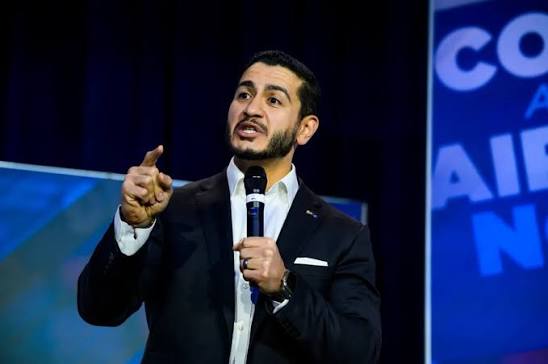
Abdul El-Sayed entered the Michigan Senate primary as a progressive candidate with a long record in public health and government service. A former director of the Detroit Health Department and Wayne County health official, he built his campaign around issues including healthcare access, economic inequality, and reducing the influence of wealthy donors in politics.
His opponent, Rep. Haley Stevens, represented a more traditional Democratic approach. Stevens, a member of Congress from Michigan, emphasized manufacturing, economic development, and her ability to compete in a crucial swing state. She also had support from many prominent Democratic figures and outside groups.
But the race quickly became about more than domestic policy. Israel’s war in Gaza and America’s relationship with Israel became defining issues among Democratic voters. El-Sayed criticized U.S. support for Israel’s military campaign and argued that American foreign policy needed a major shift.
Stevens, meanwhile, maintained a strong pro-Israel position while also criticizing Israeli Prime Minister Benjamin Netanyahu’s leadership and policies. The disagreement highlighted a growing divide within the Democratic Party over how the United States should approach one of its most sensitive international relationships.
The AIPAC Spending Battle Became a Major Campaign Story

One of the biggest storylines of the Michigan primary was the role of the American Israel Public Affairs Committee, commonly known as AIPAC, and affiliated groups. These organizations spent tens of millions of dollars supporting Stevens, making the race one of the largest tests of outside political spending in a Senate primary.
Supporters of the spending argued that voters deserved candidates who supported a strong U.S.-Israel relationship. Critics argued that massive outside spending risked overwhelming grassroots voices and turning elections into contests of financial power rather than public debate.
For El-Sayed, the spending became part of his message. He portrayed the campaign as a fight between grassroots organizing and powerful political networks. His supporters argued that voters were rejecting the idea that large financial investments could automatically determine election outcomes.
The result challenged assumptions about the influence of political spending. Despite being heavily outspent, El-Sayed built support through volunteers, progressive organizations, and voters who connected with his message.
Dearborn’s Role Highlighted the Changing Political Landscape
The significance of Dearborn extended beyond geography. The city became a symbol of how foreign policy issues can influence local elections, especially in communities with strong connections to global events.
Michigan has one of the largest Arab American populations in the country, and many voters in these communities have expressed frustration over U.S. policy toward the conflict in Gaza. The Senate primary showed that those concerns could play a major role in shaping political outcomes.
However, the election was not only about Israel. El-Sayed also campaigned on healthcare reform, economic fairness, and expanding government programs designed to help working families. His message appealed to voters who believe the Democratic Party should move further left on both economic and foreign policy issues.
His victory now raises broader questions about whether progressive candidates can translate primary victories into general election success, especially in competitive states like Michigan.
A New Chapter Begins Before the General Election
While winning the Democratic nomination represents a major achievement, El-Sayed’s next challenge will be even more difficult. He is expected to face Republican nominee Mike Rogers in the general election, a contest likely to attract national attention because Michigan is considered a key battleground state.
The Senate race will test whether El-Sayed’s progressive coalition can expand beyond the Democratic primary electorate. Supporters believe his message of healthcare reform, economic justice, and political independence can attract a broad group of voters. Critics argue that his positions could create challenges in a politically divided state.
Regardless of the November outcome, the Michigan primary has already made history. It demonstrated that issues once considered too controversial for mainstream campaigns can now become central to major elections.
Abdul El-Sayed’s victory represents more than a single candidate’s success. It reflects a changing Democratic electorate, a growing debate over America’s role in global conflicts, and a renewed challenge to the power of traditional political machines. Michigan voters sent a message that grassroots energy still matters — and that the future direction of American politics remains fiercely contest