6 Ways to Make Green Beans Taste So Good, You’ll Forget They’re a Side Dish
Green beans are rarely the problem, how you cook them usually makes them boring.
A good green bean can be crisp and fresh, blistered around the edges, silky from a slow braise, or coated in garlic butter and lemon. The secret is choosing the right cooking method, then adding flavors that complement the vegetable. Fresh beans do not need soaking before cooking; rinse, trim the stem ends, and dry them well when using a high-heat method.
If you are trying to make vegetables more enjoyable at home, even a few simple cooking habits can make a surprisingly big difference.
Roast Them Until the Edges Brown
High heat turns ordinary green beans into something caramelized, savory, and much more exciting.
Toss trimmed beans with olive oil, salt, pepper, and garlic, then spread them across a baking sheet in a single layer. Give them room because overcrowding traps moisture and makes the beans steam instead of brown. A 375°F–425°F oven works well, letting the beans soften while developing browned, slightly crisp edges.
Once they come out, add lemon zest, Parmesan, toasted almonds, or chili flakes. The combination of roasted edges and a bright finishing ingredient is especially good alongside roast chicken, fish, or potatoes. A detailed roasting method shows just how much difference browning can make.
Give Them the Garlic-Butter Treatment
Sometimes green beans only need butter, garlic, and the right texture to become the star of the plate.
Blanch the beans briefly in generously salted boiling water, then transfer them to ice water. This stops the cooking, keeps the color bright, and leaves the beans crisp-tender rather than mushy. Drain and dry them thoroughly, then finish them in a skillet with butter, garlic, black pepper, and lemon zest.
Blanching is especially useful when you are cooking for guests because you can prep the beans ahead and quickly warm them in the skillet. The important thing is not to boil them until they lose their snap.
Blister Them in a Hot Pan
If you love smoky, charred vegetables, let the skillet do the hard work.
Heat a large skillet until properly hot, add a little oil, and let the beans sit long enough to develop dark spots before turning them. Constant stirring prevents that deep browning, while a little patience gives the skins a wrinkled, blistered texture.
From there, you can take the flavor in almost any direction. Add garlic and red-pepper flakes for heat, sesame seeds and ginger for nuttiness, or lemon and Parmesan for something brighter. Drying the beans first helps, because surface moisture can work against the browning you want.
Bring in Bacon and Onions
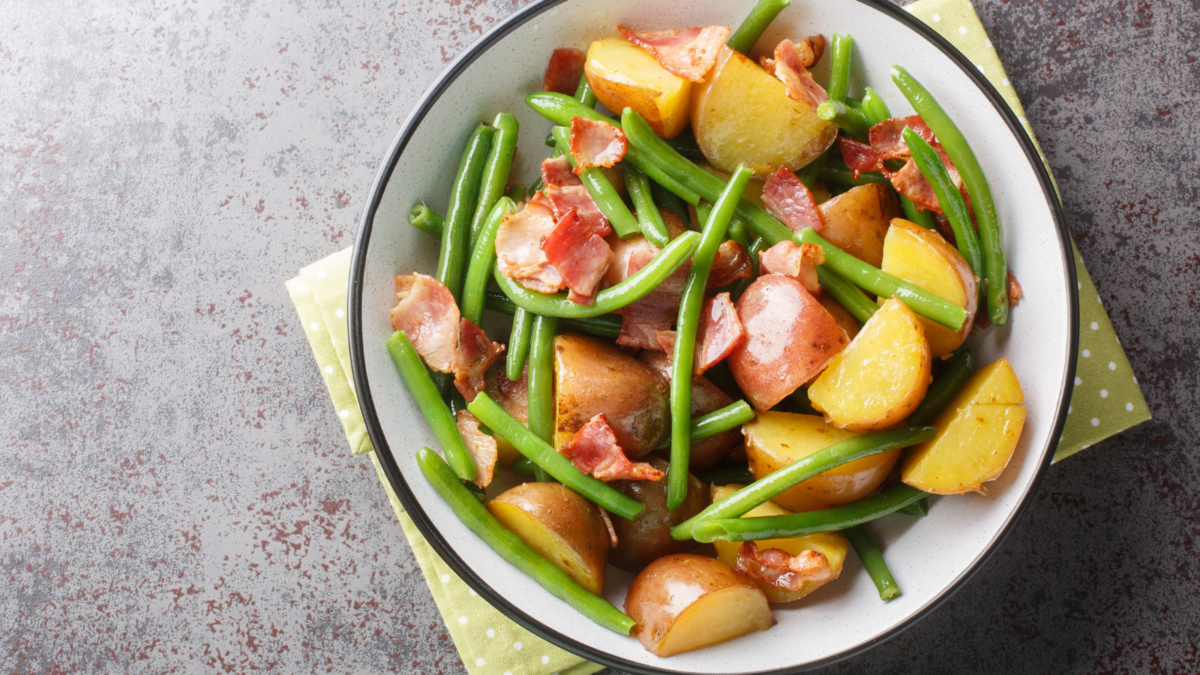
Smoky bacon and sweet onions can make green beans feel like a completely different dish.
Cook chopped bacon until crisp, then use some of the rendered fat to soften sliced onions or shallots. Add the beans and toss to coat them in those salty, savory flavors. A splash of vinegar at the end can cut through the richness and keep the dish from tasting heavy.
If you don’t eat bacon, mushrooms make a useful substitute because they bring their own deep, savory flavor. Toasted walnuts or almonds can add another layer of texture.
Go Soy, Ginger, and Chili
A few Asian-inspired ingredients can turn green beans into a bold dish rather than a predictable side.
Sear the beans in a hot skillet, then add fresh ginger, garlic, soy sauce, and a little toasted sesame oil. Finish with chili crisp or sliced fresh chili, sesame seeds, and scallions. A small splash of rice vinegar at the end provides acidity and keeps the salty sauce from overwhelming the beans.
This combination works particularly well with rice, noodles, grilled chicken, or tofu. A soy-glazed green bean technique also shows why blanching before the final sauté can help keep the beans crisp while letting the sauce cling to them.
Slow-Braise Them Until Silky
Not every delicious green bean needs to stay crunchy—the slow-cooked version has an entirely different appeal.
For a softer, richer dish, simmer the beans gently with garlic, onions, herbs, tomatoes, or broth until tender and infused with the surrounding flavors. Braising takes longer than roasting or sautéing, but the reward is a vegetable that tastes deeply seasoned rather than coated with seasoning. A little lemon or olive oil at the end can bring the flavors back into balance.
This method works especially well when you want green beans to accompany roast meats or be part of a comforting dinner rather than a quick vegetable side.
The Real Secret Is Texture
Once you stop treating every green bean the same way, the vegetable becomes much more interesting.
Steaming and blanching preserve a fresh, snappy quality, roasting and blistering create browned edges, and braising produces a soft, silky texture. Even the same beans can feel like completely different dishes depending on what happens in the pan.
That flexibility is what makes green beans worth keeping around, especially when you pair them with other foods that add flavor and variety. You do not need an elaborate recipe—just enough heat, seasoning, and contrast to give the beans somewhere interesting to go.
Which would you make first: crispy roasted green beans, garlic-butter beans, smoky blistered beans, bacon and onions, spicy soy-ginger beans, or slow-braised green beans?