10 “All-American” Foods Most Americans Have Never Actually Tasted
American food has plenty of familiar favorites, but regional cooking can look very different from one state to another. Some local dishes take everyday ingredients and combine them in ways that are hard to find outside their home regions.
Think chow mein tucked into a hamburger bun, chicken cooked with rice and sausage, or barbecue chicken finished with a creamy white sauce. These 10 foods show how local traditions can turn ordinary ingredients into dishes with a strong regional identity.
Fall River chow mein sandwich
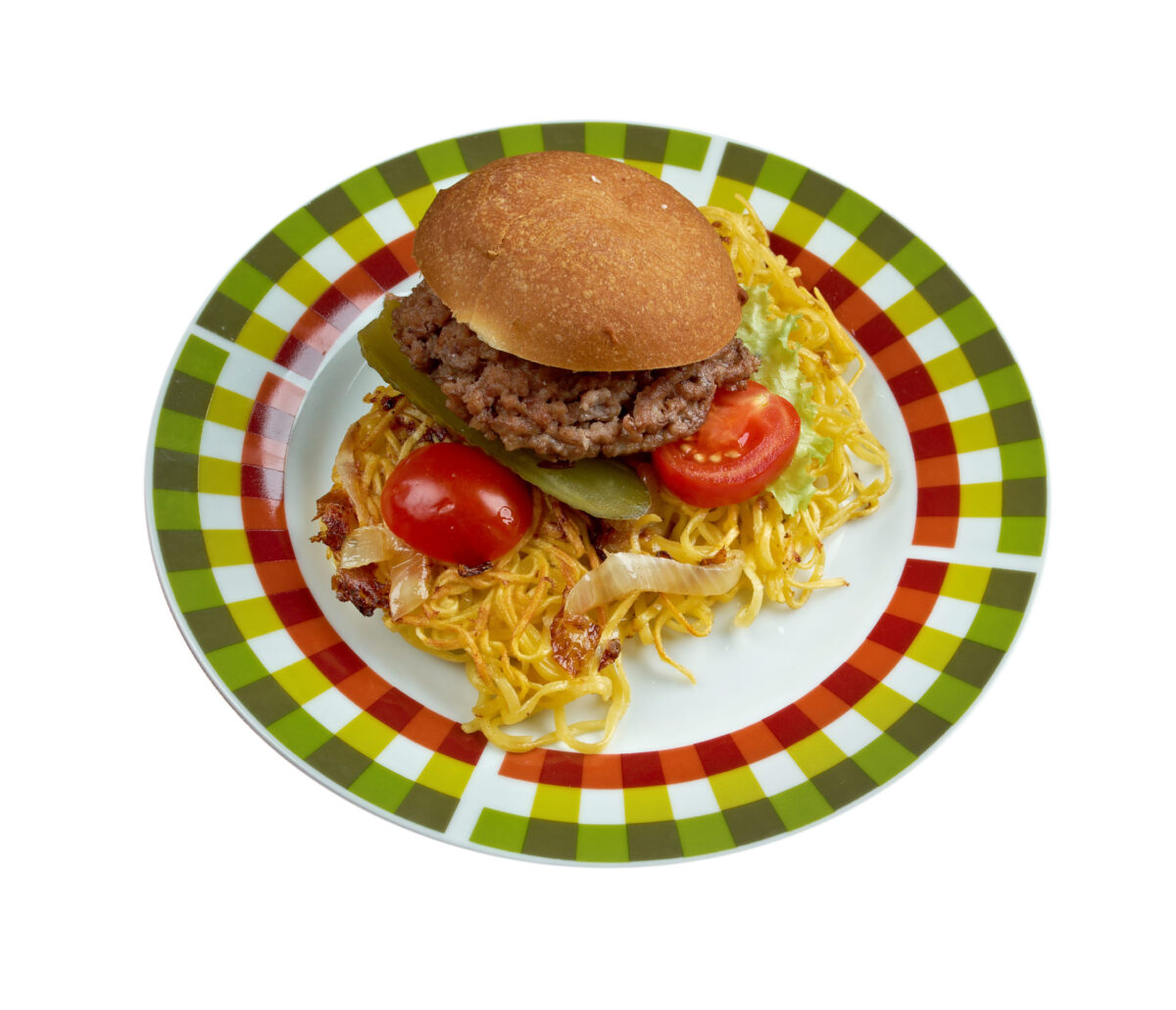
A hamburger bun is not the first place most people expect to find crunchy chow mein noodles, but that is exactly what makes this Fall River, Massachusetts, specialty so memorable. Fried noodles are covered with brown gravy that can include celery, onions, bean sprouts, and meat such as pork, chicken, beef, or shrimp, then tucked into a bun.
The combination is all about contrast. You get crisp noodles, soft bread, and gravy that soaks into the bun and noodles. It can even become more of a fork-and-plate meal than something you casually eat with one hand. The sandwich grew out of the Chinese restaurant tradition in a New England textile-mill community.
Chicken bog
Chicken bog takes chicken, smoked sausage, and rice and brings them together in one hearty pot. The rice cooks in chicken stock, giving the finished dish a softer, wetter texture than a typical rice pilaf.
A traditional preparation starts with a whole chicken simmered in water, followed by removing and deboning the meat. The chicken goes back into the cooking liquid with rice and sliced sausage, allowing the broth to become part of the entire dish. The dish is closely associated with South Carolina’s Horry County and Pee Dee region, where Loris has held its Bog-Off Festival since 1979.
Rhode Island stuffies
Stuffies make the clam shell part of the serving dish. Chopped quahog clams are combined with breading and seasonings, packed back into their shells, and baked until the filling is hot and the top is golden.
That makes them quite different from simply serving whole clams. Quahogs are hard-shell clams harvested in Rhode Island waters, giving stuffies a direct connection to the state’s coastal food traditions. A buttery finish over the filled shells adds another layer to the browned top.
Lansing’s olive burger
The olive burger begins with an American classic: a beef burger. Then comes the regional twist, a creamy mayonnaise mixture filled with olives and spread over the patty.
The olives are not just a little garnish sitting on top. They are central to the sandwich’s flavor and identity. The combination is especially associated with Greater Lansing, Michigan, where restaurants in Lansing and East Lansing serve it, and an Olive Burger Festival celebrates the local favorite.
Saimin
Saimin is a Hawaiʻi noodle soup that brings together noodles, broth, and toppings such as char siu pork, egg, green onion, and fishcake. It reflects the islands’ multicultural food traditions while having a character of its own.
The noodles are important enough that some restaurants make them themselves. There is also a related preparation called dry mein on Maui, where the broth is served separately rather than surrounding the noodles. That simple change creates a noticeably different way to enjoy the same basic combination.
Alabama white-sauce barbecue chicken
Barbecue does not always mean a red sauce. In northern Alabama, smoked chicken is famously paired with a pale sauce made with mayonnaise and vinegar.
At Big Bob Gibson Bar-B-Q in Decatur, the combination brings together hickory-smoked chicken and a peppery, tangy sauce. The restaurant dates to 1925, and its white sauce became a regional signature. Although the sauce is now used with other meats too, chicken remains one of its defining pairings.
Pork roll, egg and cheese
New Jersey has its own answer to the breakfast sandwich: griddled pork roll, egg and melted cheese served on a roll or bagel. The pork roll is seasoned, cured, and smoked before being sliced and cooked, giving the sandwich a different foundation from one made with ordinary ham.
There is even a regional disagreement over what to call the meat. “Taylor ham” is particularly associated with northern New Jersey, while “pork roll” is common farther south. Taylor is a brand, but the naming debate has become part of the sandwich’s identity.
Carne adovada
Carne adovada puts pork and New Mexico red chile at the center of the meal. The meat is slowly cooked with the chile, creating a dish where the pork and sauce become deeply connected rather than appearing as separate toppings.
In Albuquerque, restaurants such as Mary & Tito’s and Sadie’s serve established versions. Duran Central Pharmacy pairs its slow-cooked carne adovada with handmade flour tortillas, making the tortillas an important part of the meal rather than an afterthought.
Utah funeral potatoes
The name may sound serious, but funeral potatoes are essentially a creamy, cheesy potato casserole with a crunchy topping. A familiar version combines hash-brown potatoes, cheddar, and cream of chicken soup before adding a cereal topping.
The dish is strongly associated with Utah church dinners, potlucks, and Latter-day Saint food traditions. It is not limited to funeral gatherings, though. The casserole also belongs to the broader tradition of preparing food for groups and community events. Some versions are even called party potatoes.
Minnesota tater tot hotdish
Minnesota’s tater tot hotdish takes the classic casserole format and gives it an unmistakable potato finish. Beneath the layer of tots is a creamy, savory filling, while the crisp-topped potatoes make the dish instantly recognizable.
The basic format also leaves plenty of room for variation. Documented restaurant versions have included beef gravy with smoked gouda as well as combinations featuring caramelized Brussels sprouts, truffle oil, and béchamel. The ingredients can change considerably, but once those tater tots form the signature top, the Minnesota identity remains easy to recognize.
From a chow mein sandwich in Massachusetts to a noodle soup in Hawaiʻi, these dishes show just how regional American food can be. Sometimes the most surprising part is not the ingredient itself, but what a particular community decided to do with it.