6 Things to Know Before Buying a Christmas Ham
For many American families, Christmas dinner isn’t complete without a glistening ham at the center of the table. Studded with cloves, glazed with brown sugar or honey and surrounded by pineapple rings, it’s a tradition that goes back generations. It’s also one of the easiest holiday mains to serve, since many hams come fully cooked.
But walk up to the meat case in December, and the choices can be overwhelming. There are spiral-sliced hams, bone-in and boneless hams, city hams and country hams, and labels with words like “water added” and “fully cooked.” Pick the wrong one, and you might end up with a ham that’s too salty, too dry or simply too small for your crowd.
A little knowledge before you shop can save you money and stress, and help you put the best ham possible on the table. Here are six things to know before buying a Christmas ham this year.
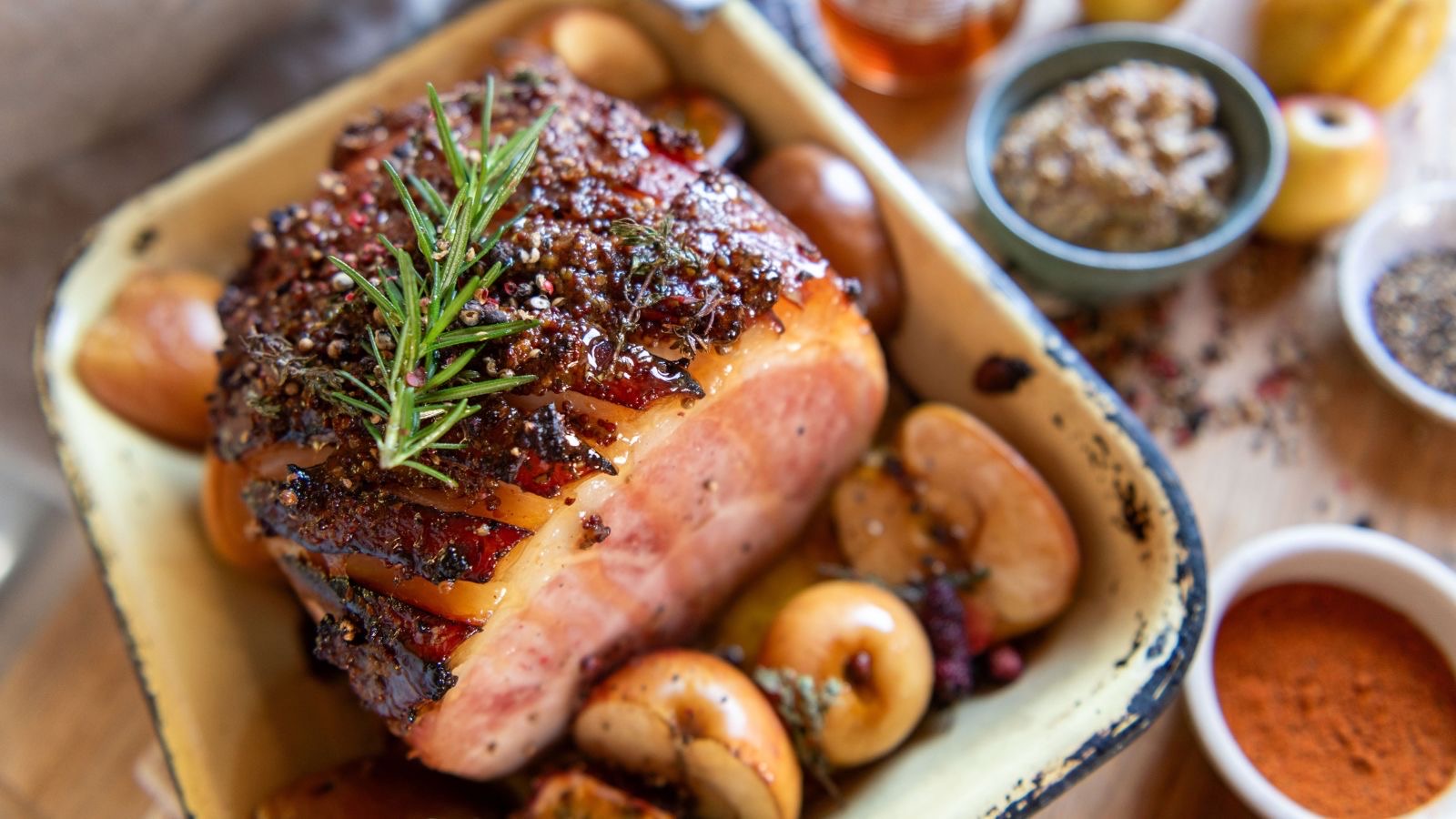
1. City Ham and Country Ham Are Very Different
Most hams sold in supermarkets are what’s known as city hams. They’re wet-cured in a brine, often smoked and usually sold fully cooked. They have a mild, slightly sweet flavor and a moist texture, which makes them the classic choice for Christmas dinner.
Country hams are a whole different experience. These are dry-cured with salt for one to three months and then aged, sometimes for many months or even years, according to the history of country ham. They’re intensely salty and firm, a Southern specialty that’s often soaked before cooking and served in thin slices. If you’re expecting a traditional glazed ham, make sure you’re not accidentally buying a country ham.
2. Bone-In Usually Has More Flavor
Bone-in hams tend to have more flavor and stay moister during reheating, because the bone helps conduct heat and adds richness. They also look impressive on a platter. The leftover bone is a bonus, perfect for making split pea soup, bean soup or a pot of greens.
Boneless hams are easier to slice and take up less room in the oven and refrigerator. They’re a good choice for smaller gatherings or for families who want quick, uniform slices. However, many cooks find they can be a little less juicy, since they’re often pressed and shaped during processing.
3. Spiral-Sliced Hams Save Time
Spiral-sliced hams are pre-cut in one continuous spiral around the bone, which makes serving incredibly easy. You simply cut along the bone, and the slices fall away. The style was popularized by the Honey Baked Ham Company, which started in Detroit in 1957 and became famous for its spiral-cut, glazed hams.
The trade-off is that spiral hams can dry out more easily because the slices are exposed to heat. To keep it moist, many cooks wrap the ham tightly in foil, place it cut side down in the pan and reheat it gently at a low oven temperature. Adding the glaze only at the end helps too.
4. Read the Label Carefully
Ham labels can tell you a lot about what you’re buying. A ham labeled simply as “ham” contains no added water beyond what was lost in curing. “Ham with natural juices” has a bit of added moisture, while “ham, water added” and “ham and water product” contain more added water, which affects both texture and price per pound.
These names are set by federal labeling rules, and America’s Test Kitchen explains the differences in its guide to water-added ham. Hams with more added water may seem like a bargain, but you’re paying for some of that water. Checking the label helps you compare real value. It’s also worth noting whether the ham is smoked, since smoked hams have a deeper, richer flavor that many families prefer for the holidays.
5. Know Whether It’s Fully Cooked
Many hams sold at Christmas are fully cooked, which means they only need to be reheated before serving. Others are labeled “cook before eating” and must be cooked thoroughly. The difference matters, so check the label before you start.
According to the USDA, fully cooked hams packaged in federally inspected plants can be reheated to an internal temperature of 140°F, while hams that need cooking should reach 145°F, followed by a rest. A meat thermometer is the easiest way to get it right. Insert it into the thickest part of the ham, away from the bone, for an accurate reading. Overheating a fully cooked ham is one of the most common reasons it ends up dry.
6. Buy the Right Size
Figuring out how much ham to buy can be tricky. A common guideline is about one-third to one-half pound per person for a bone-in ham, since the bone accounts for some of the weight, and about one-quarter to one-third pound per person for boneless. If you want leftovers, buy more.
Leftover ham is one of the best parts of the holiday. It makes great sandwiches, omelets, casseroles and soups, and it freezes well. Many families plan for extra on purpose, so they can enjoy ham biscuits and ham salad for days after Christmas.
A Few Tips for the Perfect Glaze
Once you’ve chosen your ham, the glaze is where you can make it your own. Classic glazes combine brown sugar, mustard and a little vinegar or fruit juice. Honey, maple syrup, orange marmalade, pineapple juice and even cola are popular choices too, and many families have a secret recipe passed down for generations.
Apply the glaze during the last 20 to 30 minutes of heating, so the sugar caramelizes without burning. Scoring the surface in a diamond pattern and pressing a whole clove into each diamond gives the ham that classic old-fashioned look that so many people remember from childhood. Ham has long been part of classic holiday meals for exactly this reason.
Shop Early for the Best Selection
Hams are in high demand in December, especially in the days right before Christmas. Shopping a week or two early gives you the best selection and avoids the crowds. Many grocery stores also run holiday sales on hams, so keep an eye on weekly ads.
If you have the freezer space, buying early and freezing the ham is a smart move. Just remember to give it plenty of time to thaw in the refrigerator, which can take several days for a large ham. With the right ham and a little planning, your Christmas dinner will be one to remember.