7 Fast-Food Breakfast Habits From the 1980s That Seem Odd Now
Fast-food breakfast was still fairly new in the 1980s, and Americans were figuring out how it fit into their morning routines. McDonald’s had introduced the Egg McMuffin in the early 1970s, and by the 1980s, other chains were racing to add breakfast menus of their own. Families, commuters and teenagers embraced the idea of grabbing breakfast on the go.
Looking back, some of the breakfast habits from that decade seem a little strange today. Some were shaped by the technology of the time, while others reflected different tastes and routines. Here are some 1980s fast-food breakfast habits that seem odd now, along with the memories they bring back.
1. Eating Breakfast Inside the Restaurant
In the 1980s, many people ate fast-food breakfast inside the restaurant rather than in the car. Families would sit down in a booth with trays of pancakes, hash browns and coffee. Some retirees made it a daily ritual to meet friends for breakfast at the local McDonald’s.
Today, most fast-food breakfast orders go through the drive-thru or delivery apps. Dining rooms are often quieter in the morning, and many people eat while driving to work. The idea of sitting down for a leisurely fast-food breakfast seems less common now, although some older diners still enjoy it.
2. Hotcakes and Sausage as a Sit-Down Meal
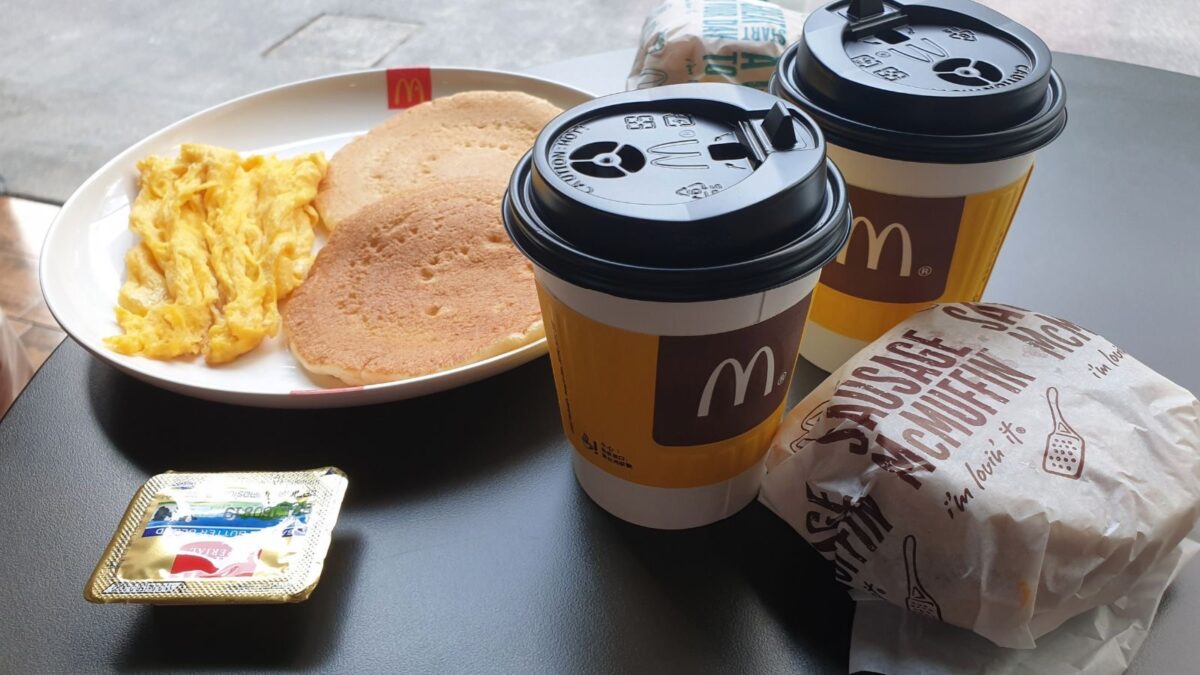
McDonald’s Hotcakes and Sausage was a popular breakfast choice in the 1980s. The meal came with three pancakes, butter, syrup and a sausage patty, served on a plate-like container. Many people ate it with plastic utensils at a table.
While Hotcakes are still on the menu, they are less common as a drive-thru order because they are harder to eat on the go. In the 1980s, eating pancakes at a fast-food restaurant felt like a special treat. Today, handheld breakfast sandwiches dominate fast-food breakfast menus, much like the breakfast favorites many people remember from that decade.
3. Breakfast Ended Early
In the 1980s, fast-food breakfast usually ended at 10:30 or 11 a.m. If you arrived even a minute late, you missed your chance for an Egg McMuffin. Many people remember rushing to get to the restaurant before breakfast ended.
McDonald’s introduced all-day breakfast in 2015, which changed expectations for many customers. Although the chain later scaled back all-day breakfast, the idea of breakfast being available later in the day has become more common. The strict breakfast cutoff of the 1980s now seems like a memory for many people.
4. Smoking With Morning Coffee
In the 1980s, many fast-food restaurants allowed smoking in their dining rooms. It was common to see customers lighting a cigarette with their morning coffee. Smoking sections were often just a few tables away from nonsmoking areas.
Today, smoking is banned in restaurants in most states, and the idea of smoking in a fast-food dining room seems strange to younger generations. Many people who remember the 1980s recall the smell of cigarette smoke mixed with coffee and hash browns. It is a reminder of how much public spaces have changed.
5. Paying With Cash Only
In the 1980s, most fast-food restaurants accepted only cash. Customers counted out bills and coins at the counter or drive-thru window. Credit cards were rarely accepted at fast-food chains until the 1990s and 2000s.
Today, most customers pay with cards, phones or apps, and some never carry cash at all. Many people remember digging through their car’s ashtray or cup holder for loose change to buy a breakfast sandwich. Paying with cash only seems like a distant memory for many fast-food customers.
6. Reading the Newspaper Over Breakfast
Many fast-food customers in the 1980s read the newspaper while eating breakfast. Some restaurants had newspaper boxes outside, and regular customers picked up a paper on their way in. Reading the sports section or the comics was part of the morning routine.
Today, most people check the news on their phones. The sight of someone reading a printed newspaper at a fast-food restaurant is less common. Many older adults remember the quiet morning routine of coffee, breakfast and the daily paper with fondness.
7. Bringing Breakfast Home in Paper Bags
In the 1980s, families often brought fast-food breakfast home in paper bags for the whole family. Parents would pick up breakfast sandwiches, hash browns and orange juice for weekend mornings. Kids remember the excitement of seeing the familiar bag on the kitchen table.
Today, families are more likely to use delivery apps or mobile ordering for breakfast. The weekend tradition of picking up fast-food breakfast still exists, but the experience has changed. Many people who grew up in the 1980s remember the smell of hash browns filling the car on the way home.
How Fast-Food Breakfast Has Changed
Fast-food breakfast has evolved significantly since the 1980s. Menus now include a wider variety of items, from breakfast burritos to specialty coffee drinks. Technology has also changed how people order and pay, with mobile apps and delivery services becoming common.
Despite these changes, fast-food breakfast remains a popular part of American mornings. Many of the classic items from the 1980s, like the Egg McMuffin and hash browns, are still on the menu. The Egg McMuffin, first introduced in 1972, remains one of the most iconic fast-food breakfast items.
Nostalgia for 1980s Mornings
For many people, 1980s fast-food breakfast is tied to memories of childhood, family routines and simpler times. The habits of that era, from eating inside the restaurant to reading the newspaper, reflect a slower pace of life. Many people look back on those mornings with nostalgia.
While some habits may seem odd now, they were part of everyday life for millions of Americans. They remind us how much technology and culture have changed in just a few decades. And for those who remember them, the taste of a 1980s fast-food breakfast is a reminder of mornings gone by.
A Decade of Breakfast Competition
The 1980s saw many chains jump into the breakfast business. Burger King, Wendy’s and Hardee’s all experimented with breakfast menus, offering croissant sandwiches, biscuits and breakfast platters. Hardee’s became especially known for its made-from-scratch biscuits, which helped it build a loyal breakfast following in the South and Midwest.
This competition gave customers more choices and helped make fast-food breakfast a regular part of American life. By the end of the decade, grabbing breakfast at a drive-thru was no longer unusual. It had become a habit for millions of people.
The Future of Fast-Food Breakfast
Fast-food breakfast continues to change with new menu items, technology and customer preferences. Chains are experimenting with plant-based options, specialty coffees and all-day menus. The drive-thru and mobile ordering are likely to remain central to the experience.
Still, some things never change. A warm breakfast sandwich and a cup of coffee on a busy morning remain a comforting routine for many people. The habits may evolve, but the appeal of a quick, satisfying breakfast is here to stay.