7 Old-Fashioned Breakfasts Farm Families Ate Before Sunrise
On an old American farm, the day started long before the sun came up. Cows needed milking, chickens needed feeding and fields needed tending, often before 5 a.m. By the time most city folks were rolling out of bed, farm families had already put in hours of hard, physical work.
That kind of labor required a breakfast to match. Farm wives were often up first, lighting the wood stove and cooking a hearty meal for the family and any hired hands. These breakfasts were big, filling and made from what the farm produced: eggs from the henhouse, milk and butter from the dairy, pork from the smokehouse and grain from the fields.
Many of these breakfasts would seem enormous by today’s standards, but they fueled long days of work. Here are the old-fashioned breakfasts farm families ate before sunrise.
1. Fried Eggs, Bacon and Biscuits
The classic farm breakfast started with eggs, often gathered fresh from the henhouse that morning. Farm wives fried them in bacon grease in a cast-iron skillet, serving them alongside thick slices of bacon or ham from the family’s own smokehouse.
Homemade biscuits completed the plate. Farm wives made them from scratch every morning, cutting lard or butter into flour and baking them in a hot oven. Biscuits were served with butter, honey, sorghum syrup or homemade jam, and there were always plenty to go around.
2. Fried Mush
Fried mush, also called cornmeal mush, was a staple on many farms, especially in the Midwest and South. Cornmeal was cooked with water into a thick porridge, poured into a loaf pan and chilled overnight. In the morning, it was sliced and fried in butter or lard until crispy.
Fried mush was served with maple syrup, molasses or sorghum, or alongside eggs and sausage. It was cheap, filling and made from corn grown on the farm. Many older Americans still remember the taste of fried mush from their childhood.
3. Sausage Gravy and Biscuits
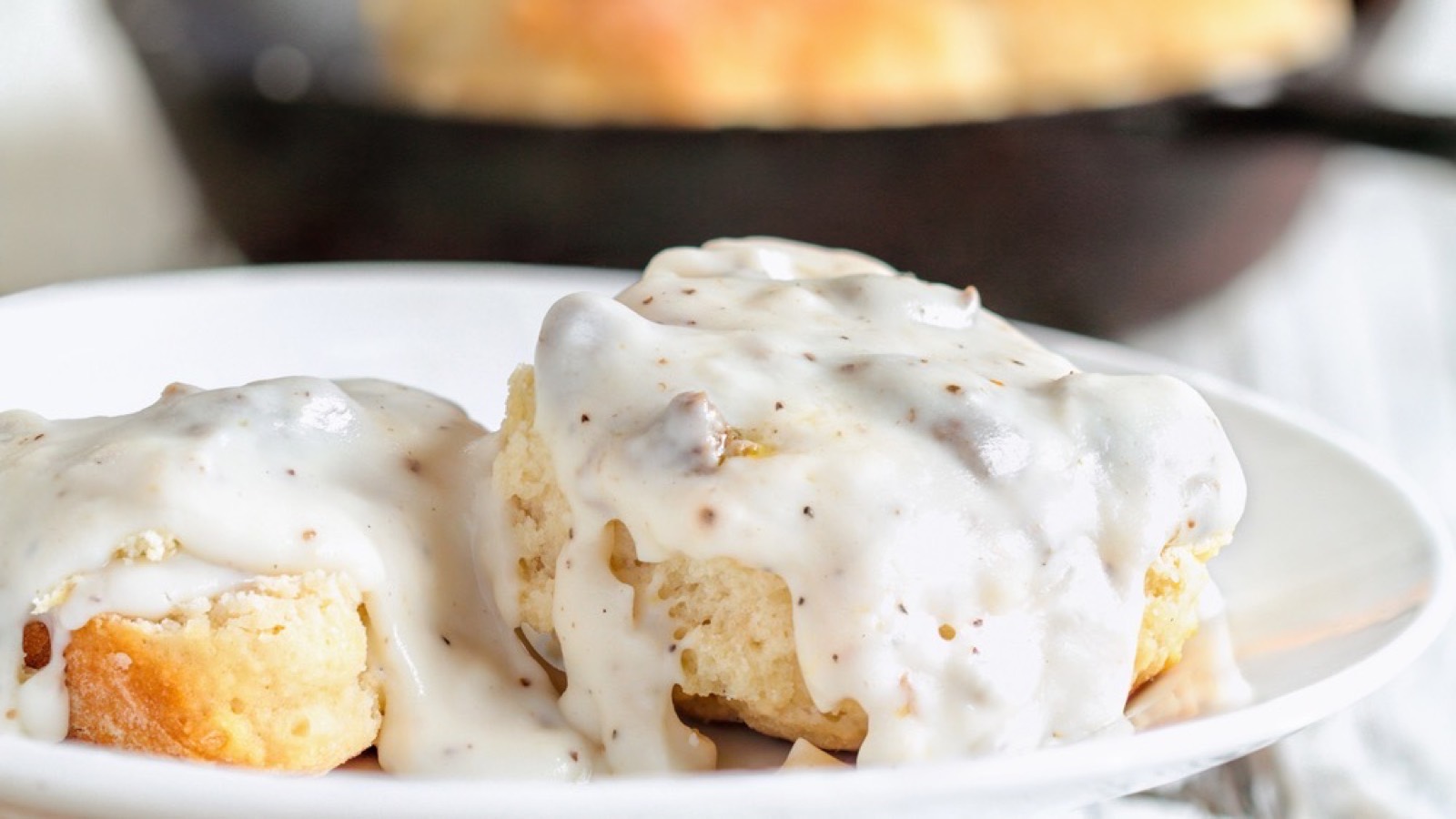
Biscuits and sausage gravy was a hearty farm breakfast that could feed a crowd. Farm wives browned homemade pork sausage, then used the drippings to make a thick, creamy gravy with flour and milk. The gravy was ladled over split biscuits.
This dish made the most of simple farm ingredients and was especially popular in the South and Appalachia. It provided the energy farmers needed for a long morning of work. Today, biscuits and gravy remains a beloved breakfast across the country.
4. Pancakes and Fried Ham
Stacks of pancakes, sometimes called flapjacks, griddle cakes or hotcakes, were a farm favorite. Farm wives made them from scratch with flour, eggs, milk and baking powder, often cooking dozens at a time on a hot griddle.
Pancakes were usually served with fried ham or sausage, butter and syrup. On farms with sugar maple trees, families made their own maple syrup each spring. Others used sorghum, molasses or homemade fruit syrups.
5. Oatmeal With Fresh Cream
Hot oatmeal was a common farm breakfast, especially in winter. Farm wives cooked oats on the stove and served them with fresh cream skimmed from the morning’s milk, along with brown sugar or honey.
On dairy farms, the cream was rich and plentiful, making oatmeal a luxurious treat. Some families added raisins, dried apples or nuts. Oatmeal was warm, filling and inexpensive, making it a practical choice for large farm families.
6. Fried Potatoes and Onions
Fried potatoes were a farm breakfast staple, often made from leftover boiled potatoes from the night before. Farm wives sliced or diced the potatoes and fried them in lard or bacon grease with onions until golden and crispy.
Fried potatoes were served alongside eggs, meat and biscuits, adding even more fuel for the day’s work. Potatoes were grown on many farms and stored in root cellars through the winter, so they were always available.
7. Pie for Breakfast
It might sound surprising today, but pie was a common breakfast food on many old farms, especially in New England and the Midwest. Leftover apple, mince or berry pie from the night before was served with coffee or a glass of milk in the morning.
Pie made sense on a farm, where hardworking families needed plenty of calories. Fruit pies were made with apples, berries and other fruit from the farm’s orchards. Some families even served pie with a slice of cheese, a tradition that still survives in parts of New England.
Why Farm Breakfasts Were So Big
Farm work was physically demanding, and before modern machinery, much of it was done by hand or with horses. Farmers burned huge numbers of calories plowing fields, hauling hay, chopping wood and tending livestock. A big breakfast gave them the energy to keep going until the noon meal, which was often called dinner.
Farm families also ate what they produced. Eggs, milk, butter, cream, pork and grains came straight from the farm, so breakfast didn’t depend on a trip to the store. Farm wives made the most of these ingredients, cooking big meals with little waste.
The Farm Wife’s Day
Farm wives worked as hard as anyone on the farm, often rising before everyone else to light the stove and start breakfast. They baked bread, churned butter, gathered eggs, tended gardens and cooked three large meals a day, all while raising children and keeping house.
During planting and harvest seasons, farm wives often cooked for hired hands and neighbors who came to help. Feeding a crew of hungry workers was a huge job, and farm wives took pride in putting a generous meal on the table.
How Farm Breakfasts Changed
As farming became more mechanized and fewer Americans lived on farms, breakfast habits changed. The USDA Economic Research Service notes that the share of Americans working in agriculture has fallen dramatically over the past century. As more people moved to cities and took office jobs, big farm breakfasts gave way to cereal, toast and coffee.
Still, many farm families today continue to eat hearty breakfasts, and diners across rural America serve farm-style plates of eggs, bacon, biscuits and gravy. These meals remain a link to the country’s agricultural roots.
The Noon Meal Called Dinner
On many farms, the biggest meal of the day wasn’t served in the evening but at noon. Farm families called it dinner, and the lighter evening meal was supper. After a big breakfast and a long morning of work, the noon dinner refueled everyone for the afternoon.
This pattern is still remembered in many rural communities, where older residents may say “dinner” when they mean lunch. It reflects a way of life built around the rhythms of farm work, when meals were scheduled around chores rather than office hours.
A Taste of the Past
Old-fashioned farm breakfasts represent a time when food was fresh, homemade and deeply connected to the land. They fueled the hard work that built American agriculture, and many families still cherish those recipes today.
Next time you sit down to a plate of biscuits and gravy or a stack of pancakes, think about the farm families who ate these meals before sunrise. And maybe, just once, try a slice of pie for breakfast.