6 Things That Could Be Making Your Living Room Look More Cluttered Than You Realize
Your guest is holding two throw pillows and looking for somewhere to put them. The coffee table is covered with souvenirs, and the sofa still has three more cushions to clear. Nothing in the room is particularly unusual, but somewhere along the way, decorating has started getting in the way of enjoying the space.
A living room should reflect the people who live in it. Family photographs, travel souvenirs, decorative plants, and personal collections can all make a house feel more welcoming. However, interior designers say that certain decorating habits can make a room feel crowded, dated, or less inviting than intended. The solution is not to throw away everything you love. Sometimes, a little editing is all a room needs.
Oversized Family Photo Displays Can Take Over the Walls
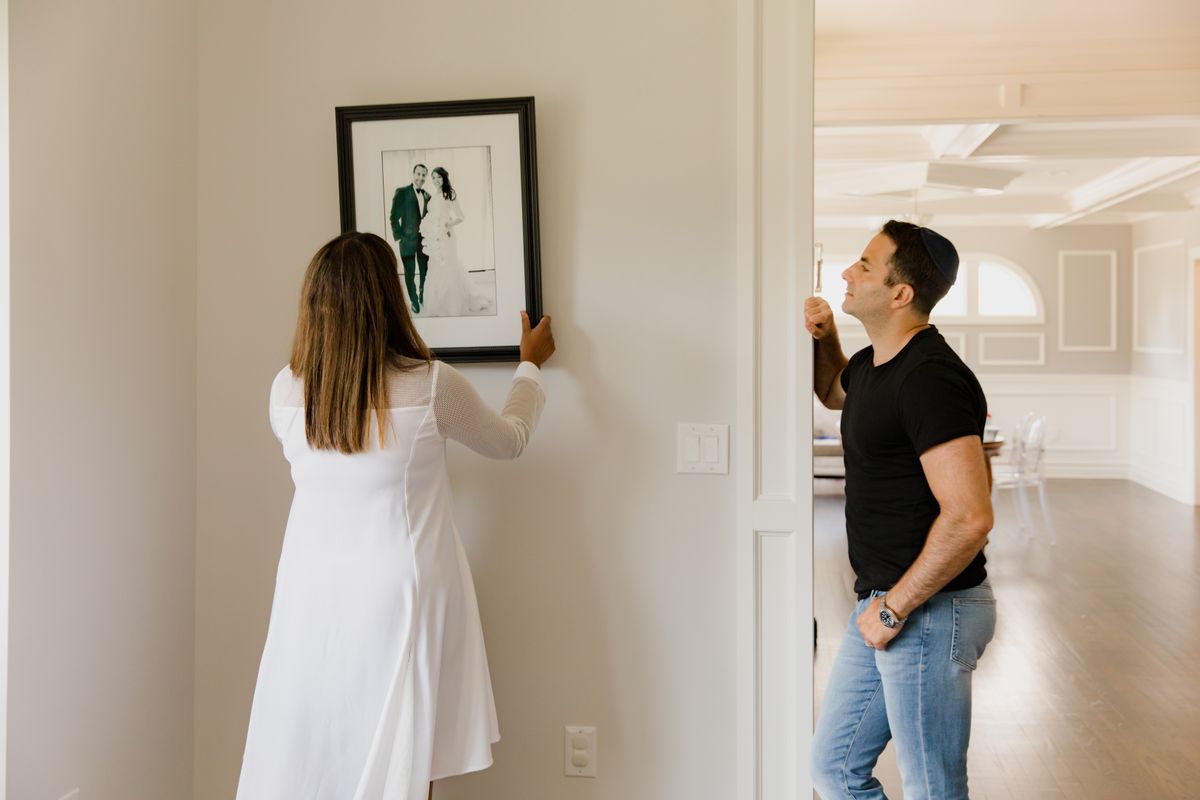
Family photographs are among the most personal things people display at home. Wedding pictures, childhood portraits, vacation memories, and photographs of grandchildren can turn an ordinary living room into a space filled with stories. However, displaying too many pictures in one area can make it difficult for individual photographs to stand out.
Boston designer Liz Caan told House Beautiful that she tends to avoid hanging family photographs in public spaces such as living rooms, entryways, and dining rooms. Her preference is not a universal decorating rule, though. Designer Danielle Chiprut takes a more flexible approach, suggesting that photographs can work when homeowners arrange them thoughtfully and combine them with other decorative pieces.
A wall covered from end to end with oversized family portraits may dominate the entire room. A better approach is to choose a few meaningful photographs, arrange them in a deliberate gallery, and rotate the rest occasionally. You can still keep your favorite memories visible without making every available wall a family photo display.
Generic Slogan Signs Can Make Your Decor Feel Dated
Words such as “Live, Laugh, Love,” “Gather,” and “Bless This Home” have appeared on everything from wall plaques to cushions and kitchen accessories. These messages are meant to make a home feel welcoming, but repeating the same familiar phrases throughout a living room can make the decorating feel less personal.
In Southern Living, Maryland designer Dara Beitler identifies word art and farmhouse-style signs among the accessories she believes can make a living room feel overly trendy. Other designers featured in the publication also criticize generic decorations that look mass-produced rather than collected over time. Their concern is less about displaying words and more about filling a room with interchangeable messages.
That does not mean all word art belongs in storage. Designer Danielle Fennoy, speaking to Realtor.com, supports using phrases with personal meaning for the household. She even uses a neon sign featuring an inside joke with her husband. Instead of buying another familiar slogan simply because it matches the room, consider displaying a meaningful phrase, a favorite piece of artwork, or something connected to a personal memory.
Too Many Figurines and Souvenirs Leave Little Room to Breathe
Travel souvenirs, miniature houses, collectible figurines, and decorative ornaments often have sentimental value. A small object might remind someone of a special holiday, a family member, or an important moment. The problem begins when every shelf, mantel, and table becomes a display area.
Professional organizer Eryn Donaldson, founder of The Model Home, told Homes & Gardens that filling every inch of a shelf leaves little breathing room and makes individual objects harder to appreciate. Austin designer Claire Zinnecker makes a similar point in Better Homes & Gardens, explaining that she enjoys collections but prefers giving meaningful pieces enough space.
Imagine a mantel covered with souvenir figurines, miniature houses filling both side tables, and a coffee table with barely enough room for a drink. Even if every object has a story, the overall display may feel crowded. Rather than getting rid of an entire collection, select a few favorite pieces, group them thoughtfully, and rotate the others. This lets the objects you love stay part of your home without competing for attention all at once.
Generic Faux Plants Can Look Like Shelf Fillers
Artificial plants have a practical place in home decorating. They provide the look of greenery without the same care as living plants, and they can work in places where keeping a real plant is difficult. However, buying several identical faux plants to fill empty spaces can make a living room look repetitive.
In Southern Living, designers Bailey Ward and Dara Beitler identify generic faux greenery among the decorations they would reconsider in a timeless living room. Their criticism focuses on mass-produced accessories that fill shelves without adding much personality. It is an opinion about design choices, not a rule that every artificial plant looks unattractive.
A bookcase filled with identical miniature succulents may look more like a store display than a carefully decorated home. Before buying more greenery, try removing a few pieces and looking at the shelves again. Keep artificial plants that genuinely suit the room, but leave some spaces empty. Real plants aren’t a must-have, especially for homeowners who choose artificial ones for practical reasons.
Decorative Pillows Should Not Make Your Sofa Unusable
Throw pillows can add color, texture, and personality to a living room. They can also make a sofa more comfortable, especially when the seating is deep, or the proportions don’t suit everyone. But at some point, decorative pillows start taking up more space than the people who are supposed to sit on the couch.
In an article for Realtor.com, Houston designer Pamela O’Brien explains that pillows can serve a useful purpose beyond decoration. They can provide additional support and help make large sofas more comfortable. The problem is not owning several cushions. It is arranging them in a way that prevents people from using the available seating.
Picture a guest arriving and having to move half a dozen cushions before finding somewhere to sit. That is a sign the arrangement may need some attention. Instead of following a strict rule about how many pillows a sofa should have, sit down and check how much usable space remains. Keep the cushions that add comfort or improve the room’s appearance, and store the extras until you need them again.
Tangled TV Cords and Old Electronics Create Unnecessary Clutter
Not everything that makes a living room look untidy is intended to be decoration. Television cables, streaming devices, old remotes, and unused electronics can gradually fade into the background. Because homeowners use these items regularly or have left them in the same place for years, they may stop noticing how much visual space they take up.
Austin designer Claire Zinnecker identifies visible television cords and forgotten electronics among the living room problems discussed by Better Homes & Gardens. Karina Toner, operations manager at Spekless Cleaning, also explains in Homes & Gardens that tangled wires can make an otherwise decorated room look disorganized.
A wall-mounted television with cables hanging toward a low outlet is one familiar example. An entertainment console filled with old remotes and unused devices can add to the problem. A simple cleanup can make a difference. Identify which devices are still needed, label their connections, remove equipment you no longer use, and organize necessary cables with clips or sleeves.
You do not need to replace your entertainment furniture to make the area look better. Sometimes, removing unused equipment and organizing what remains is enough to make the space look more finished.
A Comfortable Living Room Does Not Have to Follow Every Design Rule
A well-decorated living room does not need to look like a furniture showroom. Family photographs, treasured collections, artificial plants, and decorative cushions can all have a place in a home. What matters is how they work together and whether the room remains comfortable for the people who use it.
A good starting point is to look at what takes up space without adding much value. You might discover that removing a few cushions, rearranging souvenirs, or organizing television cables makes a bigger difference than buying new furniture.