7 Everyday Household Products Many Americans Might Be Using Too Much Of
Adding an extra splash, scoop, or squeeze of a household product can feel like an easy way to get better results. A little more detergent might seem like it will leave clothes cleaner, while extra dish soap can create the thick layer of bubbles many people associate with effective washing.
But using more does not always mean getting more out of a product. Many household products come with specific measuring instructions for a reason.
The recommended amount can depend on the product’s concentration, the size of the laundry load, the amount of water being used, or even the hardness of the water. Ignoring those details can lead to unnecessary product use without delivering the improvement people expect.
From laundry detergent to dryer sheets, these seven everyday household products are worth measuring more carefully.
Laundry detergent
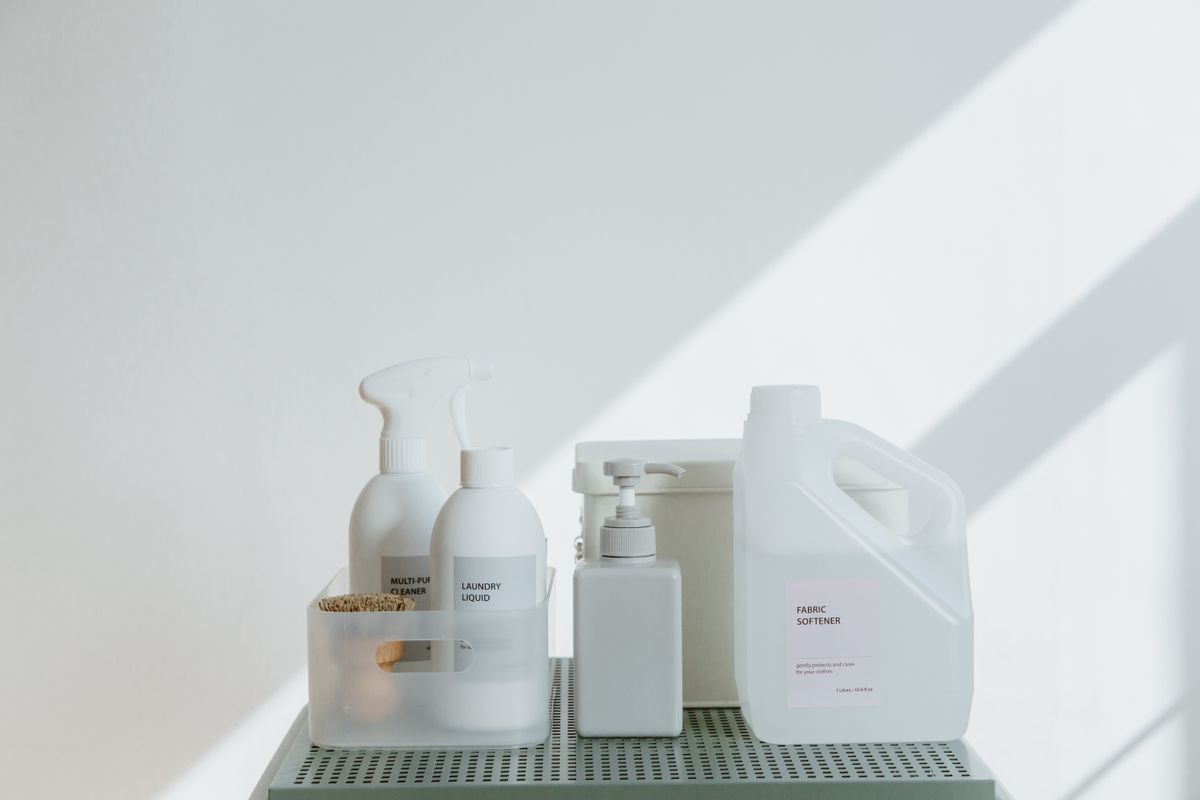
Pouring laundry detergent directly from the bottle without measuring can make it easy to use more than the manufacturer recommends. However, the appropriate amount depends on the detergent’s formulation, concentration, and the instructions on its packaging.
The American Cleaning Institute explains that concentrated detergents require smaller quantities than unconcentrated versions, making it important to check the label rather than rely on an old measuring habit.
Using too much is not necessarily a shortcut to cleaner clothes. LG also explains that excessive detergent can remain undissolved in certain top-load washing machines.
Its guidance is specific to those machines, but it illustrates why following the appliance and detergent instructions matters. Using too little can also affect cleaning results, so the goal is to find the recommended measurement, not simply use the smallest amount possible.
Fabric softener
Fabric softener is another product that can be easy to overpour, particularly when someone fills the measuring cap without checking its markings. Downy’s instructions recommend using the cap to measure the product and selecting the appropriate amount according to the laundry load.
Larger loads generally call for the highest fill line in its guidance, but the correct measurement depends on the particular product.
Instead of automatically filling the cap to the top every time, check the bottle’s dosing instructions. A smaller load may call for a different amount than a full one. Matching the measurement to the load is a more deliberate approach than assuming every wash requires the same quantity.
Dish soap
A generous squeeze of dish soap can make a sinkful of water look ready for a serious cleaning session. However, the American Cleaning Institute’s handwashing guidance explains that approximately one teaspoon of liquid dish soap per sinkful of wash water is often sufficient.
Concentrated formulas may require less, so check the label. ACI also points out that producing more suds does not necessarily mean dishes are getting cleaner.
This measurement applies specifically to dish soap diluted in a sinkful of water, not to washing with soap applied directly to a sponge or using a dish spray.
The next time the sink is filled, consider measuring the soap instead of repeatedly squeezing the bottle. More bubbles may look impressive, but they are not automatically a sign of better cleaning.
Dishwasher detergent
Dishwasher detergent measurements can depend on something many people overlook: water hardness. Frigidaire provides different measured detergent quantities in its dishwasher guidance depending on the hardness of the water.
Its recommendations are four teaspoons for soft water (0–3 grains per gallon), six teaspoons for medium-hard water (4–8 grains per gallon), and eight teaspoons for hard water (9–12 grains per gallon).
These figures are specific to Frigidaire’s guidance and should not be treated as universal measurements for every dishwasher. The same instructions separately recommend placing one detergent tablet or packet in the dispenser.
Those products should be used according to their own directions rather than treated like loose detergent. Checking the appliance manual and detergent packaging can help prevent unnecessary guesswork.
Concentrated all-purpose cleaner
Some concentrated all-purpose cleaners require dilution before use, but it can be tempting to assume that using the concentrate directly will make cleaning easier. Amway’s L.O.C. Multi-Purpose Cleaner dilution guide provides two examples of how application method changes the measurement.
For bucket cleaning, its guide specifies one ounce of concentrate per gallon of water, while its spray-bottle instructions specify one part concentrate to nine parts water.
These are product-specific directions, not general measurements for every concentrated cleaner. The guide also carries a 2018 copyright date, so anyone using this particular product should check the current container for applicable instructions.
Before pouring concentrate into a bucket or spray bottle, look for the recommended dilution ratio. Getting the mixture right starts with knowing how the product is intended to be used.
Dryer sheets
Dryer sheets are another household staple where the number used can depend on the size of the laundry load. Bounce recommends one standard sheet for small loads, two for medium loads, and three for large or extra-large loads. That means using the same number every time may not match the manufacturer’s directions for different loads.
There is also an important distinction between standard dryer sheets and other product formats. Bounce Mega Sheets are a separate format, so the standard-sheet recommendations should not automatically be applied to them or to competing products.
Rather than tossing several sheets into the dryer out of habit, check the packaging and match the quantity to the load.
Laundry scent booster beads
Laundry scent booster beads are designed to add fragrance to clothing, but they do not perform the same job as laundry detergent or fabric softener. Downy identifies one capful as a starting point for most loads, while allowing users to adjust the amount depending on whether they prefer a stronger or lighter fragrance.
That distinction matters because adding more beads does not mean clothes will receive better cleaning. The product provides fragrance rather than washing or softening performance, so it does not replace detergent.
If a stronger scent is the preference, the amount can be adjusted according to Downy’s instructions. The important thing is to recognize that fragrance intensity and cleaning performance are two different things.
A little measuring goes a long way
Household products are not always designed to deliver better results when used in larger quantities. A detergent’s concentration, a laundry load’s size, an appliance’s instructions, and a cleaner’s dilution ratio can all influence the recommended amount.
Before automatically adding another scoop, squeeze, or capful, take a moment to check the measuring marks, product label, and appliance manual. Sometimes, getting the best results starts with using the amount the product actually calls for.