How Shoppers Are Trading Down Without Even Realizing It as Store Brands Quietly Redefine the American Grocery Aisle.
The old grocery aisle rule used to be simple: national brands looked polished, store brands looked plain, and shoppers knew exactly when they were saving money by choosing the cheaper option. That line is disappearing fast.
Across American supermarkets, big-box stores, club chains, and online grocery carts, shoppers are increasingly reaching for store brands without always realizing it. The real shift is not just that they are choosing cheaper products; it is that store brands now appear to be better choices. The packaging is cleaner, the flavors are trendier, the labels are more stylish, and the quality gap that once separated private labels from household-name brands has become harder to spot.
This is not just a quiet shift in packaging. It is a structural change in how consumers define value.
Private-label sales in the United States have surged to record levels in recent years, with industry tracking groups such as Circana and the Private Label Manufacturers Association reporting that store-brand grocery sales now exceed $100 billion annually and continue to grow faster than national brands in many categories. In multiple staple categories such as dairy, frozen foods, snacks, and household goods, store brands have gained measurable market share year over year. The result is a reset in how Americans shop, especially in how they define value.
After years of elevated grocery prices, inflation pressure, and household budget fatigue, consumers are no longer buying brand names out of habit alone. They are evaluating value more carefully, comparing prices more frequently, and becoming far more open to products that deliver similar quality at a lower price. Many shoppers no longer feel like they are “trading down.”
They feel like they are optimizing.
Store Brands Are No Longer the Plain Option
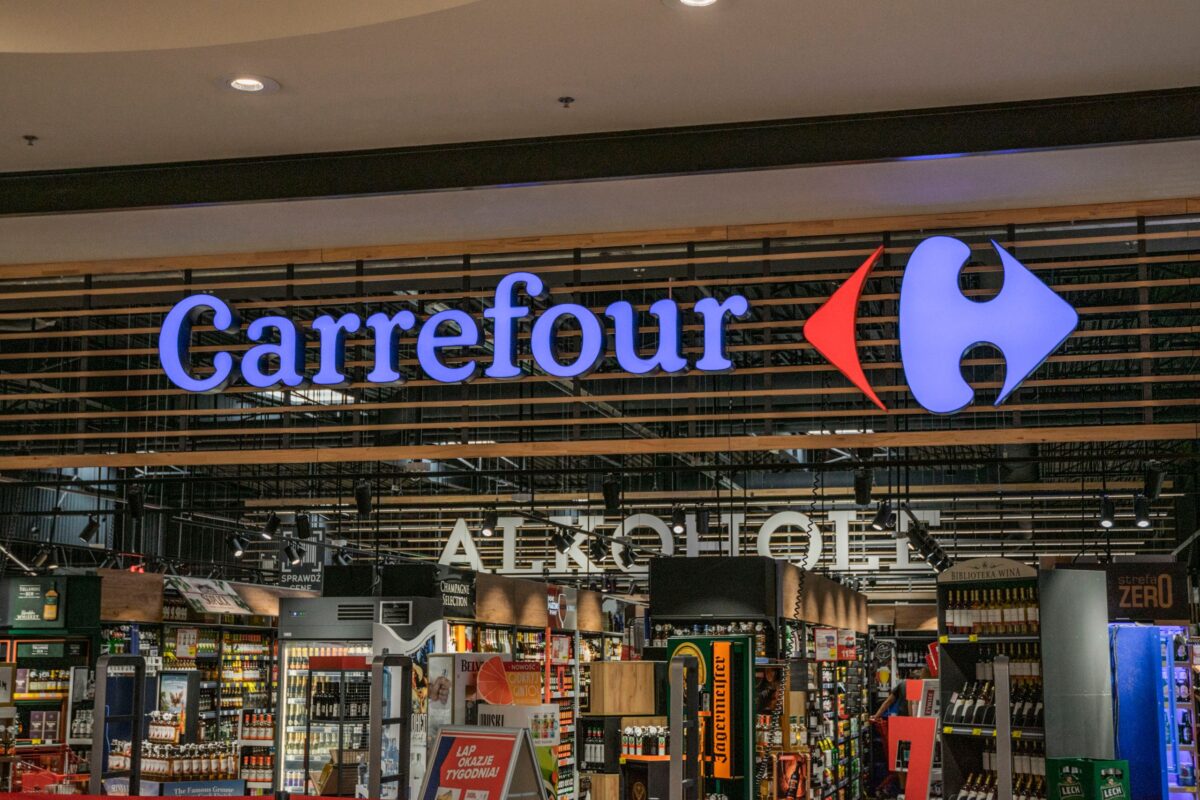
For decades, private-label products carried a predictable image. They were the cheaper cans, boxes, and bottles, usually with simple designs and minimal branding, sitting near the national brands. Shoppers bought them primarily to save money, not because they were excited about them. That era is fading quickly.
Today’s store brands are built to compete on more than price. Retailers are investing heavily in packaging design, product development, ingredient quality, and category innovation. Many private-label lines now emphasize organic ingredients, plant-based options, cleaner labels, and premium flavor profiles that mirror or even anticipate consumer trends.
Retailers such as Walmart, Target, Costco, Kroger, Aldi, and Trader Joe’s have transformed private labels into strategic growth engines rather than secondary alternatives. Walmart’s Bettergoods line alone represents one of the largest private food-brand launches in its history, designed specifically to compete in premium-yet-affordable food categories.
The outcome is a grocery shelf where store brands no longer announce themselves as cheaper substitutes. They blend in.
In many cases, they lead. A shopper may pick up oat milk, frozen meals, pasta sauce, granola, snacks, or cleaning products without immediately realizing they belong to the retailer’s own brand ecosystem. The price is lower, the design is modern, and the decision feels frictionless.
That is how trading down becomes invisible and why it no longer feels like a downgrade.
Inflation Changed the Consumer Equation
The rise of store brands is deeply tied to the inflation shock that reshaped household budgets over the past several years.
According to U.S. Bureau of Labor Statistics data, grocery prices rose significantly in the early 2020s, with food-at-home costs reaching multi-decade highs. Even as inflation has cooled, price levels remain elevated compared to pre-pandemic baselines. That environment forced a behavioral shift.
Shoppers began experimenting more aggressively with alternatives. Some switched retailers entirely. Others reduced discretionary purchases. Many began testing private-label products in categories they previously reserved for national brands. The key turning point came after the trial.
Consumer research from firms such as First Insight has shown that while shoppers often believe they can distinguish national brands from store brands, they frequently fail to do so in blind comparisons across categories like snacks, frozen foods, and pantry staples. In multiple studies, a majority of participants incorrectly identified private-label products when brand labels were removed. Once that perception gap disappears, loyalty weakens.
A brand name that once justified a higher price begins to feel less essential. Instead of asking, “Is this affordable?” shoppers increasingly ask, “Is this worth paying more for?” That shift changes everything about how shoppers define value.
Retailers Have Turned Private Labels Into Strategic Weapons
For retailers, private brands are no longer just margin boosters. They are full-scale competitive strategies.
When shoppers buy national brands, retailers earn standard wholesale margins. When shoppers buy store brands, retailers capture both production control and significantly higher profit margins. Industry estimates often place private-label margins well above those of national-brand equivalents, depending on the category and supply structure. But the financial upside is only part of the equation.
Private labels also drive customer loyalty. If a shopper prefers a store-brand product, that product cannot be found at competing retailers. That creates a built-in reason for repeat visits and stronger brand attachment to the store itself.
This is why private-label expansion has become central to retail strategy across major chains. Store brands are no longer imitation products. They are designed to function as destination goods.
Costco’s Kirkland Signature line is one of the most successful examples globally, with estimates frequently suggesting it generates a substantial portion of the company’s overall sales. Trader Joe’s operates almost entirely on private-label exclusivity, building an entire brand identity around unique products that cannot be purchased elsewhere.
The strategy is clear: control the product, control the margin, control the loyalty.
National Brands Are Facing a Structural Challenge
National consumer brands still hold enormous cultural power. Names like Coca-Cola, Pepsi, Heinz, Kellogg’s, Tide, Oreo, and Doritos remain deeply embedded in American households through decades of advertising and emotional association. But that advantage is no longer automatic.
When price gaps widen or remain visible on shelves, consumers are more willing than ever to switch. Once they switch and find acceptable alternatives, switching back becomes less likely.
This creates a structural challenge for national brands. They must now justify their premium pricing in real time against store brands that often match them in quality perception and increasingly compete on packaging and innovation.
Many national brands are responding by increasing promotional activity, reformulating products, introducing premium tiers, or shrinking package sizes to manage pricing pressure. But these strategies only go so far when consumers are actively questioning brand value. The loyalty gap is narrowing.
The Psychology of “Invisible” Trade-Down
Perhaps the most important shift is not just psychological, but definitional.
Traditionally, trading down meant visible compromise. The shopper knew they were choosing a cheaper option. The packaging reinforced that decision. The experience carried a subtle sense of sacrifice. Modern private labels have erased much of that emotional signal.
Today’s store brands are designed to feel neutral or even premium. Clean typography, minimalist packaging, and lifestyle-focused branding reduce the psychological distance between store and national brands. This matters because consumer behavior is not purely rational. It is emotional.
When a shopper does not feel like they are downgrading, they are more likely to repeat the behavior. Over time, that creates habit formation. Habit replaces comparison. Comparison replaces loyalty.
And trading down becomes routine without conscious recognition.
The Grocery Aisle Has Become a Branding Battlefield
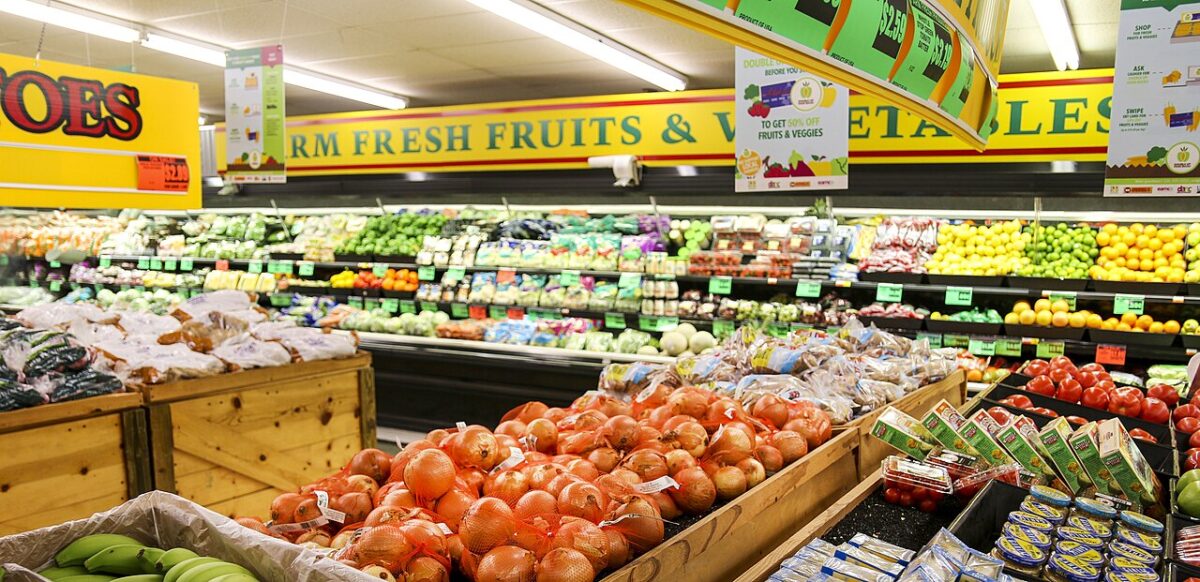
The modern grocery store is no longer just a distribution space. It is a controlled branding environment.
Retailers decide shelf placement, pricing visibility, digital promotion, loyalty app recommendations, and even search ranking within their own ecosystems. That gives them enormous leverage to push private labels directly against national brands.
With real-time sales data, retailers can also continuously optimize which private-label products expand, which are discontinued, and which are reformulated. That agility allows store brands to evolve faster than many legacy national brands tied to large-scale manufacturing and global supply chains.
The result is a feedback loop:
More private-label purchases generate more data
More data improves product design
Better products increase adoption
Increased adoption strengthens retailer control
Breaking that cycle is difficult for national brands.
Value Has Been Completely Rewritten
The biggest transformation is not just economic. It is definitional: value itself has been rewritten. Value no longer means simply low price. It now means price plus quality, price plus convenience, price plus design, and price plus trust in the retailer itself.
Private labels are winning because they no longer present themselves as “alternatives.” They present themselves as “answers.”
For shoppers, this shift brings relief amid high costs and financial pressure. For retailers, it brings stronger margins and loyalty. For national brands, it signals a new competitive reality where reputation alone is no longer enough.
The grocery aisle has changed permanently because value now means something different. The store brand no longer looks like a downgrade. It looks like the default, and that is the point.
And the most surprising part of all is that many shoppers never even notice the moment they switched.