Pennsylvania Man, 58, Sentenced to Life Without Parole After Wife’s Killing Inside Quiet Suburban Home
A Pennsylvania man, 58-year-old James Christopher Frank, will spend 100% of his remaining life in prison after pleading guilty to first-degree murder in the killing of his wife, 55-year-old Deborah Glaser. The sentencing, handed down on June 17, brings closure to a case that unfolded in a quiet residential community of roughly 23,000 residents, where violent crime remains statistically rare at fewer than 2 homicides per 10,000 people annually.
The case moved from initial police concern to a confirmed homicide investigation in under 24 hours, and ultimately ended with a mandatory life sentence that carries 0% eligibility for parole under Pennsylvania law.
Welfare Check in a Quiet Neighborhood Turns Into a Fatal Discovery
The investigation began in March 2025 after concerns were raised about the couple living inside a suburban home located in a residential zone with fewer than 10 immediate surrounding streets. Police responded to the welfare call within hours, part of a system that handles thousands of such checks annually across Pennsylvania, though fewer than 15% require forced entry, according to standard emergency protocols.
When officers arrived, they reportedly attempted to make contact for several minutes without a response before entering the home through a second-floor window using a ladder. That decision, taken in what officials later described as a “time-sensitive welfare situation,” marked the transition from a routine check to a full-scale emergency response inside 1 single residence.
Inside the Home: A Scene That Shifted Everything in Minutes
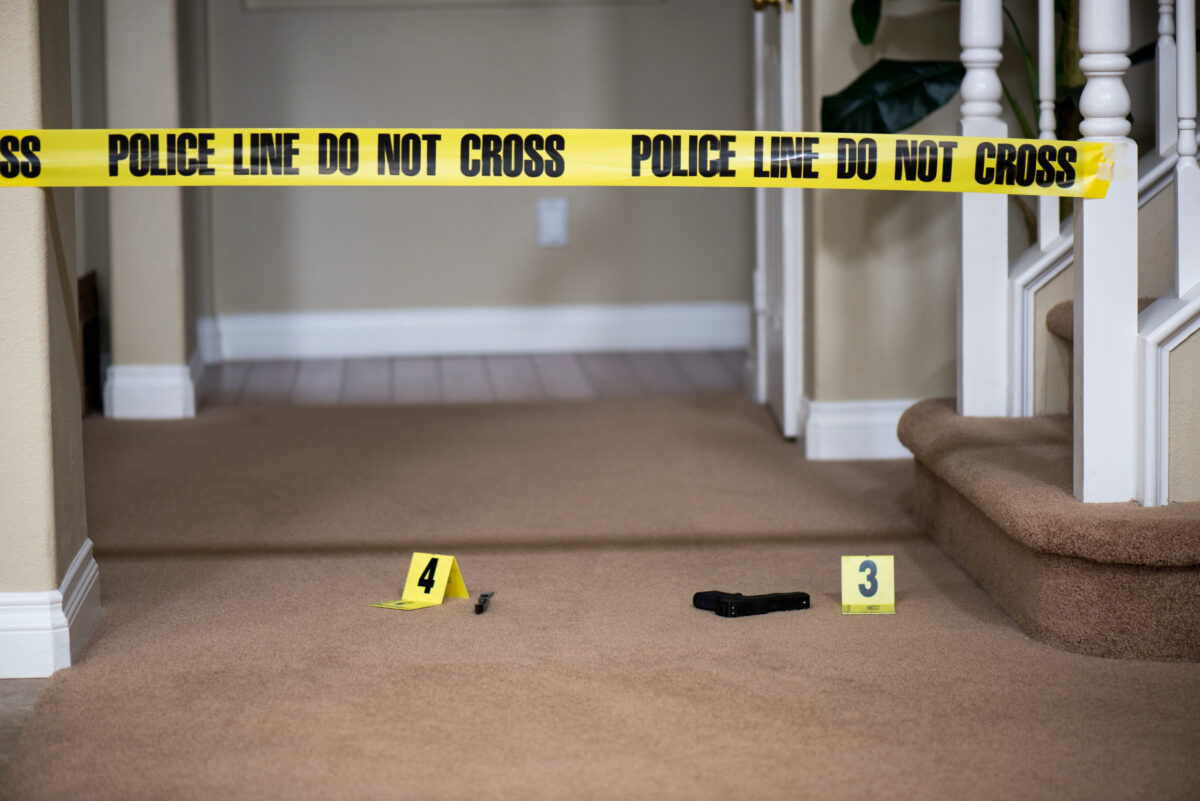
Once inside, officers encountered Frank still present inside the residence, before being directed to a bathroom where Glaser was found deceased. Investigators later confirmed the presence of multiple sharp-force injuries and at least 2 different weapons recovered from the scene, which were immediately collected for forensic testing within the first 48 hours of the investigation.
Authorities have not publicly detailed every aspect of the scene, but court records and filings indicate that the injuries were severe enough to prompt an immediate homicide classification. The case was upgraded from a welfare check to a murder investigation in under 60 minutes from entry, a rapid escalation even in serious domestic cases.
Guilty Plea Entered Just Days Before Mandatory Life Sentence
Frank pleaded guilty to first-degree murder on June 10, 2026, just 7 days before sentencing, avoiding what could have been a lengthy trial involving forensic experts, investigators, and family testimony spanning potentially weeks or even months in court proceedings.
Under Pennsylvania law, first-degree murder carries an automatic sentence of life in prison without parole, meaning the outcome was legally fixed once the plea was entered. On June 17, the court imposed the maximum penalty allowed: life imprisonment with 0% chance of release for the remainder of the defendant’s lifetime.
Court officials noted that the plea effectively shortened what could have been a multi-phase trial process, which in similar homicide cases often involves more than 20–30 witness statements and extensive forensic review sessions.
Domestic Violence Context Raises Questions Beyond the Crime Scene
While authorities have not confirmed a public motive, the case has drawn attention due to its domestic setting and the fact that it occurred in a shared marital home of a 1-household unit shared by 2 spouses. Law enforcement reports indicate there was no widely known prior criminal history or documented pattern of violence reported to police before the incident.
Domestic homicide cases in the United States account for approximately 1 in 3 female murder victims nationwide, according to federal crime data trends often cited in similar investigations. Though each case is unique, officials say incidents inside private residences remain among the most difficult to predict and prevent.
In this case, investigators emphasized that the event escalated rapidly, with no prolonged public disturbance or multi-day investigation preceding the discovery.
Community Shocked in Township With Historically Low Crime Rates
Bethlehem Township and surrounding areas typically report low violent crime rates compared to state and national averages, with annual homicide figures often remaining in the single digits per 100,000 residents. The quiet suburban environment, where most residents live in family households of 2–4 people, has contributed to the shock surrounding the case.
Residents described the incident as deeply unsettling because it unfolded in a normal residential setting rather than a public or high-crime location. Community response has focused on grief, disbelief, and renewed attention to domestic safety awareness following a case that escalated to a homicide inside 1 private household on 1 residential street.
Swift Legal Resolution Through the Guilty Plea System
From arrest to sentencing, the case moved through the criminal justice system in approximately 15 months, a timeline considered relatively fast for homicide cases involving forensic evidence and domestic context. The guilty plea eliminated the need for jury selection, expert testimony, and extended trial proceedings that often stretch cases beyond 12–24 months in serious felony courts.
Prosecutors emphasized the strength of the evidence and the clarity of the legal standard for first-degree murder, which requires intent and premeditation under state law. Once the plea was entered, the sentencing phase became procedural, culminating in the mandatory life sentence on June 17.
Final Judgment: Life Without Parole, No Legal Path Back
With sentencing complete, Frank will remain incarcerated for the remainder of his life, with no eligibility for parole at any point under Pennsylvania’s sentencing structure. That outcome represents a 100% permanent incarceration status, the highest penalty short of capital punishment in jurisdictions that retain life sentences without parole as the maximum punishment.
The case is now closed in the criminal courts, though the emotional and community impact continues beyond the courtroom. For the victim’s family, the legal system has reached its final outcome in 1 verdict, 1 sentence, and 1 irreversible loss that will remain at the center of the case forever.