The Foil-Packet Salmon Dinner That Keeps Cleanup to a Minimum
Salmon for dinner sounds appealing. Scraping buttery juices off a pan afterward? Considerably less so. Foil packets offer a practical middle ground: the fish, vegetables, and seasonings cook in individual parcels, keeping most of the mess contained. You still need a baking sheet and a few prep tools, but you don’t need a separate skillet for the fish and another pan for the vegetables.
This version comes from Slender Kitchen recipe developer and cookbook author Kristen McCaffrey. It pairs salmon with asparagus, lemon, butter, dill, salt, and pepper. No sauce needs reducing, and no fish needs flipping halfway through cooking. As McCaffrey explains, “Since the salmon and asparagus cook in the foil there are fewer dishes to clean up.” That is the useful promise: less washing, not a magical dinner with absolutely no dishes.
The packets also simplify the cooking process by enclosing the fish and vegetables together. McCaffrey explains that tightly sealed foil lets them steam and recommends salmon portions of similar thickness so they cook at a similar pace. This method tenderizes fish, but it doesn’t replace a seared crust. If you want a straightforward oven dinner rather than skillet-style browning, the trade-off makes sense.
Five Main Ingredients, One Simple Setup
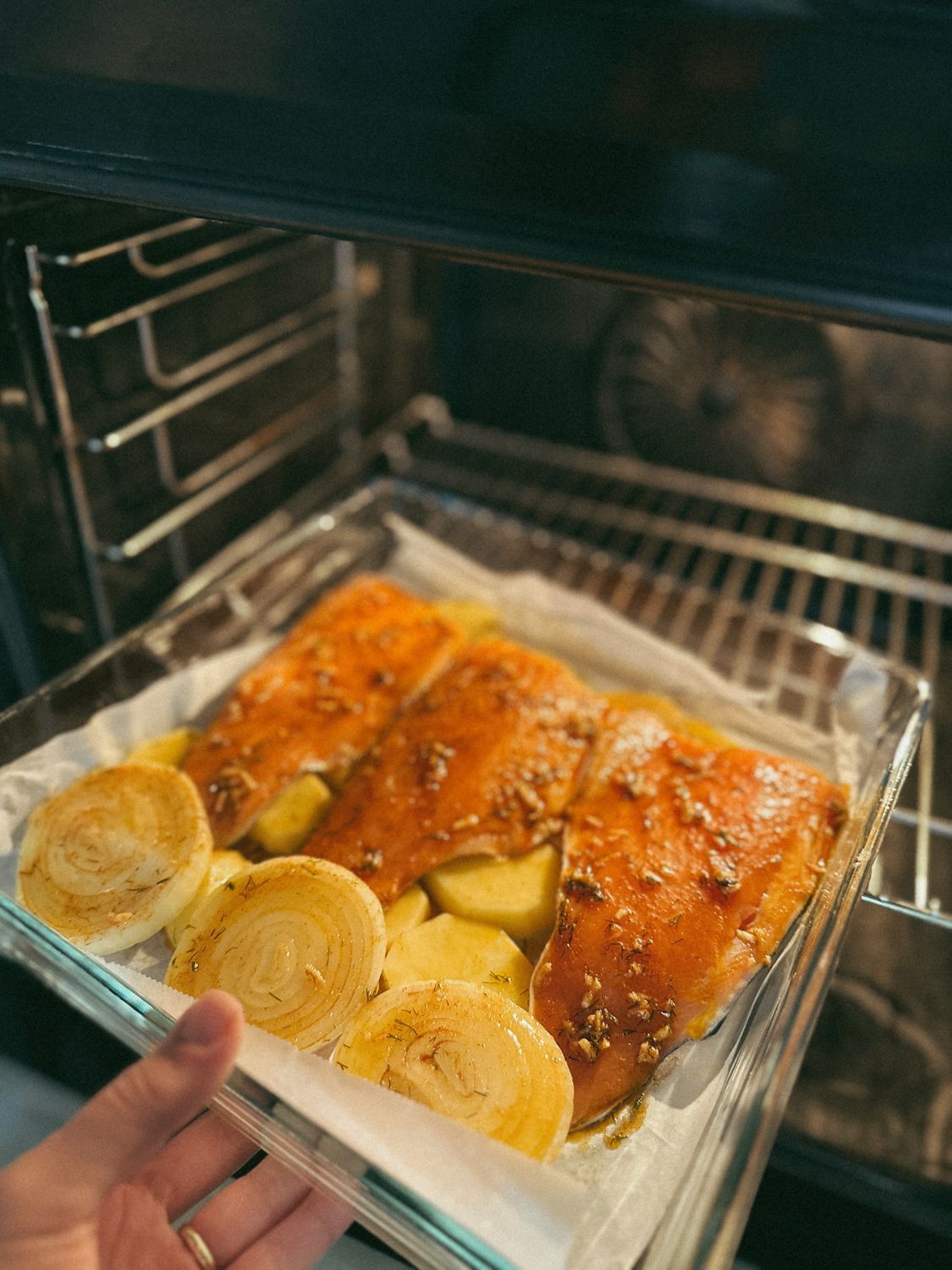
For a four-packet batch, McCaffrey’s recipe calls for about 1⅓ pounds of salmon, two lemons, 2 tablespoons of butter, four sprigs of dill, and 1½ pounds of asparagus. You will also need salt, pepper, cooking spray, foil, and a baking sheet. The recipe allows wild or farm-raised salmon, so you don’t need to treat one as the only workable option. The more immediately useful shopping detail is choosing portions of reasonably consistent thickness.
The flavor combination is deliberately uncomplicated. Lemon supplies brightness,butter adds richness, and dill brings the herbal component. McCaffrey permits olive oil or ghee instead of butter and says dried dill can replace fresh. Those are options within her published recipe, not a reason to change everything at once. If you are trying the method for the first time, the basic lemon-butter-dill combination gives you a clear starting point.
Preheat the oven to 400°F, then tear off four pieces of foil large enough to hold a salmon portion and its share of asparagus, with enough material left to fold and seal. Lightly coat the foil with cooking spray. Divide the asparagus among the sheets, then place a piece of salmon on each pile. The foil needs to form a pouch rather than a shallow tray because the sealed packet does the cooking.
Season the fish with salt and pepper, then add ½ tablespoon of butter to each packet. Top each portion with two or three lemon slices and a sprig of dill. Fold the foil around the ingredients, seal the edges securely, and place the packets on the baking sheet. McCaffrey’s instruction is direct: “Tightly packed foil will allow the fish and vegetables to steam nicely.” Check the seams before moving on.
Related: 10 American Foods That Make Visitors Scratch Their Heads- But Many Americans Still Love
Let the Packets Cook, but Let Temperature Decide
The recipe’s detailed instructions call for baking the packets for 15 to 20 minutes. Its timing information isn’t entirely consistent: the recipe card separately lists 10 minutes of preparation, 25 minutes of cooking, and 35 minutes total. For planning purposes, allow roughly half an hour or a little more, rather than promising dinner in 10 minutes. Treat the shorter baking window as the point to begin checking, not a guarantee that every piece is finished.
For a clear food-safety endpoint, use a thermometer rather than relying solely on the timer or the fish’s appearance. FDA guidance recommends cooking fish to an internal temperature of 145°F, as Clemson Cooperative Extension summarizes. Carefully open the packet and check the thickest part of the salmon. If it hasn’t reached that temperature, close the packet, return it to the oven, and continue cooking before checking again.
Open the foil cautiously when checking or serving because the packet contains hot steam. McCaffrey specifically advises opening carefully, and the same moisture that helps cook the dinner is waiting inside when you unfold it. No need to flip the salmon during baking; her explanation is that the steam in the packet cooks the fish. That eliminates one fiddly handling step without eliminating the need to verify doneness.
The asparagus pairing is convenient, but substitutions deserve some thought. McCaffrey suggests vegetables like zucchini, green beans, and broccoli, while noting that changing proteins requires adjusting cooking time. Those are possibilities, not proof that every substitute will finish on the original schedule. For the most predictable first attempt, use the salmon-and-asparagus combination as written, then experiment once you understand how the packets behave in your oven.
Finish Dinner Without Undoing the Shortcut
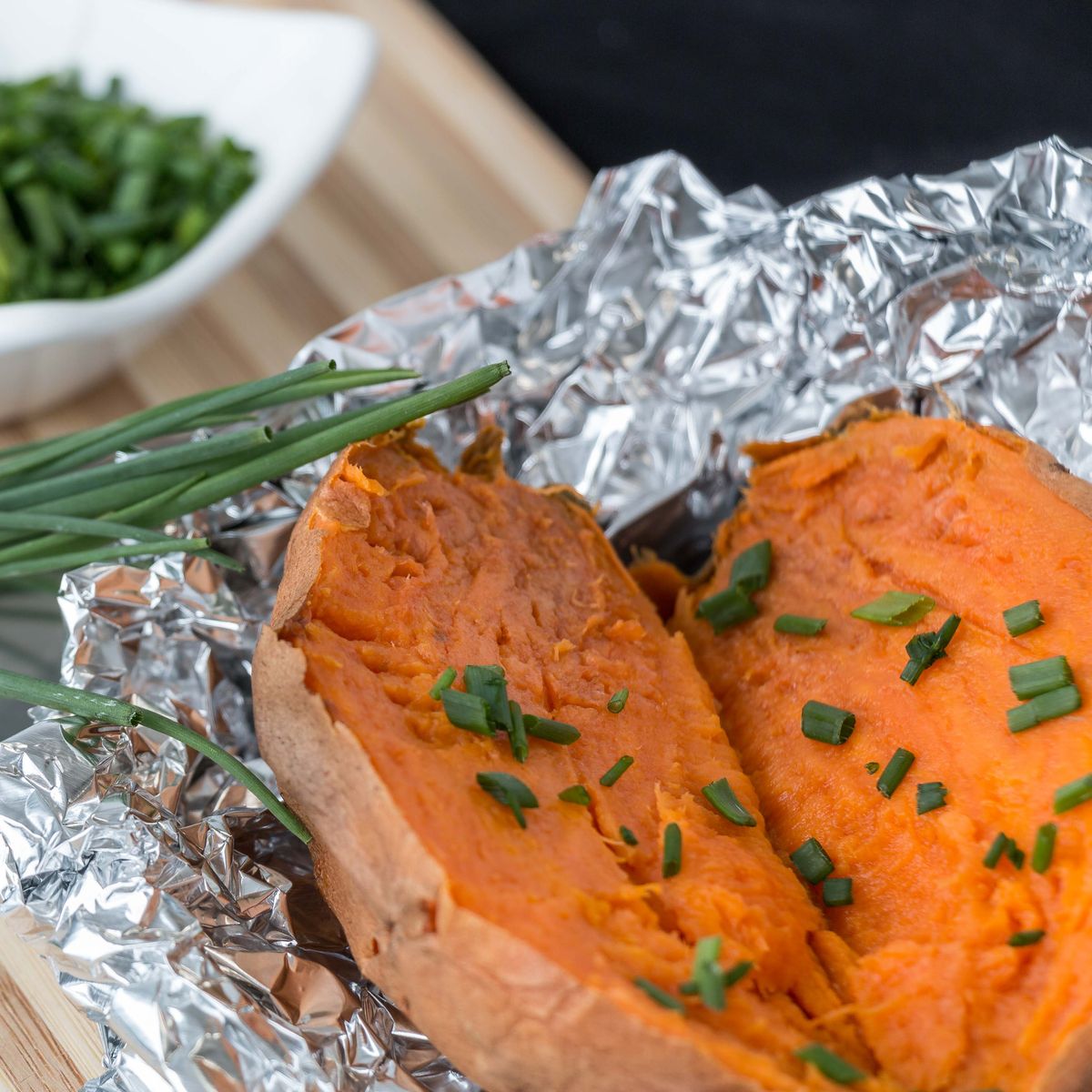
The packet already includes fish and vegetables, but you can add an accompaniment based on your appetite. McCaffrey suggests options such as salad, potatoes or a rice-based side. The practical choice is whatever you can prepare without turning a low-cleanup meal into a three-pan production. A side you already know how to make is more useful here than an ambitious second recipe competing for your attention.
You can also change the flavor on a later batch without abandoning the method. McCaffrey suggests swapping dill for parsley, cilantro, or oregano; adding chopped garlic; or finishing with a little feta or Parmesan. She also lists red chili flakes for those who want heat. These are variations to choose from, not a checklist to add in full; the original recipe works because its ingredients have a clear, simple direction.
If there is leftover salmon, the recipe recommends refrigerating it for two to three days. Clemson’s seafood guidance advises dividing leftovers into small, shallow containers for quick cooling and reheating them to 165°F. Store the food properly; don’t assume the cooking foil is a complete storage plan. The convenience of tomorrow’s lunch still depends on how tonight’s leftovers are handled.
The best reason to make this dinner is not that foil somehow makes salmon foolproof. It is that the method combines several tasks: fish, vegetables, and seasoning share one packet, and the oven does the cooking without a flipping routine. Seal carefully, check the temperature, and open cautiously. You get a lemony salmon dinner and a cleanup that doesn’t need its own motivational speech.