This Murderous Restaurant Owner Was The First White Woman Ever To Be Sentenced To Death In Georgia
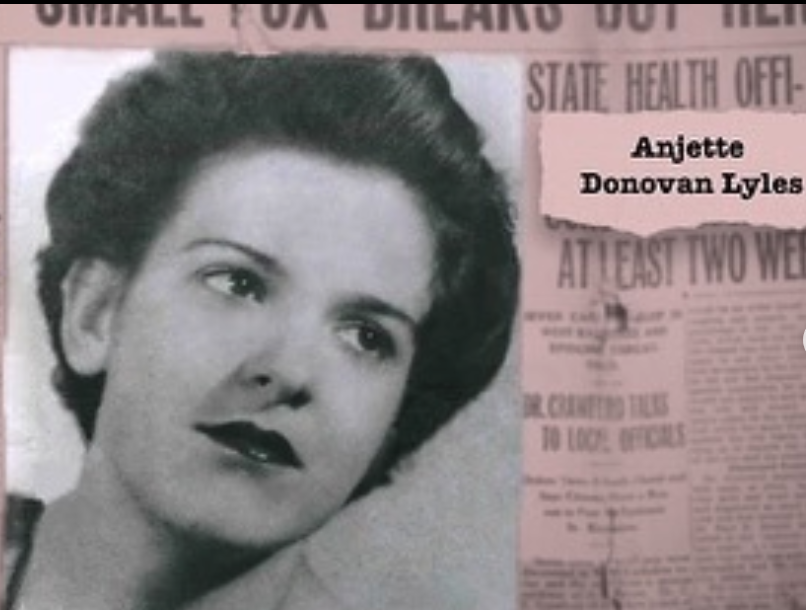
Anjette Lyles did not look like a woman who would become the center of one of Georgia’s most disturbing murder cases.
In the 1950s Macon, she was known as a charming restaurant owner with a friendly smile and a gift for making people feel comfortable. Customers knew her. Neighbors recognized her. Around town, she seemed like the kind of woman who had worked hard, survived personal tragedy, and built something for herself.
But behind that polished public image, investigators later believed something far darker had been happening.
Her story became one of the most unsettling true-crime cases in Georgia history because the alleged danger did not come from a stranger in a dark alley. It came from inside the home. From meals, visits, sickrooms, and the quiet spaces where people usually feel safest.
The First Death Looked Like Tragedy
Anjette’s first husband, Ben Lyles, was connected to the restaurant that later became part of her identity. Their life together seemed ordinary enough from the outside, but in the early 1950s, Ben became seriously ill.
His symptoms were troubling but confusing. He reportedly suffered from stomach pain, weakness, nausea, and a general decline that doctors could not easily explain. He died in January 1952.
At the time, his death may have seemed like a sad medical mystery. A young wife had lost her husband. A family had lost a loved one. The community had no reason yet to view it as part of a pattern.
After Ben’s death, Anjette eventually took control of the restaurant and renamed it Anjette’s. To many people, that looked like resilience. She was a widow trying to move forward.
But years later, investigators would look back at Ben’s death with fresh suspicion.
Then Another Husband Died
Anjette later married Joe Neal Gabbert, but that marriage also ended in death.
Gabbert reportedly became ill after a minor medical procedure involving his wrist. What should have been a manageable recovery turned into something far more serious. He developed symptoms that raised concern, including fever and a rash, and he later died.
Once again, Anjette was left as the grieving widow.
But this time, whispers began to grow louder. People noticed that another person close to her had died under strange circumstances. They also noticed that money, insurance, property, and control seemed to follow some of the deaths.
That does not prove guilt by itself. Families often deal with insurance and inheritance after a death. But when death keeps returning to the same small circle, people start asking harder questions.
A Former Mother-in-Law Became the Next Victim
The next major death connected to the case was Julia Lyles, Anjette’s former mother-in-law.
Julia moved into Anjette’s home after Joe Gabbert’s death. On the surface, that could have looked like an act of care. Anjette appeared to be helping an older relative. But later, prosecutors would argue that Julia’s illness and death were part of the same deadly pattern.
Julia died in 1957.
After her death, questions reportedly grew around her will and who benefited from her estate. The suspicions were no longer easy to dismiss. Too many people close to Anjette had become sick. Too many had died. Too many benefits appeared to land near her.
Still, the case did not fully break open until the death of a child.
The Death That Changed Everything
Anjette’s daughter, Marcia, was only nine years old.
Her illness was heartbreaking. She reportedly became severely sick and eventually died from kidney failure in 1958. For any parent, that kind of loss would be unbearable. But people around the case later described behavior that seemed deeply unsettling.
There were claims that Anjette appeared unusually certain her daughter would not survive. Some accounts said she made funeral arrangements while Marcia was still alive. Others said people close to the family began to fear that the child was being harmed rather than helped.
That fear eventually reached authorities.
Marcia’s death became the turning point. Once investigators began looking more closely, the earlier deaths no longer looked separate. They looked connected.
Arsenic Became the Center of the Case
The investigation turned toward poison, especially arsenic.
Arsenic has a long and frightening history in murder cases because it can be hidden in ordinary food or drink. It does not require a violent scene. It does not require a weapon that looks dangerous. It can work slowly, leaving victims weak, sick, confused, and dependent on the very person harming them.
That is part of why poisoning cases disturb people so deeply.
According to court records from the case, prosecutors accused Anjette Lyles of giving poison to her daughter Marcia, leading to the child’s death in April 1958. The authorities also connected her to the deaths of her two husbands and her former mother-in-law.
The case shocked Macon.
People who thought they knew Anjette were forced to reconsider everything. The smiling restaurant owner, the woman who served food and chatted with customers, was now accused of using poison against members of her own family.
A Public Image That Made the Case More Disturbing
One reason the case became so famous was the sharp contrast between Anjette’s public image and the accusations against her.
She was not seen as a wild outsider or obvious criminal. She had social charm. She ran a business. She knew how to present herself. People liked her.
That made the allegations feel even more frightening.
True-crime cases often grip the public because they reveal a gap between appearance and reality. Someone can look gentle and still be dangerous. Someone can sound caring and still be calculating. Someone can stand beside a hospital bed and appear worried while investigators later argue that the person had caused the suffering.
That possibility is what made the Anjette Lyles case feel so personal to many people.
If the accusations were true, then the danger had been hiding in plain sight.
The Trial Became a Sensation
Anjette Lyles was charged in connection with four deaths: her first husband, her second husband, her former mother-in-law, and her daughter.
The trial drew major attention. The details were dramatic, painful, and almost too strange to believe. There were claims about poisoning, insurance money, family deaths, unusual behavior, and a woman whose charm seemed to clash with the horror of the charges.
The death of Marcia became especially central. A child’s death changed the emotional weight of the case. It was no longer only about adults who had died after mysterious illnesses. It was about a little girl whose final days became the key to exposing what prosecutors described as a pattern of murder.
A jury convicted Anjette Lyles, and she was sentenced to death in the electric chair.
At the time, that made her one of the most notorious women in Georgia’s criminal history.
She Was Sentenced to Death, But Never Executed
Although Anjette received a death sentence, she was never executed.
After the trial, officials reviewed her mental state. A sanity board later found her legally insane under the standards used at the time, and her sentence was not carried out. Instead, she was sent to a state psychiatric facility in Milledgeville, Georgia.
She spent the rest of her life in institutional custody and died years later.
That ending left the case with a strange kind of unresolved darkness. She had been convicted. She had been sentenced. But the final punishment ordered by the court was never carried out.
For some, that added to the outrage. For others, it made the case even more tragic and complicated.
Why the Case Still Haunts People
The Anjette Lyles case remains chilling because it turns ordinary trust into something terrifying.
Food is supposed to comfort people. A family home is supposed to protect people. A mother is supposed to care for her child. A spouse is supposed to help during illness. A restaurant owner is supposed to feed the public, not be linked to poison.
This case twisted all of those expectations.
That is why the story still gets retold decades later. It is not only about murder. It is about betrayal. It is about charm masking danger. It is about how a person can become trusted enough to get close, then use that closeness in the worst possible way.
The most frightening part is not that Anjette Lyles looked like a monster.
It is that she did not.
To many people in Macon, she looked familiar. Pleasant. Capable. Ordinary.
And sometimes, true crime reminds us that ordinary can be the most unsettling disguise of all.