Toronto’s Yellow Sky Signals a Wider Wildfire Smoke Emergency Across Canada and the United States
The sky above Toronto changed color, but the real warning was hidden in the air. The unusual yellow haze that covered the city was not simply a rare visual event. It was a sign of a growing wildfire smoke emergency affecting Canada and the United States, with dangerous pollution spreading far beyond the areas where flames were burning.
The Toronto wildfire smoke emergency revealed a troubling reality about modern wildfires. Smoke can travel across borders, disrupt daily life, affect public health, and transform clear skies into a warning system for communities hundreds of miles away from active fires.
For many residents, the yellow sky created curiosity before concern. Yet behind the unusual appearance was a complex environmental crisis involving extreme heat, dry conditions, air pollution risks, and a wildfire season that continues to challenge emergency responders across North America.
The Strange Yellow Sky Was A Warning Hidden In Plain Sight

The yellow color covering Toronto’s skyline resulted from wildfire smoke filling the atmosphere with fine particles that altered how sunlight reached the surface. When smoke becomes dense, these particles scatter and absorb light, reducing the visibility of blue wavelengths and allowing warmer colors such as yellow, orange, and red to dominate.
The result can look almost peaceful from the ground. However, the same particles that create the unusual sky can pose serious health risks when they enter the air people breathe.
The main concern during a wildfire smoke event is PM2.5, a type of fine particulate matter small enough to enter deep into the lungs. These particles can irritate the respiratory system and increase risks for people with asthma, heart conditions, and other existing health challenges.
The contrast between appearance and danger makes wildfire smoke particularly difficult to understand. A colorful sky may attract attention, but it does not indicate that the air is safe.
Wildfire smoke does not need to arrive with visible flames to become a public concern. Communities can experience dangerous conditions even when the nearest wildfire is hundreds of miles away.
This pattern has become increasingly familiar across North America. Cities that once viewed wildfires as a distant rural issue are now experiencing smoke warnings, air quality alerts, and changes to everyday activities.
The Toronto wildfire smoke emergency represents this wider shift. The problem is no longer limited to forests and remote regions because smoke can move through entire regions depending on weather patterns.
How Canadian Wildfires Turned Into a Cross-Border Air Quality Crisis
The smoke affecting Toronto was connected to a much larger wildfire situation across Canada. Strong winds carried smoke from active fire zones toward Ontario and then into parts of the United States, creating poor air quality across a large geographic area.
The movement of wildfire smoke shows how environmental emergencies can ignore political boundaries. A fire burning in one province or state can quickly affect communities far away from the original source.
Residents across parts of Minnesota, Michigan, Wisconsin, New York, and other northeastern areas experienced hazy skies and unhealthy air conditions. The same smoke that changed Toronto’s skyline also affected millions of people who had no direct connection to the fires themselves.
This cross-border impact has become one of the defining features of recent wildfire seasons. Smoke from Canadian fires reached major American cities in previous years as well, including severe smoke events that affected millions across the United States.
The growing frequency of these events has changed how governments respond to wildfires. Emergency planning now includes not only firefighting strategies but also public health communication, air quality monitoring, and community protection measures.
The Toronto wildfire smoke emergency demonstrates that wildfire management is no longer only about controlling flames. It is also about managing smoke movement and protecting populations far from the fire zones.
The challenge becomes even greater because smoke patterns can change quickly. A city with moderate air quality in the morning can experience unhealthy conditions later in the day as winds shift and atmospheric conditions change.
The Climate Conditions Creating A Perfect Environment For Bigger Fires
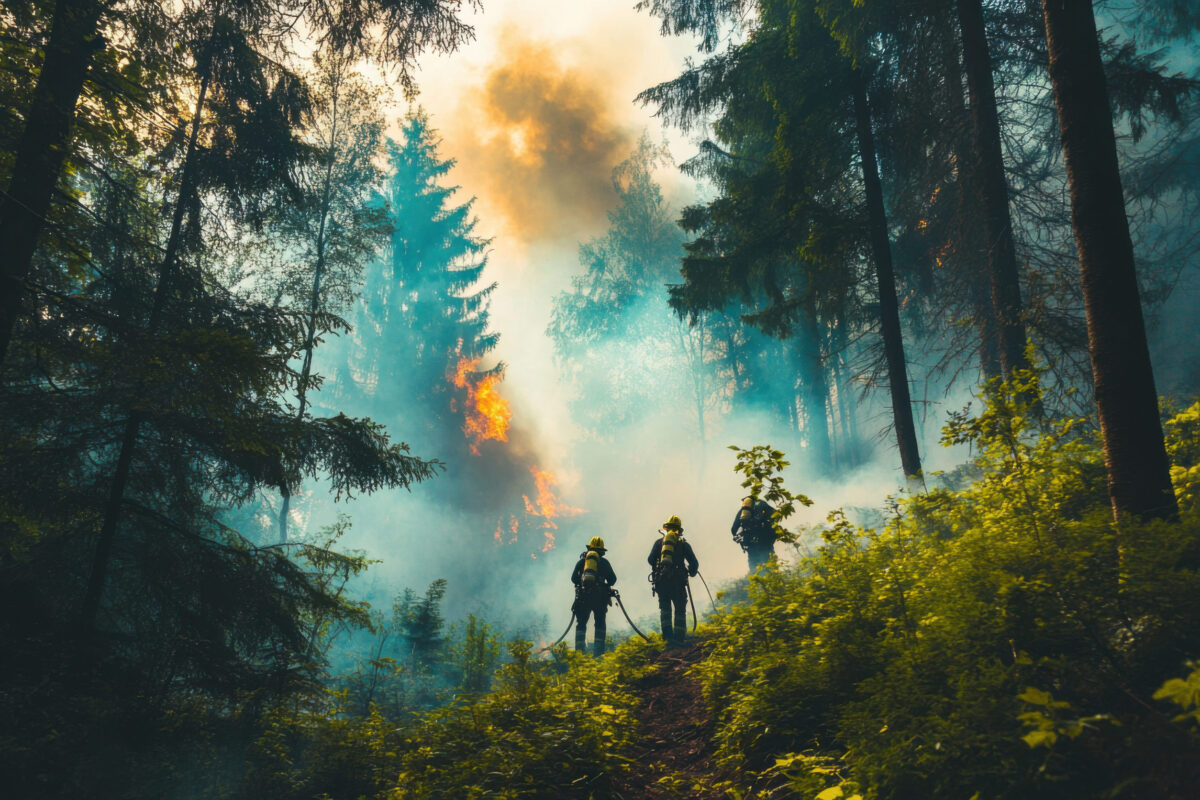
Behind the smoke emergency are environmental conditions that allow wildfires to grow rapidly. Scientists have pointed to the combination of rising temperatures, prolonged drought, and dry vegetation as major factors that increase wildfire risk.
Hotter conditions remove moisture from forests, grasslands, and other landscapes. This creates more available fuel for fires, allowing flames to spread faster and burn more intensely.
Canada has experienced several severe wildfire seasons in recent years, including the historic 2023 wildfire season, when smoke traveled into the United States and led to some of the worst air quality conditions many cities had ever recorded.
The pattern has changed how communities understand wildfire risk. Fire seasons that were once concentrated around certain months are becoming longer and more difficult to predict.
Climate researchers have warned that warmer temperatures can increase the likelihood of extreme fire conditions. While individual fires have many causes, including lightning and human activity, environmental conditions influence how quickly those fires expand.
The Toronto wildfire smoke emergency fits into this larger trend. It shows how climate-related changes can create consequences that appear in unexpected places, from urban neighborhoods to major transportation networks.
The issue also raises difficult questions about preparedness. Are cities designed to protect residents during repeated smoke events? Do communities have sufficient clean-air spaces and emergency plans for prolonged periods of pollution?
These questions are becoming increasingly important as wildfire smoke becomes a recurring part of summer conditions across North America.
The Hidden Health Crisis Behind The Hazy Horizon
The most serious impact of wildfire smoke is often invisible. PM2.5 particles can enter the respiratory system and affect the body even when smoke levels do not appear visually extreme.
Health officials have warned that wildfire smoke can cause coughing, throat irritation, shortness of breath, and fatigue. For vulnerable groups, exposure can worsen existing medical conditions and increase the need for healthcare support.
Children, older adults, pregnant individuals, and people with heart or lung conditions face greater risks during heavy smoke events. Outdoor workers also face challenges because their jobs may require prolonged exposure.
The health impact extends beyond immediate symptoms. Repeated exposure to wildfire smoke is an increasingly studied area of research as scientists examine the long-term effects of recurring pollution events.
The combination of smoke and extreme heat creates additional concerns. High temperatures already place stress on the cardiovascular system, while smoke can make breathing more difficult.
Together, these conditions create a more challenging environment for vulnerable residents. People who depend on open windows for cooling may face difficult choices because bringing in outdoor air can increase indoor pollution levels.
The Toronto wildfire smoke emergency highlights the importance of understanding air quality in the same way communities understand weather warnings. The condition of the air can influence health decisions just as much as temperature or storms.
Thousands Faced A Different Battle Away From The City Skyline
While many people watched Toronto’s unusual sky, another wildfire challenge was unfolding in the Boundary Waters Canoe Area Wilderness in Minnesota. The remote area faced multiple fires, creating an evacuation challenge for thousands of campers.
The wilderness environment made the situation especially difficult. Visitors were spread across lakes and remote trails, meaning emergency teams had to rely on boats, aircraft, and specialized rescue efforts.
Unlike urban evacuations, wilderness evacuations require careful coordination. People may be hours away from roads, communication services can be limited, and changing fire conditions can make travel dangerous.
The situation showed another side of the wildfire crisis. Some communities experience smoke from a distance, while others must respond directly to advancing flames.
The evacuation also demonstrated the growing pressure on emergency responders. Firefighters, rangers, and rescue teams are increasingly managing multiple challenges at the same time, including active fires, public evacuations, and smoke-related health concerns.
The Toronto wildfire smoke emergency, therefore, represents only one part of a much larger story. Behind the changing skies are thousands of people working to protect communities and manage increasingly complex wildfire conditions.
Smoke Is Changing How Cities Work, Travel, and Prepare

Wildfire smoke affects more than public health. It also changes how communities operate when outdoor conditions become unsafe.
Outdoor industries such as construction, agriculture, and tourism can experience disruptions during periods of poor air quality. Workers may need adjusted schedules, protective equipment, or temporary restrictions when smoke levels become dangerous.
Tourist areas can also suffer when visitors avoid outdoor destinations due to poor visibility or health concerns. Parks, hiking trails, and recreational businesses may experience losses during prolonged smoke events.
Urban life changes as well. Schools may cancel outdoor activities, sports events may be postponed, and residents may change their exercise routines.
The Toronto wildfire smoke emergency shows how environmental events can influence everyday decisions. Air quality has become a factor affecting work, recreation, and public planning.
Cities are now paying more attention to preparedness. This includes improving air monitoring systems, expanding public communication, and encouraging buildings to improve indoor air filtration.
The challenge is not only responding after smoke arrives. It is creating systems that allow communities to function during repeated environmental disruptions.
The Future Of Living With Wildfire Smoke
Toronto’s yellow sky was a powerful reminder that wildfire smoke has become a shared North American challenge. The event connected distant forests, urban neighborhoods, public health systems, and emergency response networks through one invisible force: moving air pollution.
The Toronto wildfire smoke emergency was not defined only by the unusual color above the city. It revealed a larger transformation in how communities experience environmental risks.
As wildfire seasons continue to evolve, preparation will become increasingly important. Cleaner indoor air, better public awareness, and stronger emergency planning may determine how effectively communities respond.
The yellow sky eventually fades, but the questions it raises remain. How will cities adapt to a future where wildfire smoke can arrive without warning? And how will communities balance daily life with the growing reality of a changing environment?