Trump Targets Birthright Citizenship Again After Supreme Court Defeat, Setting Up New Legal Battle
President Donald Trump is renewing his push to restrict birthright citizenship after the Supreme Court rejected his previous attempt to change the long-standing interpretation of the Constitution’s citizenship rules.
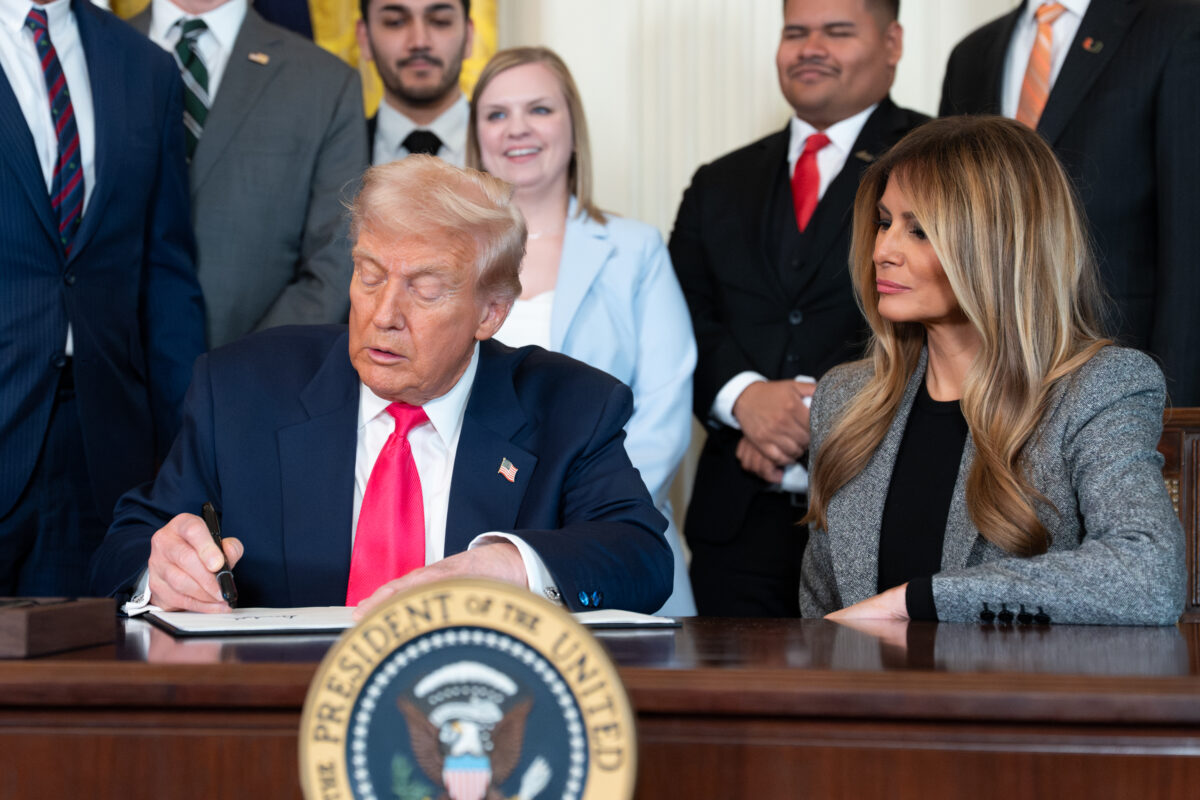
The president signed two new executive orders aimed at narrowing who qualifies for automatic citizenship and targeting what his administration calls “birth tourism.” The move comes just weeks after the Supreme Court ruled that Trump’s earlier executive order attempting to end birthright citizenship for certain children born in the United States was unconstitutional.
Trump acknowledged the setback during a White House event on Aug. 6, saying his administration was making changes after the court decision.
“We had a very unfortunate decision in the Supreme Court concerning birthright… so we’re making adjustments,” Trump said.
The latest orders take a narrower approach than his previous effort, focusing on specific categories of children and parents rather than attempting to eliminate birthright citizenship protections broadly.
However, legal experts and civil rights groups expect the new orders to face court challenges, setting up another major fight over the meaning of the 14th Amendment.
Trump’s New Orders Target Specific Citizenship Cases
The first executive order focuses on situations where neither parent is a U.S. citizen, according to the administration. It argues that certain children born in the United States may not qualify for automatic citizenship under specific circumstances.
The order identifies cases involving children of an “alien enemy” or foreign government employee. It also targets situations involving what the administration describes as commercial arrangements designed to obtain citizenship through childbirth.
Trump’s administration has specifically focused on birth tourism. In this practice, pregnant foreign nationals travel to the United States to give birth, allowing their children to receive U.S. citizenship under current interpretations of the Constitution.
A second executive order directs the State Department and Department of Homeland Security to take steps aimed at preventing individuals from entering the country for birth tourism.
The administration argues that birth tourism creates incentives for people to enter the country and places pressure on the immigration system.
White House Deputy Chief of Staff Stephen Miller defended the effort, calling it a major change that supporters of immigration restrictions have discussed for decades.
“This has been something that people have talked about, not only for years but for decades,” Miller said.
He accused some foreign nationals of using tourist visas as a way to give birth in the United States and secure citizenship for their children.
Supreme Court Previously Rejected Broader Birthright Citizenship Changes

Trump’s latest action follows a major Supreme Court ruling against his earlier attempt to limit birthright citizenship.
The previous executive order sought to deny automatic citizenship to children born in the United States when neither parent was a citizen or lawful permanent resident. The Supreme Court ruled that approach violated the 14th Amendment.
The amendment states that “all persons born or naturalized in the United States, and subject to the jurisdiction thereof, are citizens of the United States.”
In the court’s majority opinion, Chief Justice John Roberts emphasized the historical importance of citizenship rights under the amendment.
“Citizenship, then and now, was the right to have rights,” Roberts wrote. “The Framers of the Fourteenth Amendment extended that promise to ‘every free-born person in this land.’ We keep that promise today.”
The ruling was a significant defeat for Trump’s broader immigration agenda, which has included efforts to increase deportations and strengthen enforcement policies.
The administration argued that birthright citizenship encourages illegal immigration and creates national security concerns. The Supreme Court, however, ruled against those arguments.
Critics Promise Another Court Fight Over Citizenship

Civil rights organizations quickly criticized Trump’s renewed effort and warned that they would challenge the orders in court.
The American Civil Liberties Union argued that birthright citizenship is a fundamental part of American law and identity.
“The Supreme Court already decided this issue: Birthright citizenship is guaranteed by the Constitution,” the ACLU said in a statement. “Any executive order that tries to attack birthright citizenship will meet the same fate as President Trump’s last one.”
Supporters of Trump’s approach argue that the administration has the authority to address loopholes and prevent misuse of citizenship laws.
The debate over birthright citizenship has remained one of the most controversial issues in American immigration policy. Supporters of restrictions say the system can be exploited, while opponents argue the constitutional protection is clear and should not be changed through executive action.
The scale of birth tourism itself remains disputed. Estimates vary widely, with researchers suggesting the number of births connected to birth tourism could range from several thousand to tens of thousands annually.
Trump has claimed the number is much higher, saying the practice has become a major industry that needs to be stopped.
“It’s become a big business, and we’re ending that business,” Trump said.
Another Immigration Battle Heads to the Courts

Trump’s renewed focus on birthright citizenship comes as part of a broader immigration agenda centered on tougher enforcement policies and expanded deportations.
During his campaign, Trump repeatedly promised to challenge the current interpretation of birthright citizenship, making the issue a key part of his immigration platform.
The new executive orders represent an attempt to achieve that goal after the Supreme Court blocked his earlier, broader approach.
Whether the revised orders survive legal challenges will likely depend on how courts interpret the limits of presidential authority and the protections provided by the 14th Amendment.
For now, the fight over birthright citizenship is far from over. Trump’s administration is continuing its effort to reshape immigration policy, while opponents are preparing for another legal battle over one of the most fundamental questions in American citizenship law.