10 Jeff Bezos’ Yacht Embarrassment Highlights Billionaire Outrage
In the world of extreme wealth, few symbols are as unmistakable as a giant superyacht cutting through crystalline waters.
For the ultra‑rich, these floating palaces are private kingdoms, showcases of swank, space, and status. Yet nothing in recent memory illustrates the collision between billionaire lavishness and public backlash quite like the ongoing embarrassment surrounding Jeff Bezos’ monumental yacht, Koru, and the fury it has sparked across media, cities, and the global conversation about wealth. What was once a quiet indulgence has become an extraordinary example of how billionaire extravagance can provoke public ire, anger, and outrage.
At roughly 127 meters long and valued at about $500 million, Bezos’ sailing yacht Koru isn’t merely a large boat. It is one of the largest sailing yachts on Earth, complete with towering masts, a glass‑bottom pool, jacuzzis, and a helipad, a design intended to dwarf every other seafarer’s toy. From the first announcement of its construction to recent decisions about its future, Koru has become less a private retreat and more a public spectacle that has embarrassed its owner and revealed deep tension between extreme wealth and public sentiment.
A Floating Colossus Too Big for the World

Superyachts are made to impress, but Koru’s sheer size has proven counterproductive even for Bezos. Ports around the world struggle to accommodate it, and standard docking facilities simply cannot handle its scale.
Media reports suggest this logistical reality has prompted discussions about selling the yacht, as its size makes it more of a burden than a blissful escape. The embarrassment isn’t just technical; it’s symbolic. Even a billionaire can’t bend geography to suit his toys. That’s a reality check that resonates well beyond nautical forums.
Public Mockery on Social Media

In recent weeks, gossip forums and social media erupted with jokes at Bezos’ expense, poking fun at his struggle to find decent harbor space for Koru. Critics delighted in the notion that someone with access to billions could be “defeated” by port constraints.
The humor has spread far beyond yacht aficionados, echoing wider frustration with the ultra‑wealthy. This ridicule encapsulates a shift in how the public perceives the once untouchable class of financiers and tech magnates.
A Symbol of Wealth Disparity
Among progressive politicians and activists, Bezos’ yacht has become shorthand for the unequal distribution of economic power. A prominent U.S. senator recently targeted his luxury spending, citing the half‑billion‑dollar vessel as emblematic of broader issues in wealth inequality.
Those critics argue that while millions struggle with basic cost‑of‑living challenges, a tiny cadre of billionaires splurges on assets that few could ever use. Whether the critique is purely political or rooted in genuine concern for social equity, the yacht stands at the center of the conversation.
Environmental Criticism and Hypocrisy Claims
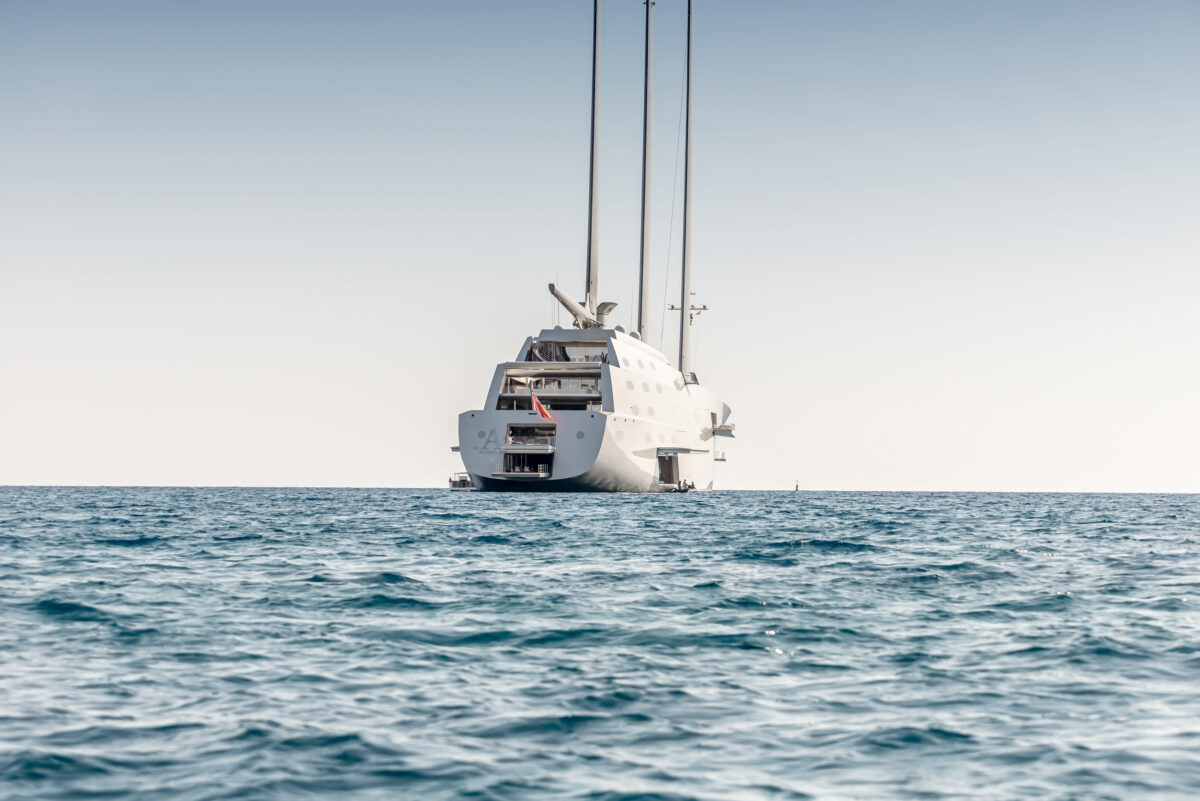
In a world increasingly conscious of climate change, owning a massive sailing yacht invites scrutiny regardless of how eco‑friendly one claims to be. Opponents often leap on luxury boats as symbols of carbon‑heavy lifestyles, even if a vessel uses wind power or hybrid technologies.
While Bezos himself hasn’t been singled out for environmental hypocrisy in the way other tech billionaires have, just the existence of Koru in a climate‑charged era feeds arguments about the dissonance between preaching sustainability and partying on a massive private ship. The broader public sees this, and it fuels online and offline outrage.
Cultural Clash in Venice
One of the most vivid episodes involving Bezos’ yacht wasn’t even about the yacht itself but about its imagined arrival.
During his lavish wedding celebrations in Venice with partner Lauren Sánchez, a flotilla of luxury boats and private jets was expected to descend on the historic Italian city. Protests erupted with banners and slogans declaring that Venice wasn’t for sale or rent to billionaires. The idea that Koru might dock amongst the city’s fragile canals symbolized, for many residents, the intrusion of wealth and tourism that disrupts everyday life. Ultimately, Koru withdrew from arriving there, a twist that some saw as capitulation in the face of public anger.
Past Controversies Hang Over the Yacht
Long before the recent embarrassment, this yacht project carried baggage. During its construction, local Dutch authorities considered dismantling part of a historic Rotterdam bridge so that the yacht could pass through , a plan that sparked protests and outraged historians.
Eventually, the move was shelved, but the mere suggestion of altering a cultural landmark for one billionaire’s toy inflamed public opinion.
Fines and Accusations Around Construction Material
There has also been controversy tied to the materials used in building Koru. A Dutch construction company was fined for using illegal timber from Myanmar, adding environmental and ethical layers to the yacht’s criticism.
Critics seized this detail as an indictment of the luxury industry’s indifference to sourcing ethics , and a reminder that extravagant yachts can carry ecological and moral costs that stretch far beyond their gleaming decks.
Celebrity Sightings Only Fuel the Spectacle
Though many billionaires hide away with their possessions, Bezos’ yacht has hosted high‑profile guests, from Hollywood stars to other global elites.
The public eye follows these sightings with a mix of fascination and disgust, turning the yacht into a celebrity stage where privilege parades itself. Reports of foam parties and lavish onboard events are shared widely online, often accompanied by scathing commentary about inequality.
The Yacht as Punchline to a Bigger Debate
For a generation questioning the role of money at the top, the spectacle of a billionaire wrestling with yacht logistics, protests, and public mockery feels like poetic justice.
Koru may have been built as a status symbol, but for many it now represents the absurd apex of wealth culture , an over‑engineered embarrassment. The public doesn’t just see a big boat; they see a billion dollars that could have been spent on housing, health care, or climate solutions, instead poured into an object that can’t even fit into normal ports.
The Irony of Selling the Ultimate Luxury
Perhaps the most ironic twist: reports in 2026 suggest that Bezos may quietly sell the yacht because its size and notoriety make it unwieldy.
The billionaire who could buy entire football clubs may now be looking to offload his floating palace because it draws too much attention and too little utility. In the eyes of critics and casual observers alike, this development is the ultimate embarrassment.
Conclusion
Jeff Bezos’ yacht saga is not just about a boat; it’s about what that boat represents in our social moment. From logistical missteps and political attacks to cultural backlash and outright ridicule, Koru has become a symbol of billionaire outrage.
In every case, the narrative isn’t only about luxury but about a growing disconnect between the ultra‑wealthy and broad swaths of the public who question why such wealth should exist alongside everyday struggles. The yacht, once a personal indulgence, has become a lightning rod in discussions about fairness, privilege, environmental responsibility, and the role of wealth in society.
In a world grappling with inequality and environmental anxiety, the embarrassment surrounding Jeff Bezos’ yacht highlights not just the excesses of the rich but the rising expectations that even the wealthy should answer to broader public values. The question now isn’t whether Koru will still sail; it’s what role that vessel will play in the shifting relationship between wealth and the societies that watch it unfold.