12 Dangerous Places in the U.S. We Wouldn’t Wish on Our Worst Enemy
America sells the dream beautifully. There are glassy lakes, canyon sunsets, mountain roads, neon cities, beaches that look like they were edited, and national parks that make people believe the country was built for postcards. Then there is the other America, the one with burning ground, poisoned towns, collapsing shorelines, brutal deserts, drowned neighborhoods, remote wilderness, and bureaucratic waiting rooms where hope gets worn down by paperwork.
These are not just “scary places” in the cheap horror-movie sense. They are places where geography, climate, infrastructure failure, pollution, isolation, or public systems can turn ordinary life into a survival test. Some are physically dangerous. Some are emotionally punishing. Some are reminders that the most frightening places in the U.S. are not always abandoned buildings or empty roads. Sometimes, they are places where people once lived normally until the ground, the water, the weather, or the system betrayed them.
Death Valley, California: The Heat Does Not Care How Brave You Are

Death Valley has a name that sounds theatrical until the heat hits. Then it feels bluntly accurate. The National Park Service notes that Furnace Creek recorded 134°F in 1913, a temperature long cited as the highest air temperature ever recorded on Earth, and the park has a long history of punishing summer heat that overwhelms people who underestimate it.
The danger here is not just that it gets hot. Plenty of places get hot. Death Valley turns heat into an environment. Metal burns skin, trails become punishing, shade can feel useless, and a broken-down vehicle can change the mood from adventure to emergency in minutes. Even experienced visitors can get into trouble when they treat the landscape as a scenic drive rather than a desert, with consequences.
We would never treat Death Valley as a casual summer stop. The desert does not reward confidence. It rewards preparation, timing, water, restraint, and the humility to turn back. A person who wants dramatic views should go in the cooler months, stay near reliable routes, and remember that the prettiest places in America can still be deeply unforgiving.
Bullfrog, Utah: Beautiful, Remote, and Too Far From Help
Bullfrog sits within Glen Canyon National Recreation Area, a vast desert-and-water landscape that stretches across parts of Utah and Arizona. The National Park Service describes Glen Canyon as covering more than 1.25 million acres, with water-based and backcountry recreation spread across a vast area from Lees Ferry to the Orange Cliffs region.
That size is part of the danger. Bullfrog is not the kind of place where every mistake has an easy fix. If a vehicle breaks down, weather shifts, supplies run low, or someone gets hurt, the distance to help matters. Remote beauty can feel spiritual when everything goes right. It feels very different when the sun is high, the phone signal is weak, and the nearest proper assistance is not around the corner.
This is the kind of destination that punishes casual planning. Visitors may see Lake Powell, red rock, open sky, and silence. They also need to see the logistics. Fuel, water, spare tires, navigation, heat awareness, and emergency planning are not boring details here. They are the thin line between a memorable trip and a very bad headline.
Lake Mead’s Drought Coast: Where the Water Keeps Exposing Secrets

Lake Mead once symbolized big American confidence: engineering, recreation, boat ramps, marinas, and endless desert water. Now it also symbolizes scarcity. The National Park Service has warned that declining water levels have had major impacts at Lake Mead, forcing costly ramp extensions, marina moves, and operational changes as infrastructure built for higher lake levels struggles to keep up.
A shrinking reservoir creates strange and dangerous conditions. Shorelines move. Old hazards emerge. Boat access changes. Mud, steep banks, submerged debris, and exposed ruins can make familiar areas feel unstable. The creepier side of Lake Mead’s drought story came when falling water levels revealed human remains and long-hidden objects, turning a recreation area into a grim reminder of what water can conceal for decades.
The danger here is not that Lake Mead should never be visited. It is the old version of Lake Mead, which no longer exists in its former form. Anyone going there has to treat changing water levels as a real safety factor, not just a climate headline. Drought does not simply reduce scenery. It rewrites the map.
New Orleans’ Lower Ninth Ward: A Place We Should Never Treat Like Disaster Tourism
The Lower Ninth Ward should be discussed carefully. It is not a freak-show destination, nor is it a neighborhood to mock or sensationalize. It is a real community with history, culture, grief, and survival, and its residents deserve respect. Its place on this list comes from what it represents: one of the most devastating examples of flood vulnerability and infrastructure failure in modern American memory.
Hurricane Katrina’s destruction remains tied to levee and floodwall failures, and New Orleans’ Lower Ninth Ward became one of the most visible symbols of that catastrophe. In 2025, the 20th anniversary of Katrina brought renewed attention to the neighborhood, where residents gathered at the repaired levee wall and remembered the flooding that devastated the community.
We would avoid the Lower Ninth Ward during major storm threats and avoid treating it as a casual disaster stop. The deeper lesson is not “do not go there.” The lesson is that flood protection, evacuation planning, infrastructure trust, and environmental justice are not abstract policy topics. In this neighborhood, they became life-or-death realities.
Centralia, Pennsylvania: The Town Burning From Beneath
Centralia looks quiet at first, which makes it more disturbing. The danger is not a monster in the woods or a storm on the horizon. It is under your feet. A coal mine fire has burned beneath the Pennsylvania borough since 1962, turning what used to be a working town into one of America’s most infamous near-ghost towns.
The problem with Centralia is that it does not announce itself like a normal disaster. There are no flames roaring across Main Street. Instead, the ground can vent smoke, gases can rise through cracks, and old mining voids can leave the surface unstable. That gives the place a strange psychological horror. You are walking through a town where the real threat is hidden below the pavement.
Centralia became a symbol of what happens when industrial history refuses to stay buried. The story is not just about a fire. It is about mining, abandoned infrastructure, failed containment, relocation, and a community slowly emptied by a disaster too stubborn to extinguish. For curious travelers, it may sound like a dark tourism stop. For anyone with sense, it is a place to respect from a distance.
The Remote Alaska Bush: Where Small Mistakes Become Big Emergencies
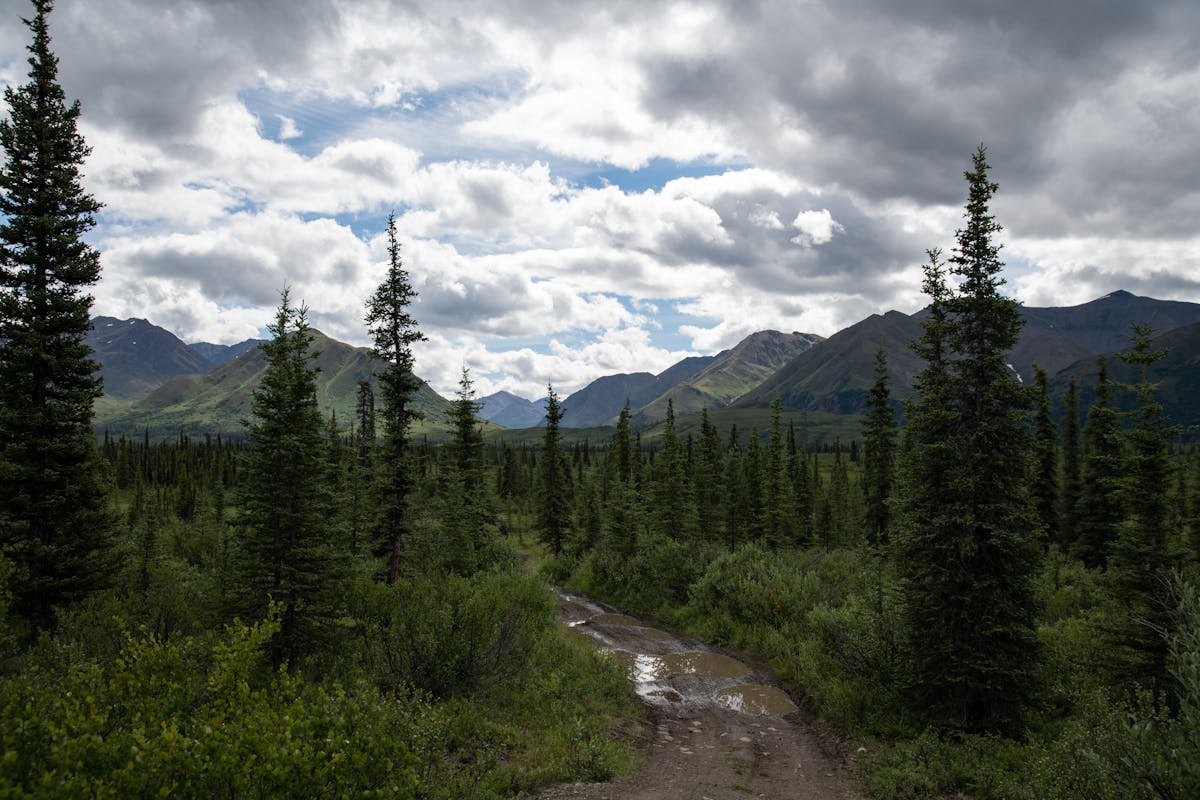
There is Alaska, and then there is the Alaska Bush. The first can mean cruise ports, mountain views, and well-planned tours. The second can mean remote terrain, air travel, severe weather, long distances, limited communication, and emergency response times measured in hours rather than minutes.
Alaska’s own wildlife and outdoor safety guidance makes the risk plain: first aid in wilderness settings can involve difficult environments, limited equipment, and extended care until help arrives, meaning injuries that are manageable in town can become life-threatening in the backcountry. The National Park Service also warns Alaska travelers to prepare for changes to plans, poor weather, delayed flights, or extended stays in the wilderness.
That is why the remote Alaska Bush belongs on any list of dangerous places in the U.S. It is not evil. It is not ugly. It is simply indifferent. A twisted ankle, a missed pickup, a sudden storm, a river crossing, or a wildlife encounter can turn isolation into a trap. We would admire it, respect it, and never wander into it casually.
Picher, Oklahoma: The Town That Industry Poisoned
Picher is one of the bleakest examples of environmental damage in America. Once tied to lead and zinc mining, the town became part of the Tar Creek Superfund disaster, where mining waste left deep scars on land, water, and public health. The Environmental Protection Agency says the area contains roughly 30 million tons of “chat,” the local term for mine tailings containing toxic lead dust, with some piles rising nearly 200 feet.
The horror of Picher is quiet. It is not a sudden explosion or a dramatic storm. It is dust. It is soil. It is contaminated water. It is the idea that children could grow up surrounded by invisible risks created long before they were born. That kind of danger feels especially cruel because it does not appear dangerous at first glance.
Picher is a place we would avoid because it shows how long pollution can outlive profit. Mines close. Companies leave. Residents age, move, or get bought out. But the waste remains, sitting in piles, blowing in the wind, and reminding the country that some places do not recover simply because the boom years ended.
I-405, Los Angeles: A Highway That Eats Time and Patience
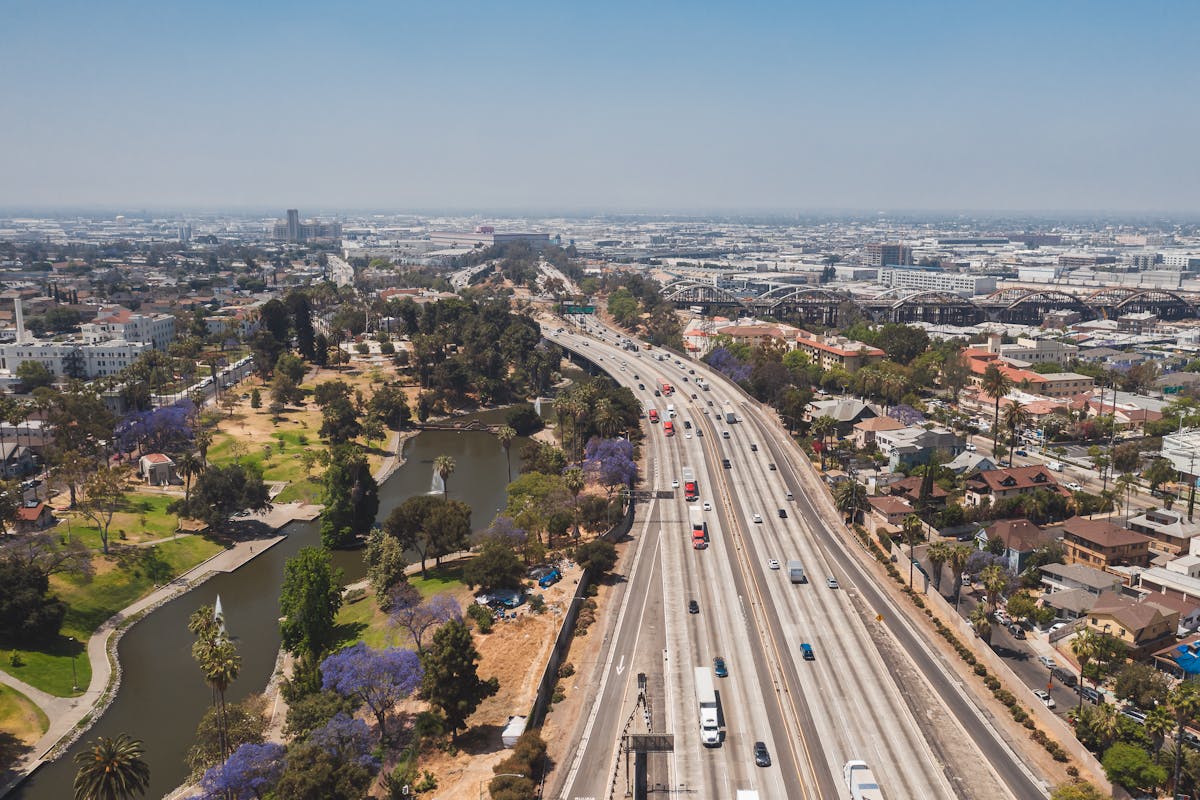
The I-405 is not haunted, radioactive, or full of quicksand. It may still be one of the most soul-draining places in America. Anyone who has spent enough time on Los Angeles freeways understands that traffic can become more than an inconvenience. It becomes a daily tax on mood, time, money, and sanity.
INRIX’s 2024 Global Traffic Scorecard ranked Los Angeles among the most congested U.S. urban areas, with drivers losing an estimated 88 hours to congestion in 2024 and facing major costs in lost time and productivity. That makes the 405 feel less like a road and more like a slow-moving civic punishment.
The danger here is mostly psychological, but that does not make it fake. Hours of brake lights, aggressive merging, missed appointments, honking, fumes, and fatigue can wear people down. We would not send our worst enemy into peak 405 traffic without snacks, water, podcasts, patience, and a full emotional support system.
The U.S. Immigration Court Backlog: The Nightmare That Is Not on a Map
The U.S. immigration court backlog is not a canyon, a swamp, a highway, a ghost town, or a desert. It still belongs here because it is one of the most punishing “places” a person can get trapped in. It is a bureaucratic landscape where people wait, worry, reschedule, hire lawyers if they can, miss work, fear removal, and build their lives around hearing dates that may sit years away.
TRAC’s immigration court data showed 3,288,186 active cases pending at the end of March 2026, including 2,318,797 people waiting for asylum hearings or decisions. Those are not just numbers. They are families, workers, children, students, spouses, and people trying to understand whether they can stay, leave, reunite, work, or plan a future.
This may be the most quietly devastating entry on the list. The danger is not heatstroke or toxic dust. It is suspended time. Nobody should spend years living inside legal uncertainty. Even an enemy deserves a system that moves with clarity, fairness, and at a basic human pace.
The Everglades Interior, Florida: Nature With Teeth, Wings, and No Cell Signal
The Everglades are stunning from the safe edges. Boardwalks, ranger areas, and guided routes can make the park feel accessible. Push too far into the interior without preparation, and the mood changes fast. Wetlands can disorient people. Heat and humidity drain energy. Mosquitoes turn patience into rage. Wildlife deserves distance, not selfies.
The National Park Service advises Everglades visitors to bring water, insect repellent, sunscreen, and appropriate clothing, especially during summer or in areas with heavy vegetation. That simple list says a lot. This is not a place where a person should improvise with flip-flops, low water, and a dying phone battery.
The Everglades are not dangerous because they are “bad.” They are dangerous because they are alive. Alligators, snakes, insects, heat, water, and distance all belong there. Humans are the visitors. The smartest move is to act like a guest who knows the host can bite.
Slab City, California: The “Free” Place With a Brutal Price
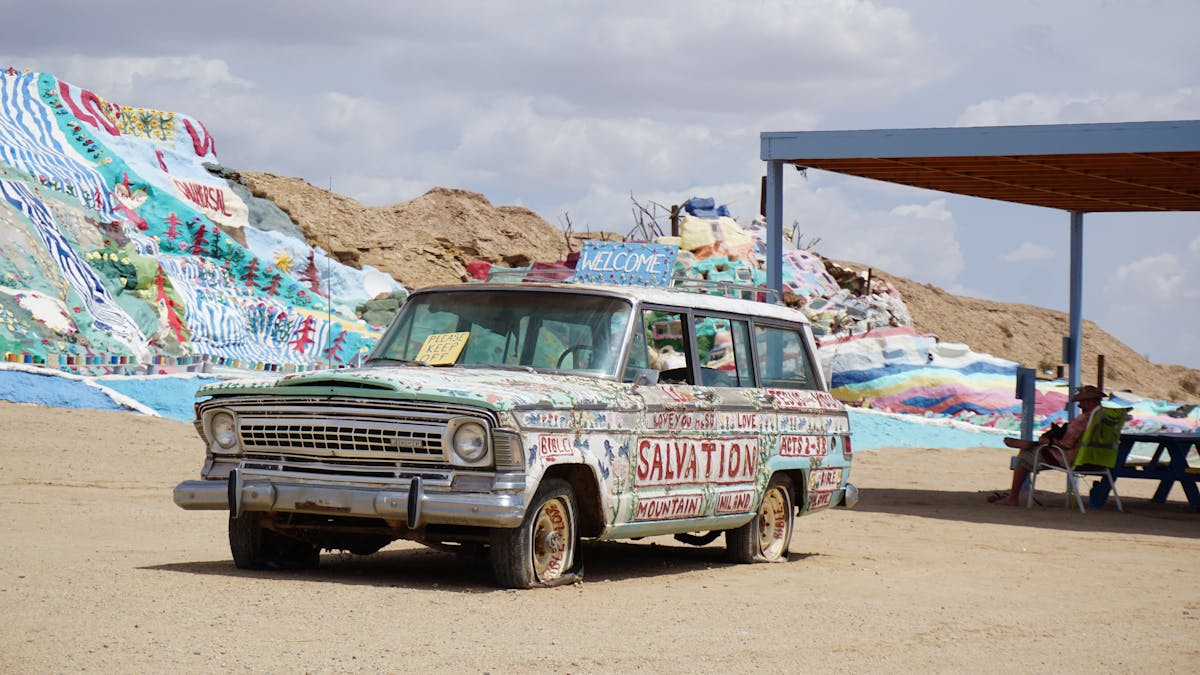
Slab City has a myth around it. People call it the Last Free Place. It attracts artists, wanderers, off-grid residents, desert dreamers, and people who want to live outside the usual systems. That myth is powerful, but the reality is much harder.
PBS SoCal describes Slab City as a desert community where long-term residents face an increasingly hot, dry climate without reliable electricity, running water, or sewage systems. Summer storms and desert conditions can add even more danger.
The harsh truth is that “free” can become expensive when basic infrastructure disappears. Water has to come from somewhere. Shade has to be created. Waste has to be managed. Heat has to be survived. Slab City may fascinate outsiders, but nobody should confuse fascination with ease. We would not send anyone there expecting a quirky vacation. It is a survival environment with art on top.
Hanford Site, Washington: America’s Nuclear Legacy Still Waiting to Be Cleaned Up
Hanford is one of the most serious environmental cleanup sites in the United States. Built into the history of the Manhattan Project, it produced plutonium for nuclear weapons and left behind a massive waste problem. Washington State’s Department of Ecology says decades of plutonium production left 56 million gallons of highly radioactive and chemically hazardous waste in 177 underground tanks at the Hanford Site.
That number alone should stop people in their tracks. Hanford is not dangerous because of rumors or urban legend. It is dangerous because the contamination is real, complex, expensive, and long-lasting. Cleanup involves high-level waste, aging tanks, chemical hazards, radiation concerns, and decades of technical work.
We would avoid any unauthorized access near Hanford for obvious reasons. This is not a spooky abandoned site for thrill-seekers. It is a controlled cleanup zone tied to one of the most consequential chapters in American history. The frightening part is not just what happened there. It is how long the cleanup still matters.
Final Thoughts
The United States has plenty of beautiful places worth visiting, protecting, and celebrating. These twelve belong to a different category. They remind us that beauty can come with risk, history can leave scars, and some destinations demand more than curiosity.
We can admire Death Valley without challenging it in July. We can respect the Everglades without wandering into remote wetlands unprepared. We can remember the Lower Ninth Ward without reducing it to tragedy tourism. We can study Centralia, Picher, and Hanford as warnings about what happens when land absorbs the cost of human ambition.
The most dangerous places in America are not always the loudest. Sometimes they are silent roads, empty lots, hot valleys, shrinking lakes, old industrial zones, court calendars, and neighborhoods that still remember the day the water came. That is what makes them unforgettable, and that is why we would not wish them on anyone.