8 Discontinued Foods From the 1960s That Defined an Era
The 1960s were a decade of big change in the American kitchen. The space race had everyone dreaming about the future, supermarkets were bigger than ever, and food companies were racing to invent new products for busy families. Television commercials introduced a parade of drinks, snacks, and cereals that promised fun, convenience, and a taste of tomorrow.
Many of those products were wildly popular for a while. Kids begged for them, mothers stocked them in the pantry, and their jingles became part of everyday life. But tastes changed, health concerns grew, and companies moved on to new ideas. One by one, these products disappeared.
For people who grew up in the 1960s, the names still bring back vivid memories. Here are eight discontinued foods and drinks from that decade that defined an era, and what happened to them.

1. Tab
Coca-Cola introduced Tab in 1963 as one of its first diet sodas. It was sweetened with saccharin and cyclamate at first, and it was marketed heavily to women who were watching their weight. The pink can became a symbol of 1960s and 1970s diet culture.
Tab had a sharp, slightly bitter taste that its fans loved. It remained a cult favorite even after Diet Coke arrived in 1982 and became far more popular. Many loyal drinkers stuck with Tab for decades.
In 2020, Coca-Cola announced it was discontinuing Tab as part of a plan to trim weaker brands. Fans were heartbroken, and some stocked up on the last cans they could find. The company said retiring Tab would let it focus on bigger brands like Diet Coke and Coke Zero, as ABC7 News reported at the time.
2. Patio Diet Cola
Before Diet Pepsi existed, there was Patio. Pepsi introduced Patio Diet Cola in 1963, the same year Coca-Cola launched Tab. The Patio brand also included a line of fruit-flavored sodas.
In 1964, Pepsi renamed Patio Diet Cola as Diet Pepsi, which went on to become one of the most popular diet sodas in America. The Patio name faded away, and the fruit flavors disappeared over time.
Few people remember Patio today. But it played an important role in the early days of diet soda, and its story is a reminder of how fast the soda business moved in the 1960s.
3. Funny Face Drink Mix
Pillsbury introduced Funny Face drink mix in 1964 to compete with Kool-Aid. Each flavor had a cartoon character on the packet, such as Goofy Grape, Freckle Face Strawberry, and Jolly Olly Orange. Kids loved the silly names and bright colors.
Unlike Kool-Aid at the time, Funny Face was pre-sweetened, so mothers did not need to add sugar. It was sweetened with cyclamate, an artificial sweetener. When the U.S. government banned cyclamate in 1969, Pillsbury had to reformulate the drinks with sugar.
Some of the original flavor names were changed after complaints that they were offensive. Pillsbury later sold Funny Face to another company, and over the years the drink faded from most store shelves. Collectors still prize the old packets and promotional mugs.
4. Space Food Sticks
Inspired by NASA’s space program, Pillsbury introduced Space Food Sticks in 1969, the same year Americans landed on the moon. They were chewy, energy-packed snack sticks that came in flavors like chocolate, peanut butter, and caramel. The packaging suggested they were the same food eaten by astronauts.
Pillsbury had worked on food development for NASA, and the company used that connection to market the snack. Kids loved the idea of eating like an astronaut, and Space Food Sticks became a popular lunchbox treat in the 1970s.
The product faded by the 1980s, though it has been revived briefly by other companies. For many boomers, Space Food Sticks remain a symbol of the excitement surrounding the space race.
5. Jell-O Vegetable Flavors
In the 1960s, gelatin salads were everywhere, and Jell-O wanted to capitalize. The company introduced savory flavors including celery, seasoned tomato, Italian salad, and mixed vegetable. Home cooks used them to make molded salads filled with chopped vegetables.
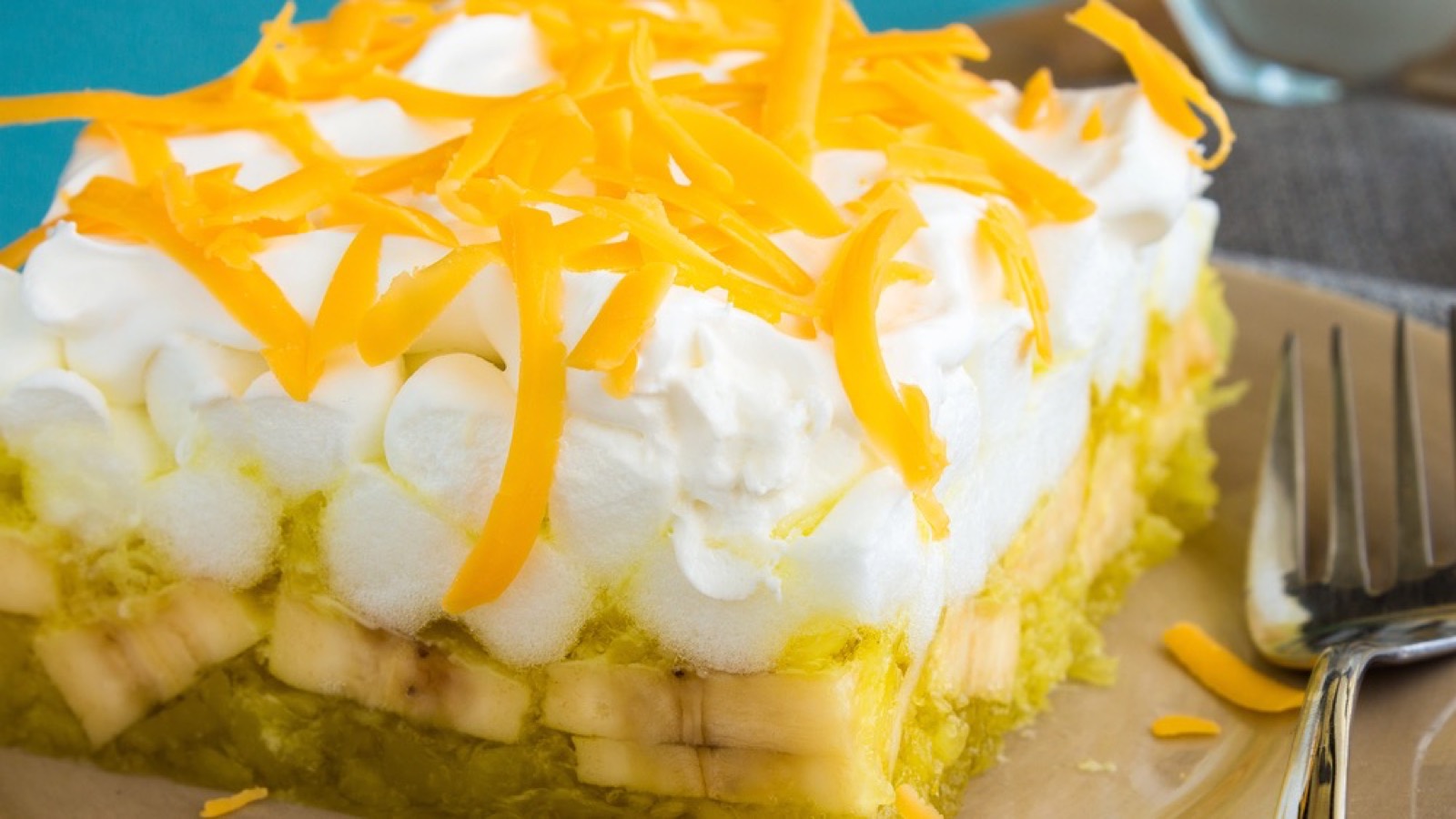
These savory flavors were meant to make Jell-O part of the main meal, not just dessert. Some home cooks loved them, but most Americans never warmed up to celery-flavored gelatin. The flavors were discontinued within a few years.
Today, they are often mentioned in lists of the strangest foods from the 1960s. They appear among the bizarre 1960s food trends that deserve to stay buried.
6. Kellogg’s OKs
Kellogg’s OKs cereal was introduced in 1959 and sold into the early 1960s. The oat cereal was shaped like the letters O and K, and its mascot was Big Otis, a friendly Scottish character. Later, Yogi Bear appeared on the boxes.
OKs did not last long, but it gained a cult following. It is often mentioned in discussions of early cereal mascots and the rise of cereal marketing on television. The cereal is mostly forgotten today, except by collectors and those who remember eating it as children.
7. Fizzies
Fizzies were tablets that turned a glass of water into a fizzy, flavored drink, much like a soda. They were introduced in the late 1950s and became popular in the 1960s. Kids dropped a tablet into water and watched it bubble and foam.
Like many diet products of the era, Fizzies were sweetened with cyclamate. When the federal government banned cyclamate in 1969, Fizzies had to be pulled and reformulated, and sales never fully recovered.
Fizzies have been revived several times by small companies, but they never regained their 1960s popularity. For many boomers, they remain a fun memory of childhood summers.
8. Screaming Yellow Zonkers
Screaming Yellow Zonkers were introduced in 1968 and became famous for their funny packaging. The snack was glazed, sweet popcorn sold in a bright yellow box covered with jokes and silly writing. The box itself was part of the fun.
The snack was popular with teenagers and college students, and its quirky marketing made it stand out. It was produced for decades by different companies.
Screaming Yellow Zonkers disappeared from most stores in the 2000s. They remain a beloved memory for many people who grew up in the late 1960s and 1970s.
Why These Foods Disappeared
Many 1960s foods disappeared for similar reasons. Some relied on cyclamate, which was banned in 1969, and could not survive reformulation. Others faded as tastes changed and new products came along. Some brands were sold to other companies, which eventually let them go.
The 1960s were also a time of rapid experimentation. Food companies released new products constantly, and only a few became long-lasting classics. Many were fads that burned bright and faded quickly. Products like these filled the grocery stores described in many lists of forgotten household items from the past.
The Lasting Power of Nostalgia
Even decades later, many people feel a strong connection to the foods they ate as children. The names, jingles, and packages are tied to memories of family, friends, and simpler times. That is why companies sometimes bring back old products for limited runs.
Collectors trade old boxes, packets, and advertisements online, and many people enjoy sharing memories of what they ate growing up. The foods may be gone, but the memories remain. They are part of the foods most boomers loved with a passion.
Which of these 1960s foods do you remember, and is there one you wish would come back? Many readers still say nothing tasted quite like a glass of Funny Face on a summer day.