9 Strange Foods Astronauts Have Actually Eaten in Space
Most people have tried the crunchy, freeze-dried “astronaut ice cream” sold in museum gift shops. It is a fun treat, but the real story of space food is far stranger. Over the past six decades, astronauts have eaten meals squeezed from tubes, bite-sized cubes coated in gelatin and even a sandwich that was smuggled on board.
Eating in space has always been a challenge. Without gravity, crumbs float into equipment, liquids form drifting bubbles and food has to last for days or months without a refrigerator. Early scientists weren’t even sure humans could swallow properly in weightlessness.
From the Mercury missions to the space shuttle era, NASA and its astronauts have experimented with some truly unusual meals. Here are nine strange foods astronauts have actually eaten in space.
1. Applesauce From a Tube
When John Glenn became the first American to eat in space during his 1962 Friendship 7 flight, his meal didn’t look like much. According to the Smithsonian National Air and Space Museum, Glenn ate applesauce and pureed beef with vegetables, packed in aluminum tubes much like toothpaste.
The goal was to prove that astronauts could swallow and digest food in weightlessness. It worked, but the tubes were far from appetizing.
2. Pureed Beef and Vegetables
Glenn’s tube menu also included pureed beef and vegetables. Like the applesauce, it had to be squeezed straight into his mouth. Astronauts didn’t love the texture or taste, and it was clear that longer missions would need better options. These early meals helped NASA learn what worked, and what didn’t, as missions grew longer.
3. A Smuggled Corned Beef Sandwich
One of the most famous food stories in space history happened during Gemini 3 in 1965. Astronaut John Young secretly brought a corned beef sandwich on rye aboard and handed it to his crewmate, Gus Grissom.
The sandwich was a lighthearted moment, but crumbs floating around the cabin raised concerns about damage to equipment. Congress even questioned the stunt, and NASA tightened its rules on outside food.
4. Bite-Sized Food Cubes
During the Gemini and Apollo programs, astronauts ate small food cubes coated with gelatin or oil to prevent crumbs. According to History.com, these included cinnamon toast cubes, bacon cubes, strawberry cubes, chocolate cubes and peanut butter cubes.
The cubes were easy to pop into the mouth in one bite, which kept the cabin cleaner. Some astronauts liked them, while others found them dry and bland.
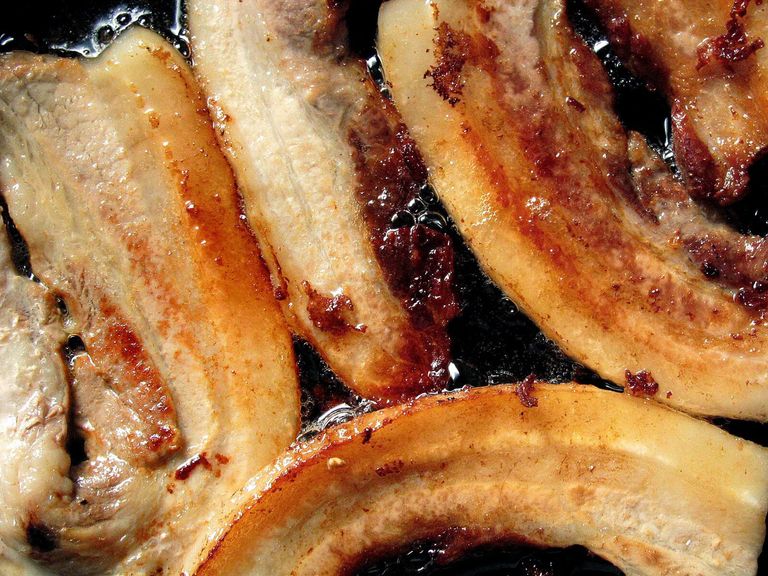
5. Bacon Cubes on the Moon
Among those cubes was one with a special place in history. According to History.com, the first food eaten on the moon was a bacon cube. It is a strange detail, but it shows how much effort went into making space food practical. Bacon remains a popular breakfast item for astronauts even today, though it now comes in a very different form.
6. Shrimp Cocktail
Shrimp cocktail became one of the most beloved foods in space. During Apollo 11, Buzz Aldrin reportedly enjoyed it so much that he praised it in his notes. The dish became a longtime favorite among astronauts.
Part of its appeal is the spicy cocktail sauce. In weightlessness, fluids shift toward the head and can dull the sense of taste, so astronauts often crave bold, spicy flavors.
7. Apricot Food Bars Inside Helmets
During Apollo 15, astronauts walking on the moon had snacks tucked inside their helmets. According to the Smithsonian, they ate apricot food bars during their time on the lunar surface. It was a clever solution for long moonwalks, when astronauts couldn’t take off their helmets to eat.
8. Spoon-Bowl Pack Meals
Apollo astronauts also tried “spoon-bowl” packs, which held rehydrated meals that could be eaten with a spoon. History.com notes that options included chicken stew, chicken and rice, and spaghetti with meat sauce.
This was a big step forward. For the first time, astronauts could eat meals that resembled what they might eat at home, using a normal utensil.
9. Ice Cream on Skylab
Despite the popularity of freeze-dried astronaut ice cream on Earth, real ice cream had to wait. The Smithsonian notes that Skylab, America’s first space station, launched in 1973 with a freezer that allowed crews to bring ice cream as a special treat. Skylab also offered heated canned foods on a galley tray, making mealtime far more comfortable than the tube days of the early 1960s.
How Space Food Has Changed
Today’s astronauts on the International Space Station enjoy a much wider menu, including fresh fruit delivered on resupply missions and dishes inspired by cuisines from around the world. NASA food scientists work to make meals tasty, nutritious and safe for long missions. Astronauts have also experimented with growing leafy greens in space, an important step for future trips to the moon and Mars.
Why Taste Changes in Space
Astronauts often say food tastes different in orbit. In microgravity, fluids in the body shift upward toward the head, which can cause a stuffy feeling similar to a cold. That congestion dulls the sense of smell, and since smell plays a big role in flavor, food can taste bland.
That is one reason astronauts tend to love spicy and strongly flavored foods, like shrimp cocktail with horseradish sauce. Hot sauce, mustard and other condiments have become popular additions to space menus. Liquid salt and pepper are used too, because regular grains would float away and could get into equipment or astronauts’ eyes.
A Taste of History
From tubes of applesauce to shrimp cocktail, space food tells the story of how far exploration has come. Every strange meal helped scientists understand what humans need to live and work far from Earth. The next time you see astronaut ice cream in a gift shop, remember that the real space menu has been far more surprising, and a lot more interesting, than anyone imagined.
Many of these early experiments paved the way for the food astronauts eat today. Each mission taught scientists something new about packaging, flavor and nutrition far from home. Who knows what astronauts on future trips to Mars will be eating, but it will probably surprise us all.