Sam Bankman‑Fried Files Presidential Pardon Request…The Stunning Return of a Fallen Crypto Titan
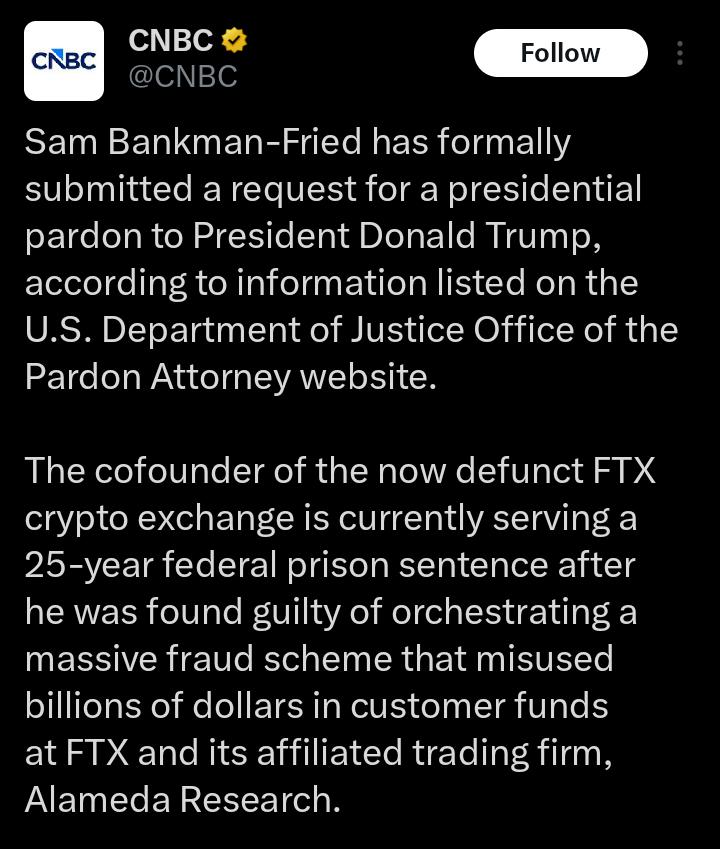
Sam Bankman‑Fried is back in the headlines, but this time, it’s not about FTX’s spectacular collapse or his time in the federal penitentiary. From behind bars, the disgraced former crypto billionaire has launched a formal bid for a presidential pardon, a bold and controversial attempt to salvage his legacy and restore his rights after a historic fraud conviction.

The filing, now listed as “pending” on the U.S. Department of Justice Office of the Pardon Attorney’s website, marks the latest chapter in a saga that has roiled financial markets, political operatives, and crypto communities alike.
A Startup Star Turned Prisoner
Bankman‑Fried, often known by his initials SBF, co‑founded the cryptocurrency exchange FTX in 2019. Once valued at tens of billions of dollars and celebrated as one of digital finance’s brightest talents, FTX collapsed in late 2022 after customers rushed to withdraw funds, triggering a liquidity crisis that exposed mismanagement and improper transfers of customer assets.
By November 2023, a federal jury convicted Bankman‑Fried on seven counts of fraud, conspiracy, and embezzlement for his role in what prosecutors described as one of the largest financial frauds in U.S. history.
In March 2024, he was sentenced to 25 years in federal prison and ordered to forfeit more than $11 billion tied to the fraud.
From Prison Cell to Pardon Petition
On June 8, 2026, Bankman‑Fried officially filed a presidential pardon petition with the Trump administration through the Department of Justice’s clemency office, an extraordinary reach for mercy from someone whose fall was one of the biggest scandals in the crypto world.
In an exclusive phone interview with FOX Business, Bankman‑Fried did not mince words about his desire for clemency. When asked if he wanted a pardon from the White House, he replied simply:
“Absolutely… It would be obvious, you know, ultimately up to the president, not up to me.”
That statement won’t quiet critics who argue his crimes caused widespread harm among retail investors and the broader digital finance ecosystem.
Bankman‑Fried’s petition seeks a “pardon after completion of sentence,” meaning it would not free him early or erase his conviction. Instead, it would restore civil rights that can be stripped away after criminal convictions, rights such as voting, serving on a jury, holding certain licenses, and pursuing employment opportunities that would otherwise be unavailable to him.
This is a crucial point: clemency here does not mean immediate release from prison.
Odd Ironies and Political Shifts
Perhaps the most striking twist in Bankman‑Fried’s pardon push is the political landscape in which it unfolds.
As recently as January 2026, President Donald Trump publicly stated he had no plans to pardon Bankman‑Fried, even as he underscored support for the broader crypto industry.
In that interview with The New York Times, Trump placed Bankman‑Fried’s case outside the scope of his clemency plans, despite pardoning other high‑profile figures with ties to digital finance, including top executives from Binance and BitMEX.
One Trump aide told CNN, when asked about the pardon request, that the White House would not comment beyond that earlier stance.
Yet Bankman‑Fried, now 34, is doubling down, both publicly and legally, on pursuing that very clemency, even though it represents a political long shot.
Trump’s decision to pardon other figures in the crypto world has set strategic precedents.
In the last year, the president granted clemency to several high‑profile offenders, including the former Bitcoin marketplace founder Ross Ulbricht and the co‑founders of crypto exchange BitMEX, a move that sparked controversy even among cryptocurrency advocates.
Yet Bankman‑Fried’s case falls into a very different category: his conviction was tied directly to the misuse of customer funds, not to regulatory disputes or administrative enforcement issues.
Analysts have noted that the FTX scandal caused more than just financial losses; it eroded trust in centralized crypto exchanges worldwide, triggering regulatory crackdowns and investor panic.
The Ongoing Appeal and Legal Strategy

Bankman‑Fried’s pardon push is not his only legal pathway.
According to reports, he continues to pursue appeals of his conviction, arguing that legal errors occurred at trial and that certain key testimony was not considered.
His attorneys argue that issues raised in February 2026, including allegedly exculpatory testimony from former executives at FTX’s trading affiliate Alameda Research, warrant reconsideration, possibly even a new trial.
But even with an appeal in motion, a presidential pardon remains a legally separate and highly unusual strategy for someone still serving a long sentence.
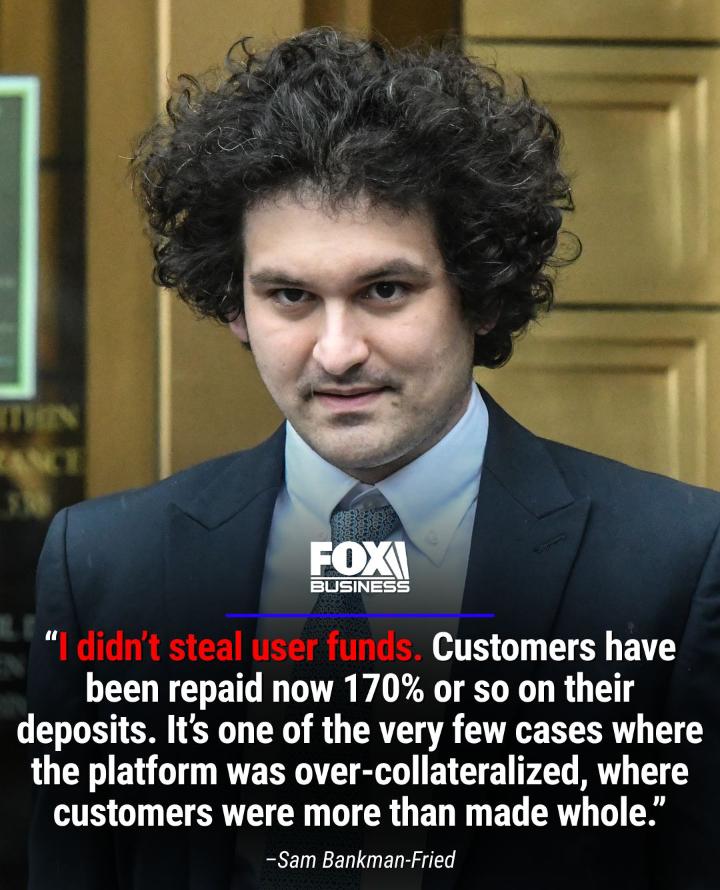
In his Fox Business interview, Bankman‑Fried invoked one of the most emotional talking points available: customer restitution. While insisting on his innocence, he highlighted the fact that FTX’s bankruptcy estate recovered billions and distributed much of that value back to creditors and former customers.
“Customers have received repayments at levels that should change how people view the case,” he told reporters.
Indeed, bankruptcy data shows billions in recovered assets, though critics caution that repayment does not erase the underlying criminal conviction or the sequence of decisions that led to customers’ losses in the first place.
Bankman‑Fried’s pardon bid has drawn reactions from all sides of the political spectrum. Some pro–crypto advocates argue that a pardon could help heal divisions and restore confidence in digital asset markets. Others say that clemency for someone whose downfall helped cause billions in market value to collapse would undercut accountability in financial systems.
A Republican strategist with ties to Trump is reportedly part of Bankman‑Fried’s broader outreach effort, though no senior Trump aide has publicly endorsed the clemency campaign.
Lawmakers have also weighed in. Reports indicate that certain members of Congress have voiced strong opposition to granting clemency, describing the bid as unwarranted given the severity of Bankman‑Fried’s crimes.
Sam Bankman‑Fried’s bid for a presidential pardon is a dramatic gambit, punctuating the dramatic arc of a man who went from crypto wunderkind to convicted fraudster.
Whether the White House ever seriously considers his petition, or whether public opinion will support such a move, remains deeply uncertain.
What is clear, however, is that this story has crossed beyond the boundaries of business headlines into constitutional debate about the power of presidential clemency, the future of emerging technologies, and how far the U.S. justice system will go to balance punishment with redemption.
And perhaps most provocatively of all, Bankman‑Fried himself has said few things more plainly than this: “Absolutely,” he wants that pardon.