Florida Executes 74-Year-Old Dusty Ray Spencer, Raising Hard Questions About Time, Punishment, and Modern Capital Justice.
A Final Moment Decades in the Making

Florida executes 74-year-old Dusty Ray Spencer after a legal journey that stretched across more than three decades and multiple generations of legal review. The execution took place at Florida State Prison near Starke on June 25, 2026, closing a case that began in 1992 with the murder of his wife, Karen Spencer. The state’s decision positioned the case as both a legal endpoint and a historical marker in Florida’s modern death penalty record.
The significance of Florida executing 74-year-old Dusty Ray Spencer extends beyond the courtroom. It highlights how long capital punishment cases can remain active in the United States justice system. It also raises questions about whether justice delivered after decades still carries the same moral and social meaning as it did at the time of sentencing.
Spencer was pronounced dead at 6:10 p.m. after receiving a lethal injection under Florida’s execution protocol. His death closed one of the longest-running capital cases in the state’s modern history. It also intensified debate over aging inmates, procedural delay, and the accelerating pace of executions in Florida.
A Crime Rooted in Escalating Domestic Violence
The case behind Florida’s execution of 74-year-old Dusty Ray Spencer began with a pattern of domestic violence that unfolded before the fatal incident. Court records show repeated threats and physical confrontations between Spencer and his wife in the months leading up to the murder. This escalation is central to understanding how the legal system later interpreted intent and aggravating factors.
In late 1991, Spencer was arrested after a violent domestic incident in which he threatened to kill his wife. Prosecutors later argued that the threat was not isolated, but part of a continuing pattern of control and intimidation. While in custody, he allegedly made additional threats during contact with his wife, reinforcing the perceived risk.
The murder occurred on January 18, 1992, in Orange County, Florida. Karen Spencer was killed after a violent attack that involved stabbing and physical assault. Her teenage son attempted to intervene during earlier violence, underscoring the extended nature of the household danger that preceded the killing.
The Legal System and the Weight of Decades
The path that led to Florida executes 74-year-old Dusty Ray Spencer was shaped by a legal process that extended far beyond the original trial. Spencer was convicted of first-degree murder in 1992 and initially sentenced to death. However, in 1994, the Florida Supreme Court ordered a resentencing review after identifying issues in the evaluation of aggravating and mitigating circumstances.
This procedural correction did not overturn the conviction. Instead, it returned the case to sentencing while preserving the underlying guilty verdict. A new death sentence followed, and years of appeals moved through state and federal courts without reversing the outcome.
Over time, the case became part of a broader national pattern in capital punishment law. According to historical trends tracked by criminal justice research organizations, death penalty cases in the United States often take decades to fully resolve. This delay creates a system in which punishment is shaped not only by crime severity but also by procedural endurance.
Why Florida Executes 74-Year-Old Inmate Cases Draw Attention.
The fact that Florida executes 74-year-old Dusty Ray Spencer places age at the center of public attention. Spencer became the oldest inmate executed in Florida’s modern recordkeeping history. He surpassed previous cases where inmates were executed in their early seventies.
Age in capital punishment cases introduces a complex legal and ethical layer. Courts have consistently held that advanced age alone does not invalidate a death sentence. However, critics argue that prolonged incarceration followed by execution raises questions about proportionality and evolving standards of punishment.
In broader U.S. history, elderly executions remain rare but not unprecedented. The oldest person executed in modern American history was 83-year-old Walter Leroy Moody Jr. in Alabama in 2018. These cases continue to fuel debate over whether time served on death row should alter the meaning of a sentence imposed decades earlier.
The Slow Collapse of Legal Resistance Over Time
The timeline behind Florida’s execution of 74-year-old Dusty Ray Spencer reflects what legal scholars often describe as “procedural exhaustion.” This refers to the gradual rejection of appeals over long periods rather than a single decisive ruling. Spencer’s legal team pursued multiple appeals in both state and federal courts without success.
Each stage of review examined different aspects of the case, including trial procedure, sentencing evaluation, and constitutional claims. Courts repeatedly upheld the conviction and death sentence. Over time, the accumulation of denied appeals effectively narrowed the legal options until no further relief remained.
This process highlights a structural reality of capital punishment systems. Cases do not end abruptly in most instances. Instead, they slowly converge toward closure through repeated judicial review, often spanning decades before execution is carried out.
The Pace of Executions in Florida and Its Broader Implications

Florida executes 74-year-old Dusty Ray Spencer in a period marked by increased execution activity in the state. Florida carried out nine executions in 2026 alone, following a record-setting year in 2025. That year saw 19 executions, the highest number recorded in the state’s modern history.
This acceleration places Florida among the most active death penalty states in the country. Comparative data from recent years show that only a small number of states account for the majority of executions nationwide. This concentration raises questions about regional differences in the application of capital punishment and policy direction.
The increasing pace also introduces systemic tension. As executions become more frequent, the administrative and ethical weight of each individual case may be perceived differently. Scholars of criminal justice often note that frequency can influence public perception of severity, even when legal standards remain unchanged.
Aging on Death Row and the Question of Time Served
A central implication of Florida executing 74-year-old Dusty Ray Spencer is the role of aging on death row. Spencer spent more than three decades under sentence of death before his execution. During that time, he aged within a highly controlled institutional environment.
This prolonged confinement raises questions about whether punishment is defined solely by execution or also by the extended period of incarceration. In many long-term capital cases, inmates experience significant health decline before their sentences are carried out. This reality has prompted ongoing debate among legal scholars and ethicists.
Historical comparisons show that extended death row stays are not unusual in the United States. According to criminal justice research, the average time between sentencing and execution has increased significantly since the late 20th century. This trend reflects expanded appeals processes and evolving constitutional review standards.
Domestic Violence Context and Missed Intervention Points

The narrative behind Florida’s execution of 74-year-old Dusty Ray Spencer also reflects broader patterns in domestic violence cases. Many homicide cases involving intimate partners follow documented cycles of escalation. These cycles often include threats, prior assaults, and repeated intimidation before a fatal outcome occurs.
In Spencer’s case, prior incidents were recorded before the murder, including threats and physical violence. This pattern aligns with research from domestic violence prevention organizations, which consistently show that escalation is one of the strongest predictors of lethal outcomes in intimate partner relationships.
The case underscores the importance of early intervention systems. While law enforcement responded to earlier incidents, the progression of violence ultimately continued. This gap between intervention and outcome remains a critical issue in domestic violence prevention policy.
The Execution Protocol and Legal Scrutiny
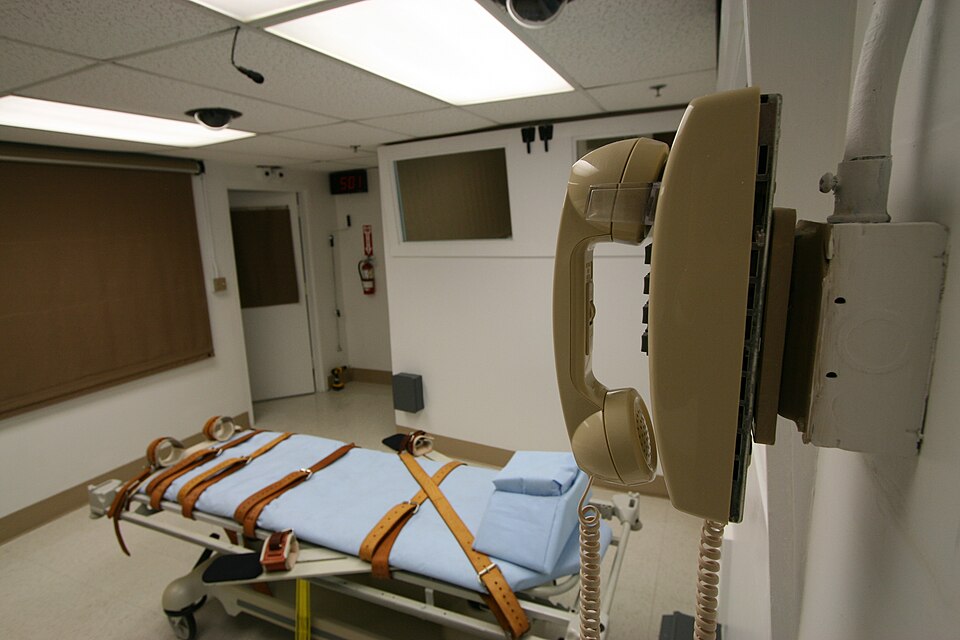
Florida executes 74-year-old Dusty Ray Spencer using a three-drug lethal injection protocol that has been upheld by state and federal courts. Legal challenges in recent years have focused on whether such protocols comply with constitutional protections against cruel and unusual punishment.
Defense arguments in Spencer’s final appeals included concerns about age-related medical vulnerability and the potential risks associated with execution procedures. Courts rejected these arguments, allowing the execution to proceed after final review by both the Florida Supreme Court and the U.S. Supreme Court.
Lethal injection remains the most widely used method of execution in the United States. However, its application continues to generate legal and ethical debate, particularly in cases involving elderly or medically compromised inmates.
A System Defined by Delay and Final Resolution
The case in which Florida executes 74-year-old Dusty Ray Spencer illustrates a justice system defined by two competing realities. One is delay, where cases stretch across decades due to appeals, reviews, and procedural safeguards. The other is finality, where the state ultimately carries out a sentence in a controlled and irreversible manner.
This dual structure creates a distinctive tension. Justice is both prolonged and absolute. It is examined repeatedly over time, yet resolved in a single act at the end. This contrast raises ongoing questions about how modern societies balance due process with final enforcement.
The broader implication is not limited to one case. It extends to how capital punishment functions in practice across the United States. As cases like Spencer’s show, time does not simplify justice. Instead, it often deepens its complexity.
In reflecting on Florida executing 74-year-old Dusty Ray Spencer, the central question is not only what happened, but what it means when justice arrives after an entire lifetime has passed. At what point does punishment remain connected to its original purpose, and at what point does it become something shaped more by time than by the crime itself?