8 Most Notoriously Evil Men Who Proved Power Can Turn Deadly
Power rarely announces itself as evil. It does not always arrive with chaos, war cries, or obvious cruelty. Sometimes it comes dressed in leadership, wrapped in ideology, and backed by applause. It signs laws, builds systems, commands armies, and convinces millions that destruction is necessary for “order,” “progress,” or “purity.”
That is what makes the darkest rulers in history so disturbing. They did not merely commit acts of violence, they turned violence into policy, fear into governance, and human beings into tools of ambition. From empires built on forced labor to revolutions soaked in suspicion, from ideological purges to mass extermination, these men show how easily authority can collapse into atrocity when accountability disappears.
Here are the 8 most notoriously dangerous rulers and leaders who proved that power, in the wrong hands, can become deadly.
Maximilien Robespierre
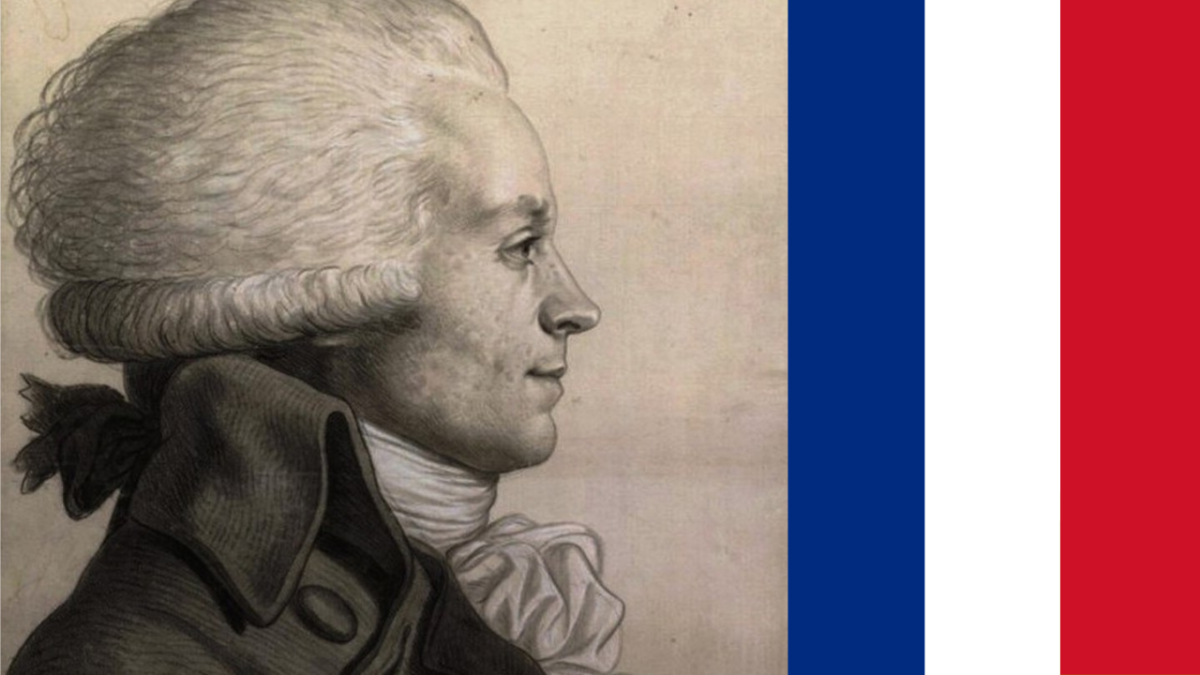
Maximilien Robespierre is a frightening example of how idealism can turn deadly when it loses mercy. During the French Revolution, he became one of the leading figures of the Reign of Terror, a period when revolutionary justice became swift, suspicious, and bloody. The guillotine became the symbol of a movement that began with liberty and descended into fear.
Robespierre spoke often of virtue, the people, and the republic. That language made his violence even more disturbing. He did not present himself as a villain. He believed he was defending the revolution from enemies. Yet once politics becomes a test of purity, almost anyone can fail. Rivals, nobles, priests, former allies, and ordinary citizens could be accused of betraying the people.
Emperor Hirohito
Emperor Hirohito remains one of the most debated figures on this list because historians still debate his exact role in Japan’s wartime decisions. Yet his reign covered some of Imperial Japan’s worst atrocities across Asia and the Pacific. Under the imperial system, loyalty to the emperor carried enormous emotional and political force, and that force helped sustain a war machine that caused immense suffering.
The Nanjing Massacre remains one of the most notorious crimes committed by Japanese forces during that era. Civilians and surrendered soldiers were killed, women were assaulted, and the city suffered shocking violence after Japanese troops captured it. Across Asia, Imperial Japan’s military campaigns also involved forced labor, prison abuse, sexual slavery, biological warfare experiments, and brutal occupation policies.
Adolf Hitler
Adolf Hitler is one of the darkest names in modern history because he turned hate into a state project. As the leader of Nazi Germany, he built an ideology around racial supremacy, antisemitism, militarism, and conquest. His regime did not merely dislike certain groups. It created a complete system designed to identify, isolate, dehumanize, deport, enslave, and murder them.
The Holocaust remains the clearest symbol of his evil. Six million Jews were murdered, along with millions of other victims, including Roma people, disabled people, Polish civilians, Soviet prisoners, gay men, political opponents, and others marked as enemies of the Nazi vision. Hitler’s cruelty was not random. It moved through offices, trains, camps, laws, uniforms, medical rooms, police files, and propaganda posters. That is what made it so terrifying. Murder became organized. Hatred became paperwork.
Pol Pot
Pol Pot turned Cambodia into one of the twentieth century’s most devastating social experiments. As leader of the Khmer Rouge, he tried to erase modern life and rebuild the country from the ground up. The regime emptied cities, abolished money, attacked religion, separated families, and forced people into rural labor camps. It claimed to be creating equality. In reality, it created hunger, fear, exhaustion, torture, and mass death.
The Khmer Rouge treated education as suspicious. Teachers, doctors, monks, professionals, former government workers, and people who seemed “intellectual” could be targeted. Even wearing glasses could make a person look dangerous in the eyes of the regime. That detail captures the madness of Pol Pot’s rule. A government became so paranoid and fanatical that ordinary signs of learning could become a death sentence.
Idi Amin

Idi Amin ruled Uganda like a man who believed a country was his personal weapon. After taking power through a military coup, he created a regime marked by disappearances, political killings, ethnic persecution, public intimidation, and wild unpredictability. His government became feared because no one could feel safe for long.
Amin mixed brutality with spectacle. He gave himself grand titles, made outrageous claims, staged public displays of strength, and built an image that was almost theatrical. Behind that performance stood a violent reality. Critics vanished. Soldiers turned on citizens. Rival groups were targeted. Officials could rise quickly and fall just as fast. Fear became part of daily life.
Ruhollah Khomeini
Ruhollah Khomeini rose to power after the Iranian Revolution and became the face of a new political and religious order. Many people who supported the revolution wanted freedom from monarchy, corruption, and foreign influence. What followed, however, was a system that used religion, law, and revolutionary authority to suppress dissent and control public life.
Khomeini’s rule punished opposition harshly. Political rivals, leftists, monarchists, secular activists, religious minorities, women who resisted strict rules, and critics of the new system faced pressure, imprisonment, or death. Revolutionary courts moved quickly. The state demanded loyalty not only to a government, but to a religious-political vision that claimed moral authority over everyday life.
Josef Stalin
Josef Stalin ruled the Soviet Union through fear so deep that silence became a survival skill. He did not need every citizen to love him. He needed them to fear the knock at the door, the secret police, the informant, the prison train, and the accusation that could ruin an entire family. Stalin understood that terror works best when no one knows exactly where the line is. Under his rule, loyalty could still end in death.
His regime used forced collectivization, mass arrests, deportations, political purges, show trials, censorship, and prison labor camps to crush resistance. Millions suffered under policies that treated human beings as disposable pieces in a political machine. The famine in Ukraine, the brutality of the Gulag system, and the Great Purge exposed the cost of a government that saw suspicion as proof and obedience as never enough.
Ivan IV of Russia
Ivan IV of Russia, known as Ivan the Terrible, built power through fear, suspicion, and ruthless punishment. As the first tsar of Russia, he expanded central authority, but he also left behind a legacy of cruelty that became inseparable from his rule. His reign showed how state-building can become monstrous when power is driven by paranoia.
The oprichnina, Ivan’s separate political and military system, became a tool of terror. Loyal enforcers targeted nobles, towns, and suspected enemies. Property was seized. People were tortured. Communities were punished. The massacre of Novgorod became one of the most infamous examples of his brutality, with accounts describing mass killing, looting, and devastation.