California Redraws Its Plastic Bag Rules Once More: What Shoppers Will Actually Be Handed at Checkout
California’s relationship with plastic bags has never been static. It has shifted through bans, loopholes, revisions, and consumer confusion for more than a decade. Now the state has adjusted its rules again, tightening what stores can provide at checkout in a move designed to close the gaps that once undermined earlier reforms.
For shoppers, the change is easy to notice but often misunderstood. The familiar thin plastic checkout bag has been steadily pushed out of circulation, replaced by stricter limits on what retailers can offer and a stronger push toward reusable alternatives.
What looks like a small policy update is actually part of a long-running effort to reshape everyday habits at the point where convenience and waste begin.
The plastic checkout bag is now largely off the table

The most significant shift is simple: lightweight plastic checkout bags are no longer part of normal retail practice in most California stores. These were the original target of the statewide ban because they were cheap, widely used once, and rarely recycled.
Over time, attempts to replace them with thicker “reusable” plastic bags created a new problem. Many of those bags were still being discarded after a single use, blurring the line between reusable and disposable.
California’s latest approach leans away from that middle ground. Instead of refining plastic options, the state has narrowed what is available at checkout, making plastic bags far less common in everyday transactions.
What you are most likely to get at checkout now
Today, shoppers typically encounter two main alternatives when they reach the register.
The first is paper bags. These are now the most visible replacement options in many grocery and retail stores. They are offered at a small charge and are intended to be recyclable through standard waste systems, depending on local guidelines.
The second option is reusable bags, which are either brought from home or purchased in-store. These are designed for repeated use and come in a variety of materials, including woven fabric and reinforced plastic alternatives.
The key difference in the updated system is expectation. Paper bags are a backup option. Reusable bags are now the default long-term solution.
Why California keeps tightening the system
The state’s continued adjustments come down to one recurring issue: behavior did not match intention. Early versions of the ban reduced thin plastic bags, but consumers often shifted to thicker alternatives that were still discarded frequently.
From an environmental standpoint, that outcome created an inconsistency. A product labeled “reusable” was often functioning as a single-use item in real life.
Lawmakers and environmental advocates have responded by simplifying the structure. Instead of maintaining multiple types of plastic checkout bags with different rules, California has moved toward a clearer system that limits confusion and reduces unintended waste.
How the change shows up in everyday shopping
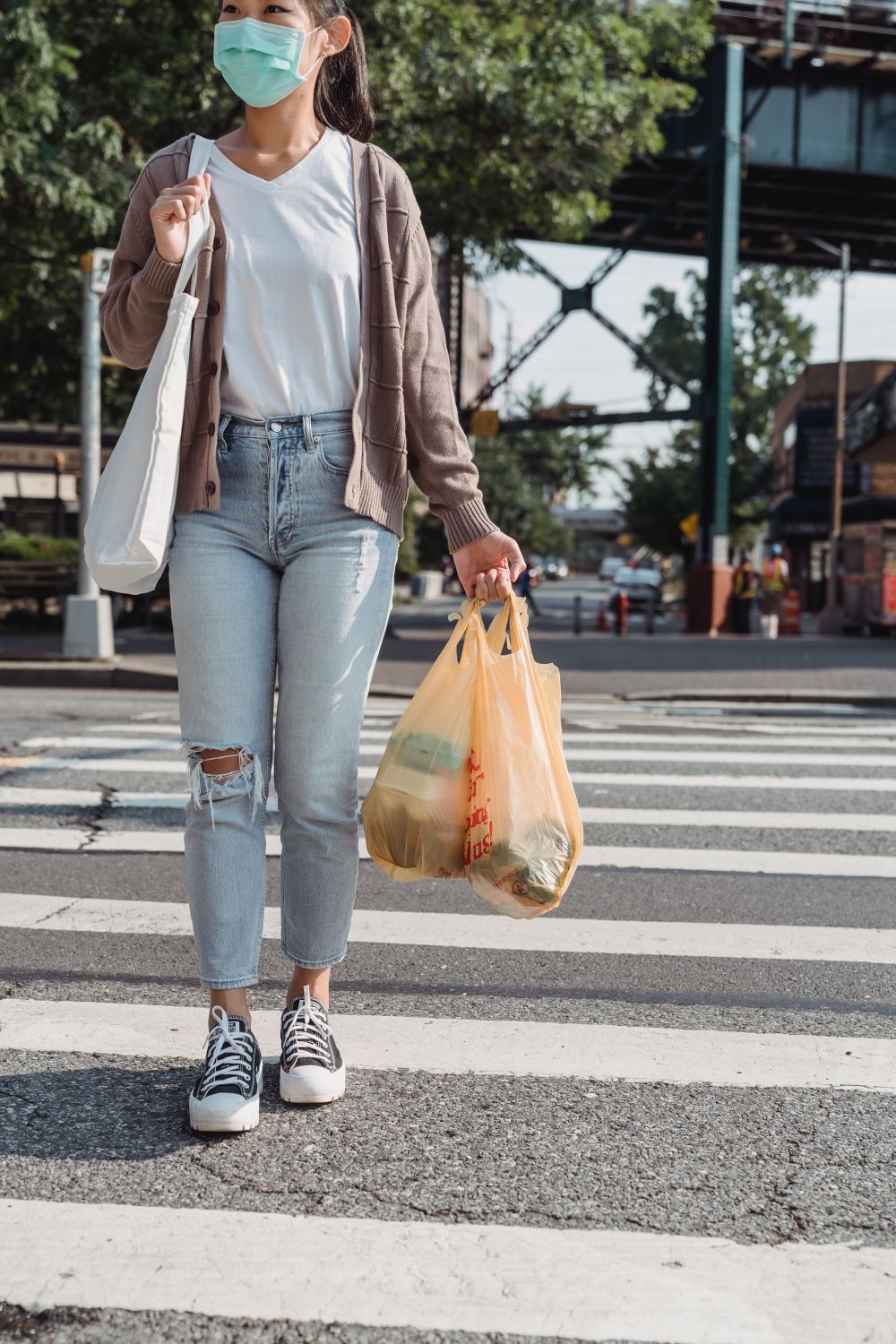
For most residents, the policy is not abstract. It appears at the checkout counter in a very direct way.
Forgetting a reusable bag now usually means choosing between paying for paper bags and carrying items without the convenience once provided by plastic. This has led many shoppers to develop new routines, such as keeping reusable bags in cars, backpacks, or near entryways.
The adjustment has not been seamless for everyone. Impulse shopping trips and quick errands can still catch people off guard, especially when bags are no longer automatically offered in the way they once were.
Still, over time, the habit shift has become more embedded in daily life, particularly in urban and suburban areas where enforcement and awareness are strongest.
The environmental reasoning behind the policy
At the core of California’s plastic bag restrictions is a simple environmental concern: disposable plastic is persistent, mobile, and difficult to manage once it enters the waste stream.
Plastic bags are especially problematic because of their weight and shape. They are easily carried by wind, frequently escape trash systems, and can end up in waterways, parks, and coastal environments. Once there, they can persist for years while breaking down into smaller pollutants.
The state’s approach is based on prevention rather than cleanup. By limiting distribution at checkout, policymakers aim to reduce the number of bags entering circulation in the first place.
A policy is still under public debate
Even after years of implementation, California’s plastic bag rules remain a point of debate. Supporters argue that the changes have reduced visible litter and encouraged more sustainable consumer behavior over time.
Critics, however, question whether the shift has fully delivered the environmental benefits promised. Some point to continued plastic waste from alternative products or inconsistent recycling outcomes across different regions.
This ongoing disagreement is part of why the policy continues to evolve rather than remain fixed. California has treated the bag ban not as a finished law, but as an ongoing system that requires adjustment as consumer behavior changes.
What this latest shift really means
The newest phase of California’s plastic bag rules reflects a broader philosophy: convenience at checkout is no longer guaranteed if it creates long-term environmental costs.
Retailers must continue to adjust to a system in which paper and reusable options dominate, while plastic checkout bags remain largely absent. Consumers, in turn, are expected to carry more responsibility for how they shop and how they plan for everyday errands.
In practice, this means the plastic bag is no longer a background feature of retail life in California. It has become a regulated choice, shaped by policy decisions rather than automatic availability.
And with each revision, the message becomes clearer: the state is not just changing bags at checkout. It is changing expectations about how everyday consumption should work.