Elon Musk Rejects Blame as Deadly Texas Tesla Crash Sparks New Federal Investigations
A fatal crash in Katy, Texas, has once again dragged Tesla’s Full Self-Driving system into the center of a familiar, uncomfortable question: when advanced driver-assistance systems are involved in a deadly accident, who is actually responsible? the driver, the software, or the company that insists the system isn’t really “driving” at all?
The incident involved 76-year-old Martha Avila, who died after a Tesla vehicle reportedly drove through the front of her home. According to a lawsuit filed by her family, both police accounts and the driver’s statements suggest Tesla’s automated driving features were active at the time of the crash.
Elon Musk, as expected, rejected the implication outright, calling the situation “nonsensical” and arguing that Full Self-Driving does not behave the way investigators and witnesses described. But in the modern world of semi-autonomous vehicles, contradictions like this have become almost routine, less a surprise than a script.
A Crash, a Lawsuit, and Two Competing Realities
On one side of the case, the victim’s family alleges that Tesla’s Autopilot and Full Self-Driving systems played a direct role in the crash. Their lawsuit claims the vehicle was defective in design and that both Tesla and the driver contributed to the fatal outcome through negligence.
On the other side, Tesla leadership is pushing a different explanation entirely. Musk and Tesla’s AI leadership argue that the system cannot behave as described in the lawsuit, pointing to operational limits that, in theory, prevent such high-speed residential incidents under active autonomous control.
The gap between these two narratives is not small. It is the entire case. And somewhere in that gap sits a question regulators have been circling for years without fully answering: what does “driving” mean when a machine is partially in control?
Musk’s Defense: The System Didn’t Do That
Elon Musk responded on X with characteristic certainty, dismissing the allegations by arguing that Full Self-Driving operates cautiously in neighborhood environments and would not execute a high-speed maneuver in a residential area.
Tesla’s Vice President of AI software, Ashok Elluswamy, reinforced that position, suggesting the driver manually overrode the system by pressing the accelerator fully, effectively canceling automated behavior.
This is where Tesla’s defense strategy often settles: the system is advanced but not responsible; capable but not in control; present but never truly driving in the legal sense. It’s a carefully constructed boundary, one that allows Tesla to market autonomy while distancing itself from its consequences.
The Legal Question Nobody Has Fully Solved Yet
The lawsuit filed by Martha Avila’s daughter and son-in-law places Tesla squarely in the chain of responsibility. It alleges that the crash was caused by both human negligence and a defective automated driving system.
That dual-culpability framing is becoming increasingly common in autonomous vehicle litigation. It reflects an uncomfortable reality: modern driving is no longer strictly human or machine-led. It is a shared system of inputs, overrides, sensors, and assumptions that don’t always align.
Regulators are watching closely. The National Highway Traffic Safety Administration has opened a special investigation into the crash, adding it to a broader list of Tesla-related incidents involving automated driving systems.
A Pattern That Keeps Repeating
This is not an isolated case. Federal regulators have already been examining Tesla’s Full Self-Driving software through multiple investigations, including engineering-level analysis following earlier safety evaluations.
NHTSA is reportedly reviewing multiple crashes involving the system, including at least one fatal incident where the technology allegedly failed to properly interpret road conditions or alert drivers in time.
Each investigation adds another layer to a growing pattern: a technology that performs well in demonstrations and controlled conditions, but struggles under real-world unpredictability. Or, as critics might put it more bluntly, a system that works, until it doesn’t.
Where Human Control Ends and Machine Responsibility Begins
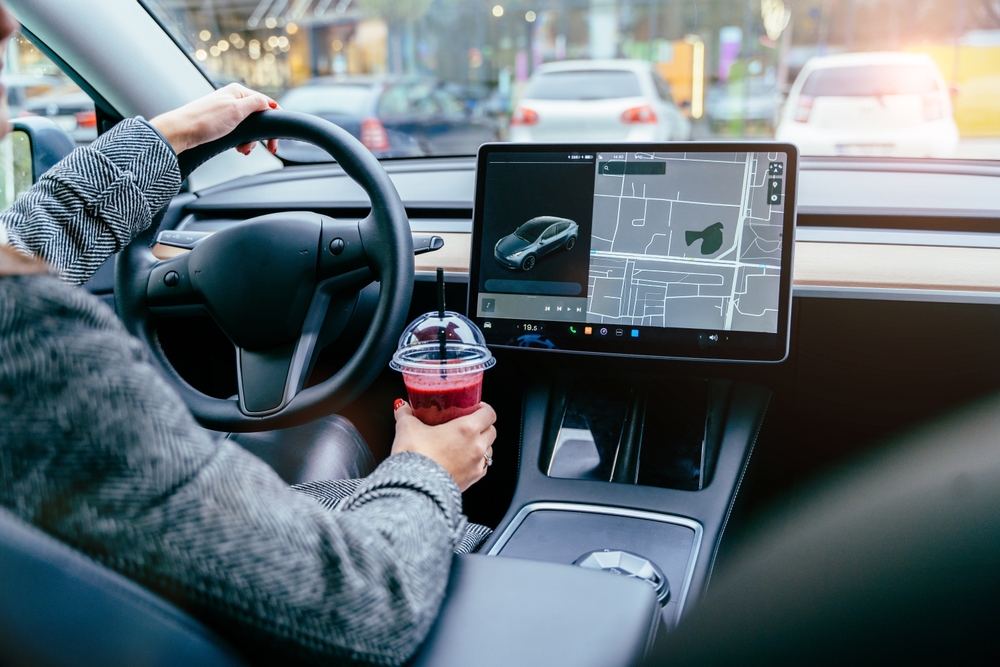
Autonomous driving systems are designed to share responsibility with human drivers. But in practice, that shared responsibility often becomes a gray zone where accountability is easy to blur and difficult to assign.
If a driver overrides a system, is the human fully responsible? If the system encourages overreliance through marketing or design, is the manufacturer equally responsible? And if both are involved at the exact moment of failure, who carries the legal weight? These are not theoretical questions anymore. They are being argued in courtrooms after real-world fatalities.
The Regulatory Slow-Motion Response
While Tesla pushes forward with increasingly ambitious autonomy claims, regulators are still playing catch-up. Investigations tend to unfold over months or years, while software updates and product iterations continue rolling out in real time.
This mismatch creates a structural tension in oversight: regulators investigate yesterday’s system while companies deploy tomorrow’s version. And in the middle, drivers are asked to interpret a system that is simultaneously marketed as intelligent yet constrained, autonomous yet supervised, experimental yet production-ready.
The Marketing Problem Hidden Inside the Technology
Tesla’s challenge has never been purely technical. It has been interpretive. The phrase “Full Self-Driving” itself sits at the center of controversy, because it describes a capability that still requires human supervision. That tension between branding and reality is where most legal and public confusion begins.
Supporters argue that drivers should understand the limitations. Critics argue that the branding does the opposite, encouraging overconfidence in systems that are not truly autonomous. And every time a crash like this occurs, that contradiction becomes harder to ignore.
The Larger Question Nobody Wants to Answer
Beyond this single case, the deeper issue is whether society is ready to normalize partial autonomy in systems that weigh more than two tons and operate at highway speeds.
Because once machines begin to share control of life-critical decisions, every accident becomes more than a traffic incident. It becomes a referendum on design philosophy, regulatory gaps, and corporate responsibility.
The Texas crash is now part of that larger record. Another entry in a growing file that regulators, lawyers, engineers, and executives will continue debating long after the headlines fade. And, as with every case before it, it leaves behind the same unresolved truth: the technology is advancing faster than the rules built to govern it.