American Shoppers Could Feel It First After Trump Threatens 100% Tariff on European Imports
For many Americans, a fight over digital taxes may sound distant, technical, and buried somewhere inside trade policy. But if President Donald Trump follows through on his latest threat, the impact could show up in a much more familiar place: the price tag.
Trump on Friday threatened to impose a 100% tariff on imports from any country that moves ahead with a tax on digital services provided by U.S. companies. The warning was aimed largely at European countries, where governments have been debating or already using digital services taxes to collect more revenue from major technology companies that earn money from their users.
The dispute may be about tech giants, online platforms, and cross-border taxation. But the possible fallout could reach American consumers, small retailers, importers, and businesses that depend on European goods.
Trump’s Warning Turns a Tech Tax Fight Into a Trade Threat
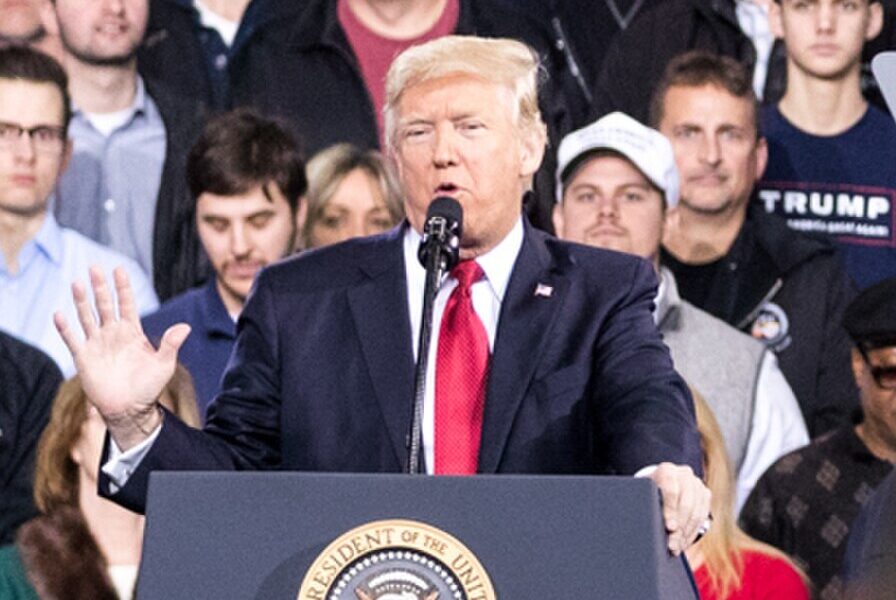
Trump made the threat in a social media post, saying any country that imposes a digital services tax would be met “immediately” with a 100% tariff on goods sent to the United States.
He also said the new penalty would override any previously negotiated trade agreements. That detail matters because the United States and the European Union had already reached a deal that capped most tariffs on EU exports at 15%. The latest threat raises the possibility that a new fight over tech taxation could disrupt that arrangement before it fully settles into place.
The tariff threat is not yet a finalized policy. It remains unclear how the administration would enforce it, whether it would apply broadly to all goods from a country, or whether specific nations and products would be targeted first. But the warning alone is enough to add uncertainty for businesses that plan months ahead for imports, inventory, and pricing.
Why This Could Reach U.S. Households
Tariffs are paid by importers when goods enter the United States. In practice, those added costs can be passed along the supply chain until they reach consumers.
That means a trade fight that begins with digital taxes could eventually affect everyday products. European food, clothing, cosmetics, auto parts, machinery, wine, luxury goods, household items, and specialty products could all become more expensive if broad tariffs are imposed.
Small businesses could feel pressure too. A local wine shop that imports from France, a boutique selling Italian leather goods, a grocery store carrying European specialty foods, or a repair business relying on imported parts may not have the flexibility of a large corporation. If costs rise suddenly, owners often face a difficult choice: raise prices, absorb the hit, reduce orders, or change suppliers.
That is why this story is bigger than a clash between Washington and Brussels. It is also about how global policy disputes can quietly reshape the choices available in American communities.
The Fight Is Really About Where Tech Profits Should Be Taxed
At the center of the dispute is a question governments have wrestled with for years: where should large digital companies pay taxes?
Traditional corporate tax systems were built around physical presence. A company had offices, factories, workers, or stores in a country, and taxes were tied to that footprint. Digital companies changed that model. A platform can earn significant revenue from users in one country while booking profits elsewhere.
Several governments argue that this creates a gap between where value is created and where tax is collected. Britain, which is no longer part of the European Union, has had a 2% digital services tax since 2020 on revenues earned by search engines, social media platforms, and online marketplaces that benefit from U.K. users.
The British government has said the tax was designed to make large multinational companies contribute more fairly to public services. Other countries have made similar arguments, saying digital taxes help modernize tax systems for an economy increasingly shaped by online platforms.
Trump and other U.S. officials have taken the opposite view. They argue that these taxes unfairly target American companies, especially major technology firms that dominate search, social media, online advertising, and digital marketplaces.
Europe Is at the Center of the Pressure
Trump’s post singled out European nations, although he said the penalty could apply to any country that imposes such a tax.
The timing is sensitive. The United States and the European Union are approaching a July 4 deadline connected to the implementation of their tariff deal. Digital services taxes were not part of that agreement, leaving one of the most politically charged issues unresolved.
That makes the current dispute especially risky. If Europe moves forward with digital tax measures and the U.S. responds with steep tariffs, both sides could find themselves back in a trade confrontation just as they were trying to stabilize economic relations.
For European governments, backing away from digital taxes could look like surrendering tax authority to Washington. For Trump, allowing the taxes to proceed could look like failing to defend U.S. technology companies. That leaves little room for either side to retreat without political cost.
Businesses Now Face Another Round of Uncertainty
The immediate next step is whether any country moves ahead with a digital services tax that triggers a U.S. response.
Trump’s warning suggests the administration wants to deter countries before the taxes are implemented. But businesses cannot plan around threats as easily as they can plan around written rules. Importers may now have to prepare for the possibility of higher duties, delayed shipments, contract changes, or sudden pricing decisions.
The uncertainty could also affect companies that do not consider themselves part of the tech industry. A furniture importer, a restaurant group, a parts distributor, or a local retailer may have no direct connection to digital taxation yet still be exposed if tariffs are imposed on goods from Europe.
That is the hidden feature of trade policy. The dispute may begin with governments and corporations, but the pressure often spreads outward.
A Digital Tax Dispute Could Become a Main Street Price Story
The larger question is whether governments can find a tax system that fits the digital economy without triggering new trade wars.
Countries want revenue from global companies that earn money from their citizens. The United States wants to protect its largest technology firms from taxes it deems discriminatory. Consumers want stable prices. Businesses want predictable rules. Those interests are now colliding.
For Americans, the practical takeaway is simple: this is not just a fight over Silicon Valley or European tax policy. If the threat becomes policy, it could affect what U.S. businesses pay to import goods and what shoppers pay when those goods reach shelves.
A digital tax may sound abstract. A 100% tariff does not. And if this dispute escalates, the first place many Americans may notice it is not in a government statement, but at the checkout counter.