Clarence Thomas Says Supreme Court Has ‘Diluted the Meaning of American Citizenship’ in Birthright Citizenship Dispute
The U.S. Supreme Court has upheld birthright citizenship for children born in the United States to undocumented or temporarily present parents, but Justice Clarence Thomas issued a sharply worded dissent arguing the decision weakens the constitutional meaning of American citizenship and stretches the Fourteenth Amendment beyond its original intent.
While the majority reaffirmed long standing precedent, Thomas framed the ruling as a broader constitutional turning point, warning that the Court’s interpretation risks redefining citizenship in ways the Reconstruction-era framers never intended.
Supreme Court Reaffirms Birthright Citizenship Under Fourteenth Amendment
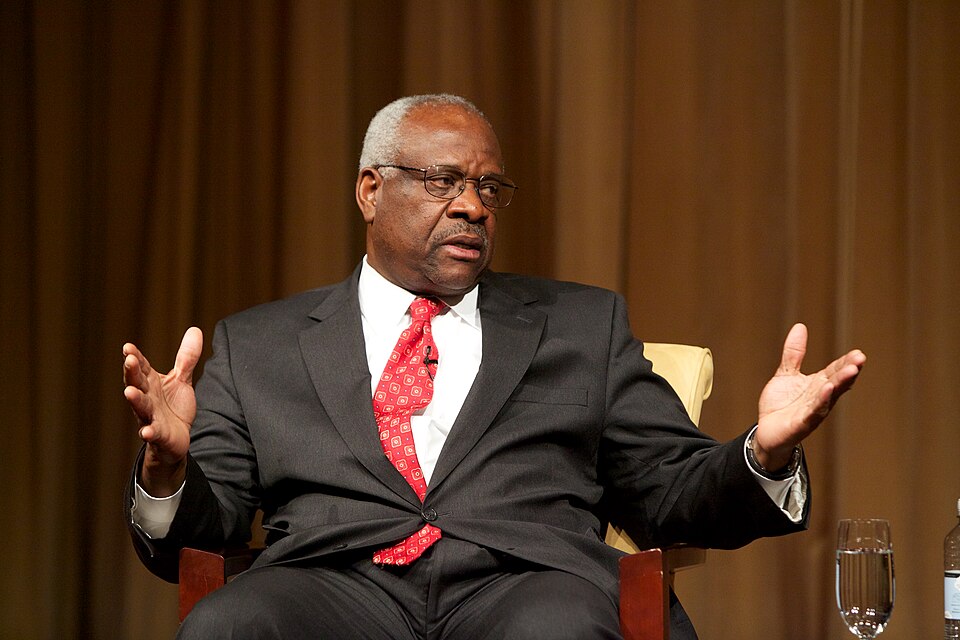
The case, centered on Executive Order No. 14160, tested whether the federal government could deny automatic citizenship to children born in the United States if their parents were not legally permanent residents. The Supreme Court rejected that argument and reaffirmed that such children are “subject to the jurisdiction” of the United States, and therefore qualify as citizens at birth under the Fourteenth Amendment’s Citizenship Clause.
Chief Justice John Roberts authored the majority opinion, joined by Justices Sonia Sotomayor, Elena Kagan, Amy Coney Barrett, and Ketanji Brown Jackson. The Court concluded that the constitutional language has long been understood to guarantee citizenship to nearly all individuals born on U.S. soil. The ruling effectively blocks efforts to reshape birthright citizenship through executive action and reinforces the principle that constitutional citizenship cannot be narrowed unilaterally by the presidency.
Clarence Thomas Dissents, Argues Citizenship Has Been Expanded Beyond Original Meaning
Justice Clarence Thomas issued a forceful dissent, arguing that the Court’s interpretation of the Citizenship Clause expands constitutional meaning beyond what he believes the framers intended. At the center of Thomas’s argument is the phrase “subject to the jurisdiction thereof” in the Fourteenth Amendment. He contends that mere physical presence in the United States at birth is not sufficient to automatically grant citizenship.
Instead, Thomas emphasizes a narrower interpretation tied to legal allegiance and domicile, arguing that the amendment was never meant to extend citizenship broadly to individuals whose parents lack lawful or permanent ties to the country. He described the Court’s reasoning as a departure from historical intent and warned that the ruling risks weakening the constitutional definition of what it means to be an American citizen
Birthright Citizenship and the Fourteenth Amendment’s Historical Foundation
The Fourteenth Amendment, ratified in 1868 following the Civil War, fundamentally reshaped the legal meaning of citizenship in the United States. It was designed to overturn the Supreme Court’s infamous Dred Scott decision, which had denied citizenship to Black Americans. The Citizenship Clause established that all persons born or naturalized in the United States and subject to its jurisdiction are citizens.
For more than a century, this clause has been widely interpreted as guaranteeing automatic citizenship to nearly all individuals born on U.S. soil, regardless of their parents’ immigration status. The Supreme Court’s majority opinion reaffirmed this traditional understanding, emphasizing continuity in constitutional interpretation and longstanding precedent.
Wong Kim Ark Case Remains Central to Legal Debate
A key precedent in the ruling is the 1898 Supreme Court case United States v. Wong Kim Ark, which established that children born in the United States to non-citizen parents are generally entitled to citizenship under the Fourteenth Amendment. Chief Justice Roberts relied heavily on this precedent, noting that it has been consistently interpreted over more than a century as affirming birthright citizenship.
The Court rejected arguments attempting to narrow the scope of Wong Kim Ark by distinguishing between lawful permanent residents and undocumented or temporary immigrants. Justice Thomas, however, challenged that interpretation, suggesting that the historical context of the ruling leaves room for a more limited understanding of citizenship tied to legal permanence rather than geographic birth alone.
Executive Order at the Center of the Legal Battle
The case arose from Executive Order No. 14160, titled “Protecting the Meaning and Value of American Citizenship.” The order sought to deny automatic citizenship to children born in the United States whose parents were unlawfully present or temporarily residing in the country. Supporters of the order argued that birthright citizenship has been applied too broadly in modern immigration contexts, encouraging what they describe as “birth tourism” and incentivizing irregular migration.
Opponents argued that the executive order directly conflicts with the Fourteenth Amendment and established Supreme Court precedent, making it unconstitutional. The Court ultimately agreed with the challengers, ruling that the executive branch cannot override constitutional protections through unilateral action.
Thomas Warns of Broader Consequences for National Identity
In his dissent, Justice Thomas went beyond legal technicalities and raised broader concerns about national identity and constitutional interpretation. He argued that the Court’s ruling risks transforming citizenship into a status determined solely by geography, rather than meaningful legal and political connection to the United States.
Thomas warned that this interpretation could dilute the concept of citizenship, making it easier to acquire without what he views as the necessary legal ties to the American political community. His dissent frames the issue not just as an immigration dispute, but as a question about the philosophical foundation of citizenship itself.
Political and Legal Implications of the Ruling
The Supreme Court’s decision effectively closes the door on attempts to alter birthright citizenship through executive action alone. Any future effort to change the rule would likely require congressional legislation or a constitutional amendment. The ruling is expected to have significant political consequences, particularly in debates over immigration policy and border enforcement.
For supporters of birthright citizenship, the decision is seen as a reaffirmation of constitutional stability and a protection of long-established rights. For critics aligned with Justice Thomas’s reasoning, the ruling represents what they view as judicial expansion of constitutional meaning beyond its original scope.
Why Birthright Citizenship Remains a Defining National Issue
Birthright citizenship continues to be one of the most consequential and emotionally charged issues in American constitutional law. It directly affects millions of families and shapes how citizenship is defined at its most fundamental level. For children born in the United States, the ruling determines whether citizenship is automatic and unconditional or subject to reinterpretation based on parental status.
The Supreme Court’s decision maintains the current framework, ensuring continuity in citizenship law. However, Justice Thomas’s dissent signals that the philosophical and legal debate over the meaning of citizenship is far from settled.
A Constitutional Debate Far From Over
While the majority opinion preserves the existing interpretation of the Fourteenth Amendment, Justice Thomas’s dissent underscores a continuing divide within the Court over constitutional interpretation, historical meaning, and national identity.
The ruling stands as a clear legal affirmation of birthright citizenship, but the dissent transforms the case into a broader argument about what it means to belong in the United States.
As immigration policy continues to dominate national political discourse, the tension between these competing interpretations is likely to remain at the center of future legal and political battles.