Toyota’s $3.6 Billion Tacoma Shift Turns Texas Into the New Front Line of America’s Truck War
Toyota’s decision to move a major share of Tacoma pickup production from Mexico to Texas is more than a factory expansion.
It is a clear signal that the North American auto map is being redrawn under pressure from tariffs, trade uncertainty, and a renewed political push to bring manufacturing deeper into the United States.
The Japanese automaker is investing $3.6 billion in its San Antonio manufacturing campus, where it plans to add a second vehicle assembly line, create more than 2,000 jobs, and increase annual production capacity by roughly 150,000 units.
The new line is scheduled to begin operations in 2030, while Tacoma production will transition from Toyota’s Baja California plant in Mexico to Texas over an estimated four-year period. Toyota will still continue building Tacoma trucks at its Guanajuato plant in Mexico.
Toyota Tacoma Production Is Returning to Texas at a Critical Moment
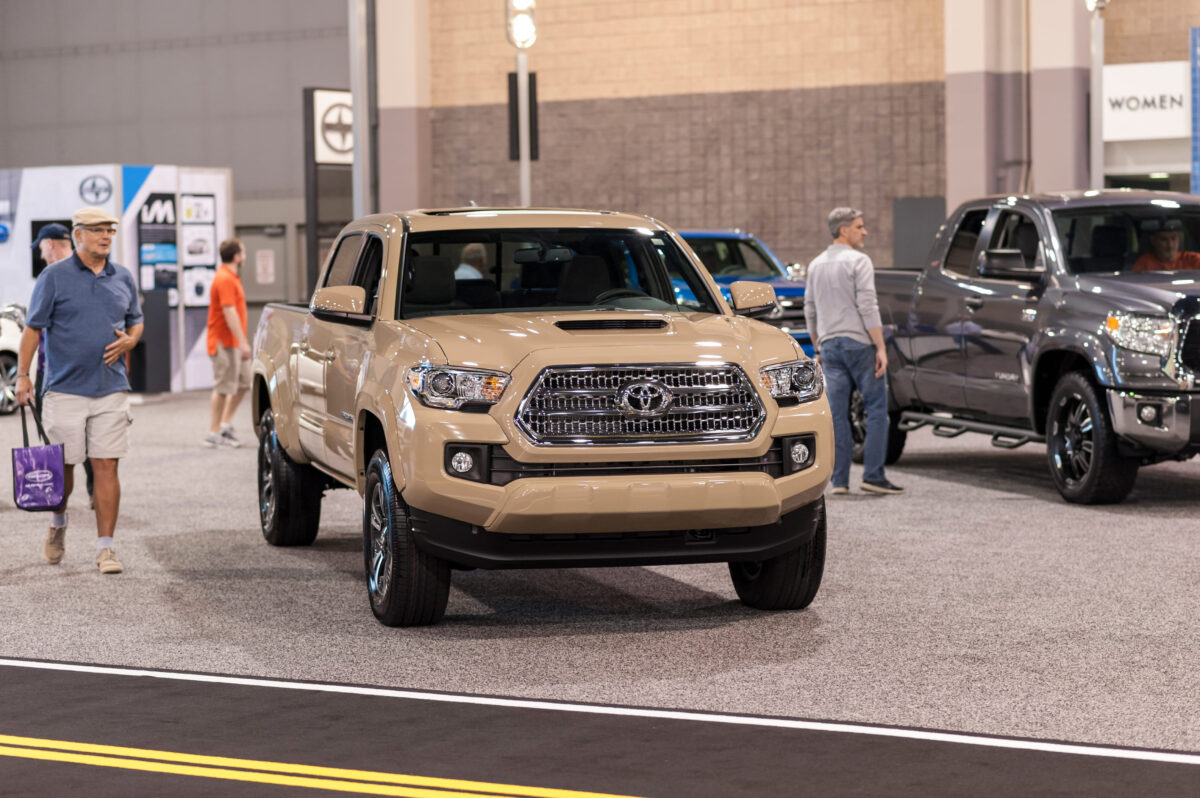
The Tacoma is not just another model in Toyota’s lineup. It is one of the company’s most recognizable trucks in the U.S. market, a midsize pickup with deep loyalty among drivers who want durability, resale value, and everyday utility without stepping into full-size truck territory.
That is why this move matters. Toyota previously shifted Tacoma production away from San Antonio in 2020, sending it to Guanajuato while Baja California continued to build the truck.
Now, the company is reversing part of that production logic and bringing Tacoma assembly back to Texas as the political and cost equation around cross-border manufacturing changes.
We should read the timing carefully. Toyota is not abandoning Mexico. It is balancing Mexico. The company is preserving North American flexibility while reducing its exposure to policy shocks that can hit vehicles, parts, steel, aluminum, and cross-border logistics with little warning.
Why San Antonio Became the Center of Toyota’s Truck Strategy
San Antonio already sits at the heart of Toyota’s U.S. truck operation. The plant currently builds the Tundra pickup and Sequoia SUV, and Toyota is preparing to open a rear-axle assembly facility on the same campus.
The new $3.6 billion project adds a 2.5-million-square-foot building and turns the site into an even larger truck-and-component hub.
For Texas, the gain is straightforward: jobs, supplier activity, construction work, tax base growth, and another manufacturing win in a state already competing aggressively for industrial investment. The project qualifies for a $20 million state grant, along with other incentives.
For Toyota, the advantage is deeper. San Antonio provides the company with a U.S. production base for one of its most important trucks while maintaining access to an established workforce, existing supplier relationships, and a campus already built around body-on-frame vehicles.
Tariffs and USMCA Uncertainty Are Reshaping Auto Decisions
Toyota’s announcement lands just days after the Trump administration declined to extend the U.S.-Mexico-Canada Agreement in its current form.
The pact remains in place for another decade, but it now faces annual reviews unless the three countries agree to renew it with changes.
That distinction matters. USMCA has not disappeared, but its predictability has weakened. Automakers built North American supply chains around the assumption that parts and vehicles could move across borders under stable trade rules.
Annual reviews inject uncertainty into long-term investment decisions, especially for companies planning factories, tooling, suppliers, and workforce needs years ahead.
The auto sector is especially exposed because vehicles are rarely “made” in a single country in a straightforward way.
Engines, transmissions, axles, electronics, seats, stampings, and finished vehicles often cross borders multiple times before a customer sees the final product. When trade policy becomes unstable, the safest move is often to shift production closer to the market where the vehicle will be sold.
Toyota’s Texas Expansion Fits a Bigger $10 Billion U.S. Manufacturing Push
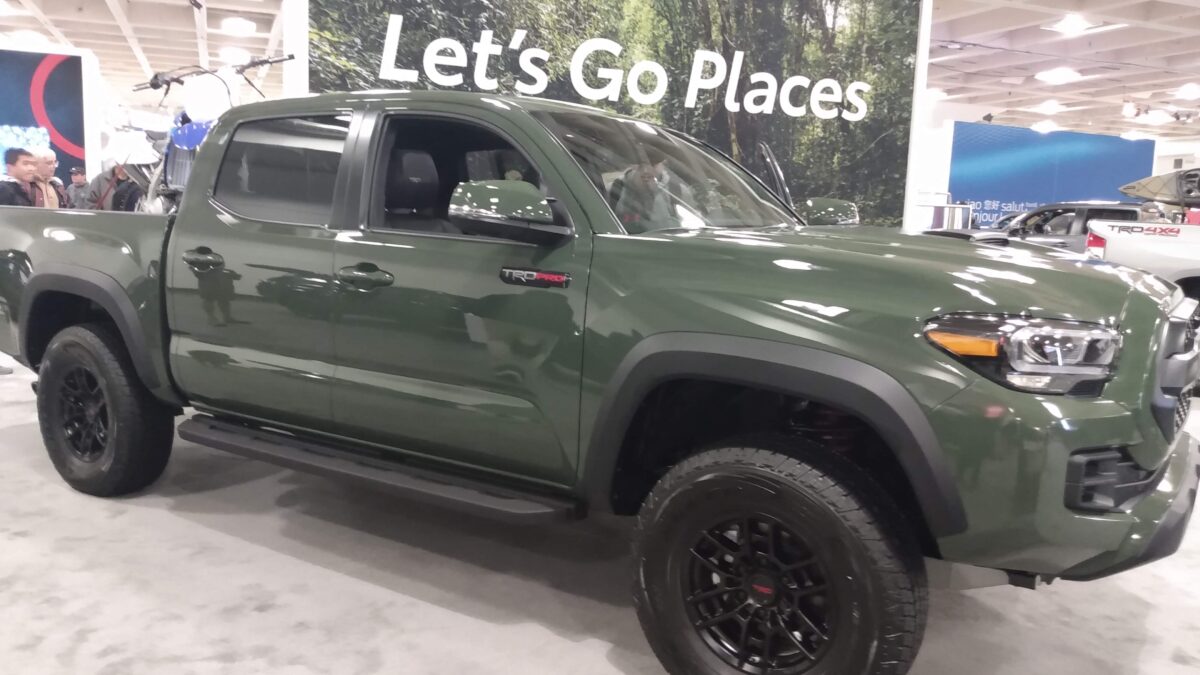
This Tacoma decision is part of a larger Toyota strategy. In November 2025, the company announced plans to invest up to $10 billion in U.S. operations over five years, bringing its total U.S. investment to nearly $60 billion since entering the market.
Toyota also said it employs about 50,000 people in the U.S. and has manufactured more than 35 million vehicles at 11 U.S. plants.
That broader spending plan includes investments in batteries, hybrids, SUVs, and now pickups. Toyota is not making a narrow political gesture. It is building a manufacturing hedge.
The company is preparing for a U.S. market where customers still want trucks and hybrids, regulators are shifting priorities, and trade barriers can quickly alter vehicle economics.
What This Means for Mexico
The biggest mistake would be to frame Toyota’s move as a clean break with Mexico. It is not. Tacoma production will continue in Guanajuato, and Toyota has stressed its commitment to operations across the U.S., Canada, and Mexico.
Baja California faces a harder question. If Tacoma production gradually shifts from Baja to Texas over four years, the future role of that plant becomes one of the most important unanswered questions in the story.
Toyota has not fully detailed what comes next for the facility, and that silence leaves room for concern among workers, suppliers, and local officials who depend on the auto economy.
Mexico remains a powerful manufacturing base because of labor cost advantages, supplier depth, geographic proximity, and trade infrastructure. Yet the Toyota decision shows that low-cost production alone is no longer enough. Political risk has become a real manufacturing cost.
The Consumer Angle: Will Texas-Built Tacomas Cost Less?
American buyers should not assume that U.S.-built Tacomas will automatically become cheaper. New plants, added capacity, higher U.S. labor costs, supplier adjustments, and tariff exposure all influence pricing. The stronger case is availability.
If Toyota can add 150,000 units of annual capacity in San Antonio, dealers may eventually have more room to meet demand, reduce wait times, and improve selection.
That does not guarantee bargain prices. It does, however, give Toyota more control over supply in its largest and most politically sensitive market.
In an era when inventory swings can shape dealer markups and financing pressure can change buyer behavior, domestic capacity becomes a competitive weapon.
The Bigger Story: Automakers Are Buying Certainty
Toyota’s $3.6 billion move is not only about the Tacoma. It is about certainty. When trade rules become less predictable, companies pay more to protect production.
When tariffs raise the cost of imports, domestic assembly becomes more valuable. When political leaders reward U.S. investment, factories become part of national strategy.
We are watching automakers make decisions that will shape local economies for the next decade. Texas gains jobs and production muscle. Mexico keeps a role but loses some Tacoma volume. Toyota gains flexibility. Consumers may gain supply, though not necessarily lower prices.
The Tacoma’s road back to Texas tells us where the auto industry is heading: closer to the customer, closer to political protection, and closer to the places where companies believe the next trade fight will be won.