Tyler Robinson Hearing Ends Without Ruling as Evidence Challenges Charlie Kirk Conspiracy Claims
Tyler Robinson’s weeklong preliminary hearing ended Friday without an immediate ruling on whether he will stand trial for the killing of conservative activist Charlie Kirk.
Judge Tony Graf Jr. granted the defense’s request, allowing both sides to submit written briefs before presenting final arguments on September 1. The decision extends a closely watched legal process that has already brought previously unseen surveillance footage, DNA findings, digital messages and witness interviews into public view.
Robinson, 23, is accused of fatally shooting Kirk during a Turning Point USA event at Utah Valley University in Orem, Utah, on September 10, 2025. Prosecutors have charged him with aggravated murder and intend to seek the death penalty.
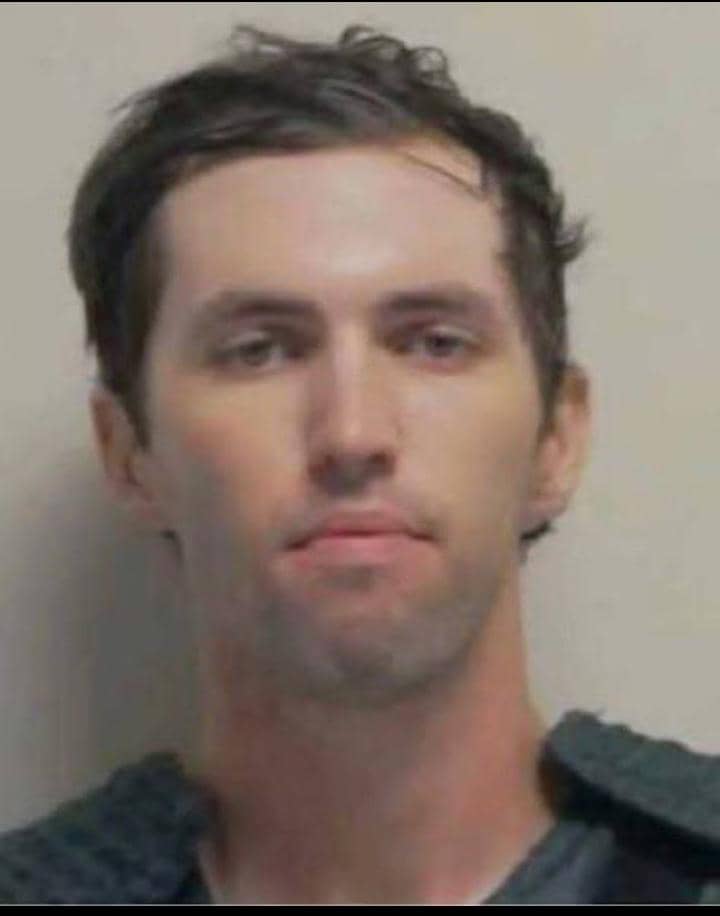
Robinson has not entered a plea, and the evidence presented during the preliminary hearing has not been tested before a jury. His attorneys challenged several aspects of the prosecution’s case and emphasized that forensic conclusions do not always confer absolute certainty.
DNA Evidence Links Robinson to Rifle
One of the strongest moments for prosecutors came when forensic biologist Caitlin Oliver testified about DNA recovered from the rifle investigators believe was used in the shooting.
Oliver said the testing provided extremely strong statistical support for Robinson being the primary contributor to the DNA found on the weapon and ammunition. Other items tested included a towel recovered near the crime scene and a rotary tool that prosecutors believe may have been used to engrave messages on cartridges.
Defense attorney Richard Novak questioned the language used to describe the results. Oliver acknowledged that forensic laboratories calculate likelihood ratios rather than declaring a DNA identification to be an absolute match.
The defense also focused on the ballistics evidence. Bullet fragments removed from Kirk’s body could not be conclusively matched to the suspected murder weapon through tool-mark testing. However, the fragments were consistent with the caliber of a spent cartridge recovered from the rifle.
That distinction could become important at trial. Prosecutors are presenting the forensic findings as part of a larger collection of evidence, while the defense is examining each component for uncertainty.
Surveillance Video Tracks the Suspect

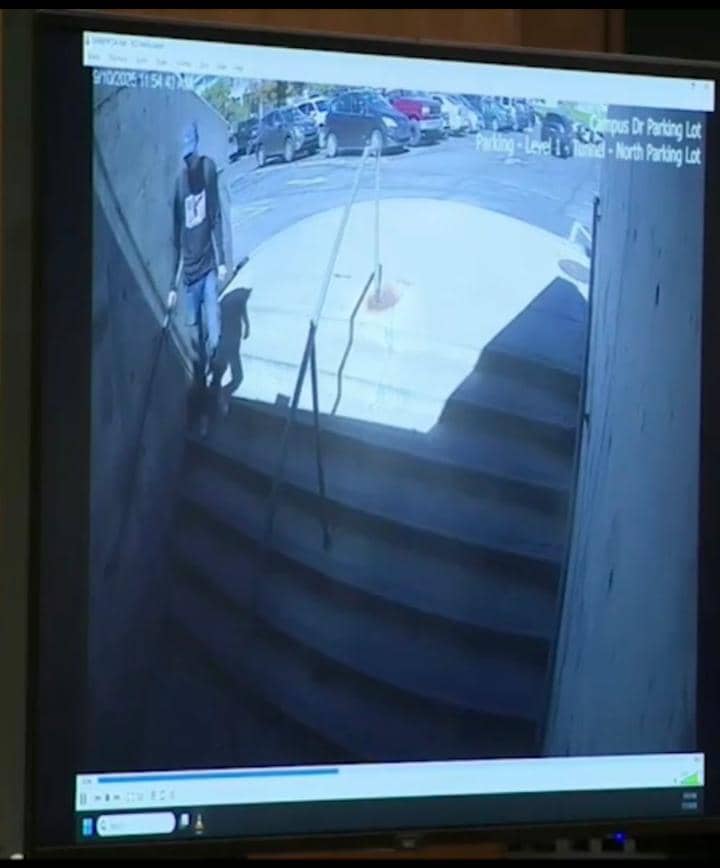
Investigators also presented surveillance footage that they say tracks Robinson’s movements at Utah Valley University on the day Kirk was killed.
The video compilation showed a man arriving on campus, leaving, and later returning in different clothing. Prosecutors contend that Robinson appears in both sets of footage. They also introduced images of a gray Dodge Challenger, the same model of vehicle Robinson drove, entering and leaving the campus area.
Additional footage reportedly showed a figure moving across the roof from which investigators believe the fatal shot was fired. Erika Kirk, Kirk’s widow, watched an unedited version of that video in court after asking for access to the evidence.
Not all the footage was displayed publicly. Graf has repeatedly tried to balance courtroom transparency with Robinson’s right to a fair trial and Kirk’s family’s privacy interests.
Prosecutors said Robinson’s connection to the location was also supported by DNA recovered from a screwdriver near the suspected rooftop position. A rifle was later found wrapped in a towel in a wooded area near campus.
The evidence directly challenges online claims that Robinson was never at the university. It also weakens speculation based on attempts to estimate the rooftop figure’s height from grainy surveillance images. Still, the court has not ruled that Robinson was the person shown in the footage.
Former Roommate Describes Alleged Confession
The hearing also featured a recorded interview with Lance Twiggs, Robinson’s former roommate and romantic partner.
Twiggs told investigators that Robinson returned home after the shooting in an emotional state, cried, and expressed regret about what had happened. He also described a note and online messages that prosecutors view as admissions.
Discord records presented during the hearing reportedly contained statements in which Robinson appeared to acknowledge responsibility. Investigators extracted information from his phone, including communications and other digital activity, as part of the case.
Twiggs participated in multiple interviews with investigators and prosecutors. That testimony contradicts another claim circulating online that authorities never properly interviewed him.
Defense lawyers raised objections to portions of the interview, and the court ultimately allowed prosecutors to play a redacted version. Twiggs received use immunity, meaning prosecutors generally cannot use his interview statements against him, subject to the agreement’s precise terms.
Robinson did not testify during the hearing. His attorneys advised him against taking the stand, and he agreed with that recommendation when questioned by the judge.
Medical Testimony Addresses Cause of Death
Utah State Bureau of Investigation Agent David Hull testified that Kirk’s death was classified as a homicide caused by a gunshot wound to the neck.
That testimony undercut internet theories suggesting Kirk was killed by an exploding microphone or some other hidden device. Nothing presented from the medical examination supported those claims.
Some online speculation also centered on the apparent absence of a visible exit wound. That detail, however, does not establish that a shooting did not occur. Bullets can remain inside a body after striking bone, muscle or other tissue.
A forensic pathologist recovered bullet fragments from Kirk’s body, and those fragments were submitted for laboratory examination. The inability to make a conclusive tool-mark comparison may provide the defense with an argument, but it does not contradict the medical conclusion that a gunshot killed Kirk.
Investigators also recovered an empty pistol holster near the stage and an unfired .223-caliber round on another building. The defense highlighted those discoveries, although prosecutors have not presented them as weapons or ammunition connected to Kirk’s death.
Judge Will Hear Arguments in September
A preliminary hearing does not decide guilt or innocence. Its purpose is to determine whether prosecutors have presented enough evidence for the case to proceed to trial.
Graf will hear final arguments on September 1, just days before the first anniversary of Kirk’s killing. He will then decide whether the evidence establishes probable cause for the charges against Robinson.
Kirk’s family described the proceeding as an important step toward justice and said the evidence presented by prosecutors was overwhelming. That statement reflects the family’s view, not a judicial finding.
The five-day hearing answered several factual questions that had fueled speculation, especially about Robinson’s alleged presence on campus, the cause of Kirk’s death and whether Twiggs spoke with investigators. It did not resolve every dispute, nor did it replace the need for a trial.
For now, Robinson remains an accused defendant who is entitled to the presumption of innocence. The prosecution’s evidence may have sharply challenged some of the most persistent conspiracy claims, but the court’s central question remains unanswered: whether the case will advance to a murder trial.