Mike Pence’s 2028 comeback claim collides with what he actually said.
A social media post is painting former Vice President Mike Pence as a man waiting for America to call him back into presidential politics. It claims Pence is keeping the door open to a 2028 White House campaign because the country may someday need him to step forward. It also says he believes a large but quiet group of supporters remains behind him.
The picture is dramatic: a former vice president standing offstage, convinced that a hidden army of voters may demand his return. The problem is that Pence’s recent public comments point in the opposite direction. Rather than teasing another run, he has repeatedly suggested that his days as a presidential candidate are over.
Pence gave a direct answer about 2028
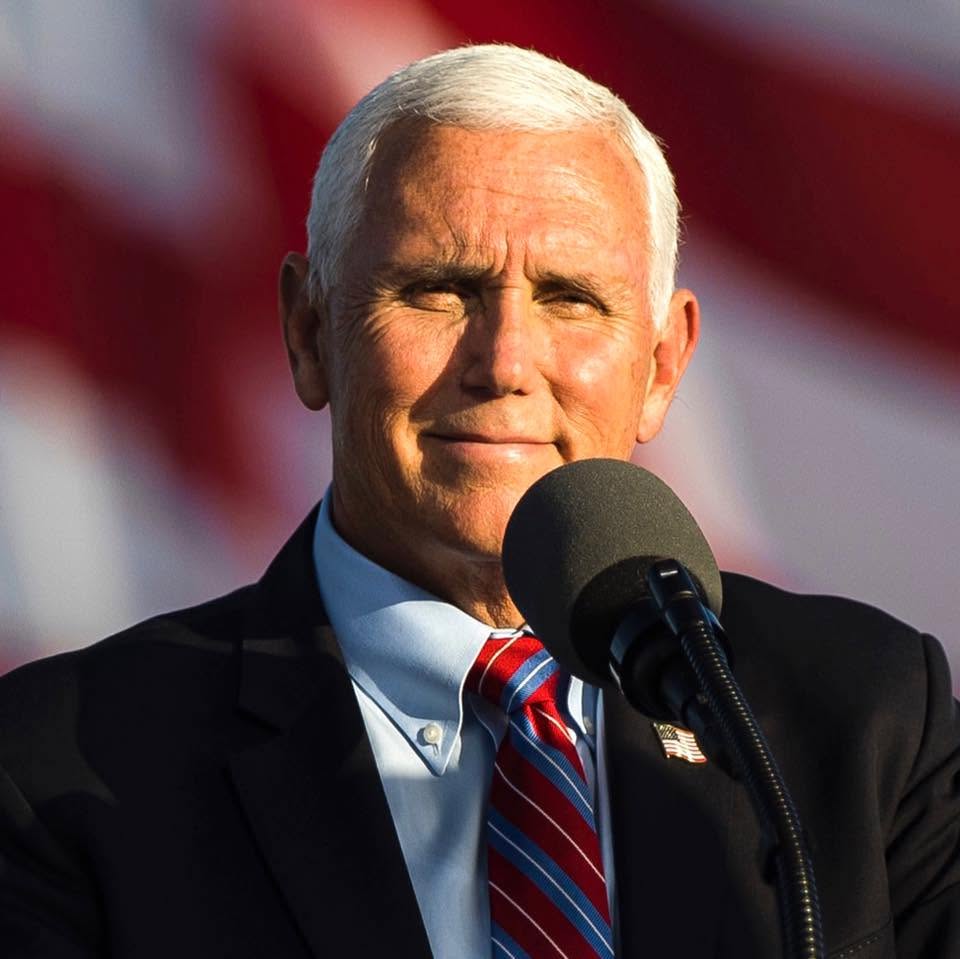
The clearest contradiction came on June 15, 2026, when Pence appeared at a National Press Club Headliners Dinner in Washington. CBS News journalist Robert Costa asked about a possible 2028 campaign. Pence borrowed a lyric from country singer Luke Combs, saying he had “rode that rocket about as far as it can fly,” before adding, “We don’t see that in our future.”
That was not a vague answer designed to keep every option alive. It was a straightforward statement that another presidential campaign was not part of the fut ure he currently sees. The National Press Club confirmed that the event focused on Pence’s new book, “What Conservatives Believe,” and the Republican Party’s direction.
Pence made a similar point on May 18, 2025. During an appearance on NBC’s “Meet the Press,” he was asked whether he could imagine running for president again.
“I don’t see that in my future,” Pence replied, while saying he would continue defending conservative principles.
Those statements create a consistent public record. Pence has not announced a 2028 bid, formed an exploratory committee, or publicly said America may need him to “save the country.” The Facebook wording appears to turn his continued political activism into a presidential tease he has not actually made.
His first presidential campaign struggled.
Pence served as Donald Trump’s vice president from 2017 to 2021 after representing Indiana in Congress and serving as the state’s governor. In June 2023, he entered the Republican presidential primary, presenting himself as an experienced conservative who could defend parts of the Trump record while breaking with Trump over January 6 and constitutional limits.
The campaign never found a durable lane. Trump dominated the Republican field, while Pence struggled to raise money and gain traction.
On October 28, 2023, Pence suspended his campaign before any primary votes were cast. “It’s become clear to me: This is not my time,” he told the Republican Jewish Coalition gathering in Las Vegas.
That history makes the claim about “silent supporters” difficult to prove. Pence may still have admirers among evangelical voters, traditional conservatives and Republicans uncomfortable with the party’s populist direction. However, no public election results from the 2024 race showed a hidden national Pence coalition, as he withdrew months before the Iowa caucuses.
More importantly, Pence’s recent comments about broad support focused on ideas rather than his candidacy. At the National Press Club event, he said he believed a majority of Americans embraced the principles discussed in his book.
He also said lawmakers had privately thanked him because they viewed traditional conservatism as a “winning agenda.” That is different from claiming millions of voters are quietly waiting to elect him president.
Pence is fighting over the GOP’s identity.
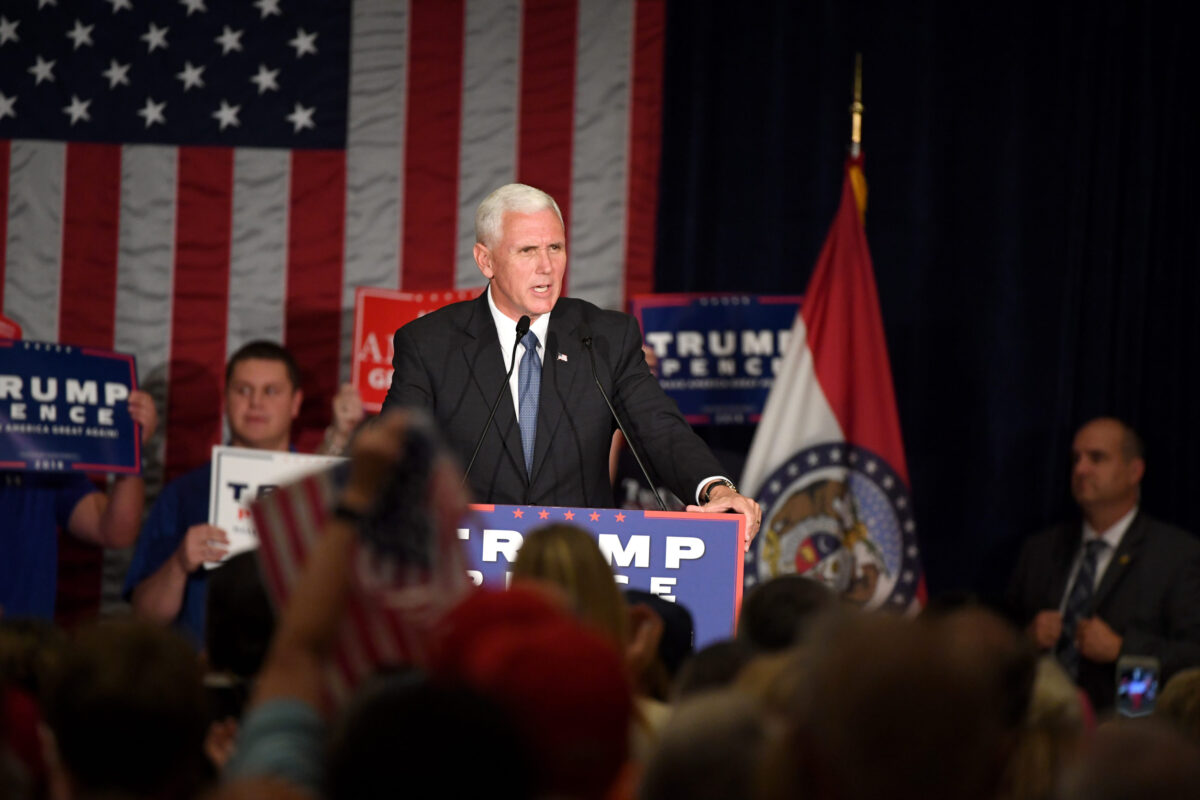
Pence remains politically active, but his work now centers on ideology. Through Advancing American Freedom, the organization he founded after leaving office, he promotes limited government, a strong national defense, opposition to abortion, and traditional free-market policies.
He has also become one of the few prominent Republicans willing to criticize parts of Trump’s second-term agenda. Pence has challenged Trump’s tariffs and other government interventions that he believes depart from traditional conservative economics.
He argues that the Republican Party has moved toward what he calls the “populist right,” leaving less room for the Reagan-era conservatism that shaped his political career. During a June 2026 interview, Pence said the administration’s system for granting tariff exemptions to major corporations looked “swampy.”
That position leaves Pence in an unusual place. He remains a recognizable national figure with a book, a policy organization, and access to major media platforms, but he is no longer at the center of the Republican coalition.
His current mission appears to be preserving a traditional conservative movement inside a party transformed by Trump. Pence believes those ideas still have an audience, even when Republican leaders and voters appear more attracted to populist economic policies and an America First approach to foreign affairs.
Could Pence change his mind before 2028? Any politician can reverse course, and presidential decisions are never completely settled until filing deadlines arrive. But responsible coverage must begin with what a public figure has actually said, not what a social media caption imagines he believes.
For now, the facts are clear. Pence has twice said he does not see another presidential run in his future. He believes conservative ideas still have a large audience, but that is not the same as claiming a secret nationwide army of Pence voters.
The story of a political savior waiting for America’s call may be compelling online. It is not supported by Mike Pence’s latest words.