Trump Administration’s $7.6 Billion Clean Energy Grant Cuts Spark National Debate After Court Filing Reveals State-Based Review
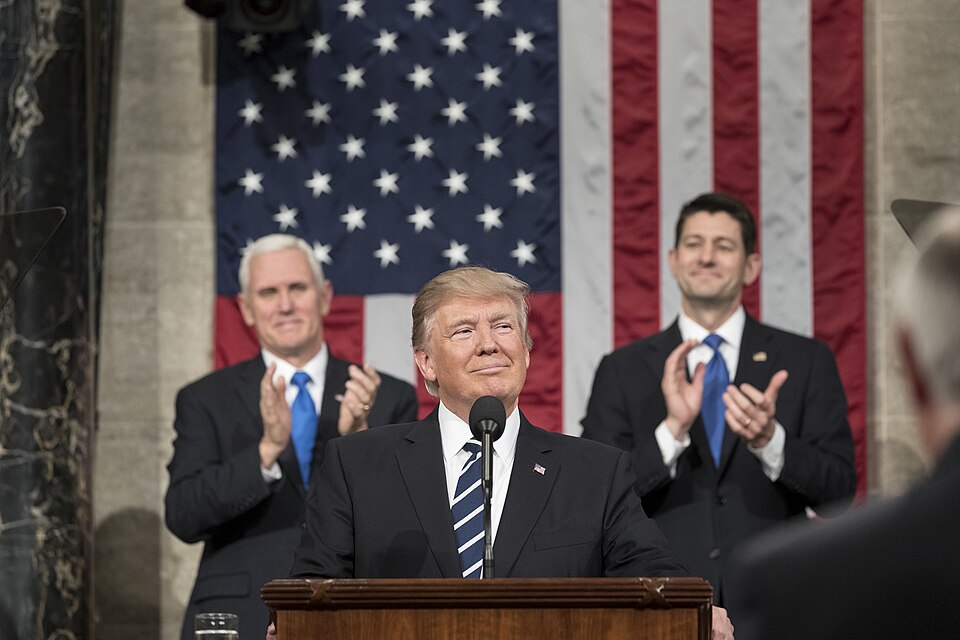
Shealeah Craighead, Public domain, via Wikimedia Commons
A major shake-up in America’s clean energy investment landscape is unfolding after the Trump administration canceled billions of dollars in federal grants tied to hundreds of projects across the country.
The decision has placed energy companies, universities and communities in the middle of a growing debate over federal spending priorities, presidential authority and the future of clean energy investment.
According to The Associated Press, the administration terminated about $7.6 billion in clean energy grants involving hundreds of projects across 16 states. The affected projects include initiatives focused on battery manufacturing, hydrogen development, carbon capture technology and other energy-related industries.
The issue gained further attention after a federal court filing revealed that officials considered state political factors when reviewing which grants should be canceled. The filing is part of a lawsuit challenging the administration’s decision.
For communities that expected new facilities, jobs and economic investment, the debate is about more than Washington politics. It is about what happens when major federal funding commitments suddenly change.
A New Administration Reviews Biden-Era Energy Investments
The grants at the center of the dispute were awarded through clean energy programs created during the Biden administration.
Those programs were designed to support emerging industries, strengthen domestic manufacturing and accelerate investments in technologies intended to reshape America’s energy system.
After taking office, the Trump administration began reviewing previously approved federal spending programs as part of a broader effort to change government priorities.
Energy Secretary Chris Wright defended the administration’s approach, saying the Department of Energy had a responsibility to review whether projects aligned with the nation’s energy needs and provided value to taxpayers.
The administration has argued that reviewing federal grants is a normal responsibility when a new president takes office and establishes different policy goals.
However, critics say the review process raised concerns after court documents revealed details about how certain projects were identified for cancellation.
Court Filing Raises Questions About How Grants Were Chosen
The legal dispute centers on a July court filing connected to a lawsuit brought by groups challenging the cancellations.
According to the filing, the Energy Department provided the Office of Management and Budget with a list of more than 600 grants recommended for termination.
The filing stated that the list included projects located in states where former Vice President Kamala Harris won the 2024 presidential election and where both U.S. senators caucus with Democrats.
The Office of Management and Budget later canceled 284 grants in October 2025, according to court documents.
The plaintiffs argue that federal funding decisions should be based on factors such as project quality, economic impact and legal requirements rather than the political characteristics of states.
The administration has disputed claims that the cancellations were improper and has maintained that federal agencies have authority to evaluate spending decisions.
Democratic Leaders Condemn the Grant Cancellations
The funding cuts have drawn strong criticism from Democratic lawmakers, who argue that political considerations should not influence federal investment decisions.
Senate Minority Leader Chuck Schumer criticized the decision, saying the administration’s actions represented an inappropriate use of government authority.
“Trump admits he’s ripping the rug out from under hardworking families so he can get revenge on the Americans who didn’t vote for him,” Schumer wrote on X.
Maryland Rep. Jamie Raskin also criticized the move, arguing that the funding should be restored.
“This mass partisan retribution is appalling, outrageous, dangerous, lawless, unconstitutional, unpatriotic and a massive offense against the Republic,” Raskin wrote on X.
Democratic lawmakers serving on congressional appropriations committees also raised concerns about the possible impact on workers, businesses and communities connected to the projects.
They argue that federal investments should benefit communities based on economic opportunity and project strength, not election results.
Supporters Say Federal Spending Needs New Oversight
Supporters of the administration’s decision view the review as part of a broader effort to make government spending more accountable.
They argue that federal agencies should be able to reconsider programs created by previous administrations and ensure taxpayer money supports current national priorities.
The Trump administration has emphasized energy policies focused on expanding traditional energy production and changing the direction of federal climate-related spending.
Supporters say the government should not continue funding programs simply because they were approved under a previous administration.
The debate reflects a longstanding question in Washington: how much power should a new president have to reshape federal programs after taking office?
Communities and Businesses Watch What Happens Next

Behind the political arguments are companies, researchers and local communities waiting for answers. Energy projects often require years of preparation, including land agreements, hiring plans, construction decisions and private investment.
Federal grants frequently serve as a key piece of financing that helps projects move from planning stages to reality. When funding is canceled, organizations involved must reconsider timelines, budgets and plans.
The projects affected by the decision represent a range of industries, including clean energy manufacturing, infrastructure development and technology research.
For workers and communities hoping these projects would bring economic opportunities, the outcome of the legal challenge could have significant consequences.
A Bigger Debate Over the Future of Federal Funding
The clean energy grant dispute represents a larger national conversation about the role of government in shaping America’s economy.
One side argues that elected administrations should have flexibility to redirect taxpayer dollars toward their priorities.
The other argues that federal programs should operate through consistent standards that do not change based on political geography.
The courts will now play an important role in determining whether the administration followed federal rules when canceling the grants.
As the legal process continues, billions of dollars in planned investments remain at the center of a debate that reaches far beyond clean energy.
The outcome could influence how future presidents handle federal grants, contracts and major government programs across the country.