ICE Officer Vetting Under Scrutiny After Maine Shooting Raises Questions About Hiring, Training and Oversight
A single traffic stop in Maine has placed the future of federal immigration enforcement under a powerful spotlight. The ICE officer vetting process is now facing intense scrutiny after a fatal shooting involving an Immigration and Customs Enforcement officer raised questions about whether the agency’s screening, training and oversight systems can keep pace with its rapid expansion.
The shooting of Johan Sebastián Durán Guerrero, a 25-year-old Colombian national, has triggered an internal review into the background and preparation of officer David Brouillette, the ICE officer involved in the incident. Officials say the review will examine whether the officer’s hiring process, training and field readiness met the standards expected of federal law enforcement personnel.
The case has become larger than one encounter. It has opened a broader debate about whether ICE expanded its workforce too quickly, whether warning signs can be identified before officers receive federal authority and whether accountability measures are strong enough when an armed officer is involved in a deadly confrontation.
A fatal encounter that raised immediate questions about ICE operations
The Maine shooting began as an immigration enforcement operation in Biddeford, a coastal city where federal officers were attempting to carry out an arrest action. According to officials, the encounter escalated when a vehicle moved in a direction that caused the officer to fear for his safety.
Durán Guerrero was killed during the confrontation. Authorities have not released a final determination on whether the shooting complied with federal use of force policies, leaving investigators to examine evidence, witness statements and officer accounts.
One of the most significant details is that Durán Guerrero was reportedly not the person ICE officers originally intended to locate. That information has increased questions about communication, identification procedures and whether the operation was planned in a way that minimized risks to people who were not the target.
The uncertainty surrounding the incident has made the ICE officer vetting process a central part of the public discussion. The question is no longer only what happened during the shooting, but also what happened before the officer ever entered the field.
The background check questions behind the badge
Federal law enforcement agencies rely on extensive screening systems designed to determine whether applicants are suitable for positions involving firearms, arrests and public authority. The ICE officer vetting process typically involves background investigations, employment history reviews, criminal record checks and evaluations of an applicant’s overall suitability.
The concern emerging from the Maine case is whether those safeguards identified all relevant information before Brouillette received the authority to operate as an ICE officer. Relatives have alleged that he had a history of serious personal struggles and troubling behavior before joining the agency.
Those allegations have not been fully established as official findings. However, they have raised an important question about how federal agencies evaluate information that may not appear in standard criminal databases.
A person’s suitability for armed law enforcement work often depends on more than whether they have a criminal conviction. Investigators may also examine patterns of behavior, workplace conduct, past conflicts, and information provided by people who know the applicant personally.
The challenge for agencies like ICE is balancing speed with accuracy. A rushed process may fill staffing needs quickly, but incomplete screening can create serious consequences when officers are given the power to make decisions involving force.
ICE’s rapid expansion created new pressure on recruitment systems
The scrutiny comes at a time when ICE has undergone major growth. The agency has worked to recruit thousands of additional officers as the Trump administration increases immigration enforcement efforts across the country.
Large-scale hiring campaigns create practical challenges. Agencies must attract qualified candidates, complete background checks, provide training, and ensure that supervisors can properly monitor new employees.
The ICE officer vetting process becomes especially important during periods of rapid expansion because the number of applicants and the urgency to deploy personnel can create pressure throughout the system.
Federal agencies have faced similar challenges before. During periods of national security expansion, military growth and law enforcement hiring surges, questions often emerge about whether recruitment speed can maintain the same level of screening quality.
The issue is not simply how many officers an agency can hire. It is whether each officer receives enough review, preparation and supervision before being placed in situations where decisions must be made within seconds.
The unanswered question of provisional clearance
Another issue drawing attention is the use of provisional employment while background investigations continue. Large federal agencies sometimes allow applicants to begin certain duties before every part of the review process is complete.
Supporters argue that this approach helps agencies manage staffing needs and prevents lengthy investigations from creating unnecessary delays. Critics argue that law enforcement positions require a higher standard because officers may carry weapons and exercise significant authority.
The debate surrounding the ICE officer vetting process now focuses on whether officers should have full clearance before performing high-risk duties. A temporary approval system may create vulnerabilities if important information appears after an officer has already entered the field.
The distinction matters because background investigations are designed to prevent problems, not simply document them afterward. If significant concerns emerge only after an officer becomes involved in a deadly encounter, the system may have failed at its most important purpose.
The Maine shooting has therefore renewed calls for greater transparency about when officers receive final approval and what safeguards exist during the period before clearance is complete.
Training concerns follow hiring scrutiny
Hiring is only one part of the equation. An officer can pass a background investigation and still require extensive preparation before handling complex immigration enforcement situations.
The Maine shooting has also placed ICE training programs under examination. Critics have questioned whether rapid recruitment was matched by enough instruction in areas such as de-escalation, vehicle stops, communication and judgment under pressure.
ICE has defended its training standards and said new officers receive instruction designed to prepare them for field operations. The agency has also introduced additional training measures focused on high-risk situations.
However, questions remain about whether all officers hired during the expansion received the same level of preparation. The timing of training, field supervision, and practical experience can influence how officers respond during unpredictable encounters.
The ICE officer vetting process and training system are closely connected. Screening determines who enters the agency, while training determines how those officers use the authority they receive.
The missing body camera footage created another accountability problem

The Maine shooting also highlighted concerns about body camera use. Officers involved in the encounter were reportedly not wearing body cameras, leaving investigators without a direct recording of the interaction.
Body cameras have become an important accountability tool for police and federal agencies because they provide evidence during disputed encounters. They can protect officers from false accusations while also helping the public understand what occurred.
Following the shooting, officials announced new requirements aimed at ensuring vehicle stops include body camera coverage. Supporters viewed the policy change as a necessary improvement.
However, critics questioned why stronger camera requirements were not already fully implemented before the fatal encounter. A policy introduced after a death naturally raises questions about whether the safeguard arrived too late.
The absence of footage also demonstrates why technology alone cannot replace strong oversight. Cameras are valuable, but they must be supported by clear rules, proper training and consistent enforcement.
Vehicle stops remain one of ICE’s most challenging operations
Vehicle stops are among the most complex situations faced by law enforcement officers. They involve limited visibility, unpredictable movement and moments where officers must quickly assess whether someone represents a danger.
Federal use of force policies generally require officers to determine whether there is an immediate threat before using deadly force. A moving vehicle can create danger, but investigators must examine the specific circumstances of each encounter.
The Maine case will likely focus heavily on those details. Investigators will examine the vehicle’s movement, the officer’s position, commands issued, and whether alternative actions were available.
Similar questions emerged after another fatal ICE-related vehicle encounter in Houston. The incident involving Lorenzo Salgado Araujo also led to debate about vehicle stops, officer tactics, and the difficulty of reconstructing encounters without complete video evidence.
Together, the cases have intensified calls for clearer national standards governing immigration enforcement operations involving vehicles.
Political pressure and operational safety collide

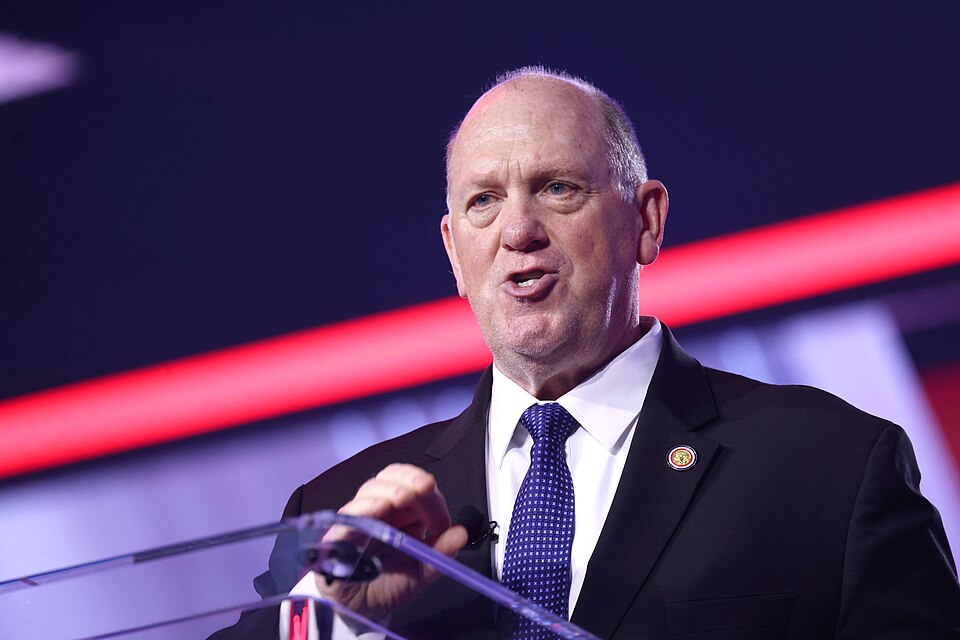
Matt Johnson from Omaha, Nebraska, United States, CC BY 2.0, via Wikimedia Commons
The broader debate surrounding the ICE officer vetting process is connected to the administration’s larger immigration enforcement strategy. The Trump administration has pushed for increased arrests and deportations, creating pressure on ICE to expand operations.
Law enforcement agencies often face difficult choices during periods of increased demand. They must meet policy goals while maintaining standards that protect officers and the public.
Critics worry that rapid enforcement goals can unintentionally weaken internal safeguards. When agencies expand quickly, recruitment, training and supervision must grow at the same pace.
The Maine shooting has forced officials to confront that balance. Strong enforcement requires capable officers, but public confidence depends on knowing those officers have been carefully selected and properly prepared.
What the review could reveal about ICE’s future
The internal review of the ICE officer vetting process will likely determine whether failures occurred in Brouillette’s hiring, training, or deployment. It may also influence future policies across the agency.
A meaningful review would examine not only one officer’s background but the broader system used to approve thousands of employees. It should determine whether current procedures are strong enough to identify risks before officers receive federal authority.
The case also highlights a larger challenge facing modern law enforcement agencies. Public safety depends not only on enforcement actions but on the systems behind those actions.
The badge, firearm, and authority given to federal officers represent public trust. The Maine shooting has raised a difficult question for ICE: Can an agency expand quickly while still ensuring that every person carrying that authority has been fully prepared for the responsibility?
The answer will depend on whether the agency treats this case as an isolated incident or as a warning sign that its hiring, training and accountability systems require deeper reform.