Sen. John Fetterman Says He Would Leave the Democratic Party if It Formally Adopts an Anti-Israel Platform, Calling It His “Red Line”.
Sen. John Fetterman is warning that there is one issue where he believes the Democratic Party could go too far: a formal shift toward an anti-Israel platform. The Pennsylvania senator says such a move would cross a personal and political boundary so significant that he would consider leaving the party he has represented for years.
Fetterman’s comments reveal the growing tension inside the Democratic Party over one of the most divisive foreign policy debates in American politics. As the war between Israel and Hamas continues to shape political conversations across the United States, Democrats have become increasingly divided over how the country should approach its longtime ally in the Middle East.
While some members of the party have called for a major change in U.S. policy toward Israel, including stronger criticism of the Israeli government and conditions on American support, others argue that maintaining a strong relationship with Israel remains a central part of American foreign policy.
For Fetterman, the issue is not simply a disagreement over policy details. He sees support for Israel’s security as a fundamental principle, and he says a formal rejection of that position by Democrats would force him to reconsider his political home.
Fetterman Calls an Anti-Israel Party Platform His Breaking Point
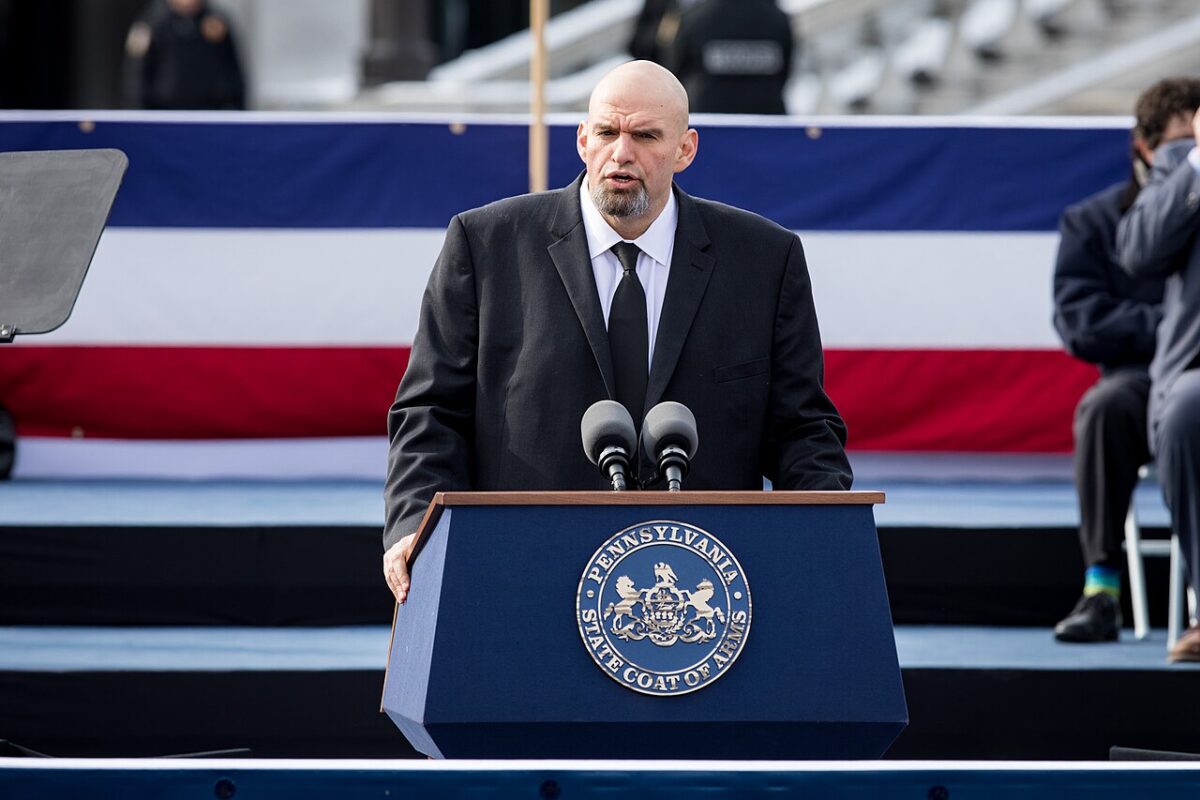
In an interview with Fox News, Fetterman said that an official anti-Israel position from the Democratic Party would represent a line he could not cross. He described the possibility as his “red line,” signaling that the issue carries deeper importance for him than ordinary political disagreements.
Fetterman has consistently positioned himself as one of the most outspoken Democratic supporters of Israel in the Senate. Since the October 7, 2023, Hamas attack on Israel that killed approximately 1,200 people and led to the capture of hostages, he has strongly defended Israel’s right to respond militarily while also acknowledging the complexity of the humanitarian situation in Gaza.
The senator’s position has placed him at odds with some progressive voices within his own party. Several Democratic activists and lawmakers have become increasingly critical of Israel’s military campaign in Gaza, arguing that the United States should take a tougher approach toward Israel’s government because of civilian casualties and humanitarian concerns.
Fetterman, however, has argued that criticism of Israeli policies should not become opposition to Israel itself. His comments suggest he views a formal anti-Israel platform as something fundamentally different from normal debate over foreign policy.
A Major Fault Line Inside the Democratic Party
The debate over Israel has exposed one of the deepest divisions within the Democratic coalition in decades. The party has historically maintained broad support for Israel, but that support has become increasingly complicated as younger voters and progressive activists demand a different approach.
For much of modern American politics, Democratic and Republican leaders have generally supported close ties between Washington and Jerusalem. Israel has been viewed by many U.S. officials as a strategic ally in the Middle East, with cooperation involving defense, intelligence, and technology.
However, the political landscape has changed significantly in recent years. The war in Gaza has intensified disagreements within the Democratic Party, with some members calling for a ceasefire, restrictions on military aid, or a reassessment of America’s relationship with Israel.
Polling has also shown growing generational and ideological differences among Democrats. Younger voters and progressive Democrats have generally expressed more criticism of Israel’s government and greater concern about Palestinian civilian deaths. At the same time, many older and more moderate Democrats remain supportive of maintaining strong ties with Israel.
Fetterman’s warning reflects this broader struggle over the future identity of the Democratic Party. The disagreement is not only about foreign policy but also about what values the party should prioritize on the global stage.
Fetterman Has Long Taken Independent Positions

Fetterman’s willingness to challenge parts of his own party is not new. Throughout his political career, he has often presented himself as a Democrat who does not always follow the party’s dominant trends.
Before becoming a senator, Fetterman served as the mayor of Braddock, Pennsylvania, and later became the state’s lieutenant governor. His political brand has often focused on working-class voters, economic issues, and a more direct communication style that separates him from traditional politicians.
In the Senate, he has occasionally broken from progressive members of his party on major issues. His strong support for Israel has been one of the clearest examples of where his views differ from some Democratic activists.
His approach has earned praise from supporters who see him as willing to stand by his beliefs even when doing so creates political challenges. Critics, however, argue that his positions sometimes put him out of step with a changing Democratic base.
The Israel debate has highlighted that divide more than almost any other issue. Fetterman’s comments suggest that he sees political independence not as a strategy but as a responsibility to his own convictions.
The Broader Impact of a Possible Party Realignment
Although leaving a major political party is rare, Fetterman’s statement highlights how deeply the Israel debate has affected American politics. Foreign policy issues that once received limited attention from many voters have become major factors shaping political identities.
A senator leaving the Democratic Party over Israel policy would be an extraordinary event, but even the possibility demonstrates the level of disagreement within the party. It would also raise questions about whether Democrats can maintain a broad coalition that includes moderates, progressives, and voters with different views on international affairs.
Political parties often evolve, and disagreements over major issues have historically influenced their direction. From civil rights debates to economic policy battles, internal conflicts have sometimes reshaped party identities for generations.
The current debate over Israel may become another defining moment. Democrats must decide how to balance longstanding alliances with changing voter attitudes and growing demands from within their own coalition.
Why Fetterman’s Warning Matters Beyond One Senator

Fetterman’s comments are significant because they show that the debate over Israel is no longer limited to activists and foreign policy experts. It has reached the highest levels of American politics and is challenging traditional party alliances.
The senator’s position also reflects a larger question facing Democrats: Can the party make room for sharply different views on Israel while maintaining unity? Or will foreign policy become one of the issues that separates different factions within the party?
For now, Fetterman has not left the Democratic Party. His message is a warning about what he believes would represent a fundamental change in its direction. He remains a Democrat, but he has made clear that some issues carry consequences beyond ordinary political disagreements.
As debates over Israel, Gaza, and America’s role in the Middle East continue, Fetterman’s “red line” statement serves as a reminder that political parties are not just built around elections. They are built around beliefs, values, and the issues their members consider non-negotiable.
The question now is whether the Democratic Party’s internal debate over Israel will remain a disagreement within the party or become a force that reshapes its future.