Chiefs Family Nightmare Deepens as Eric Bieniemy’s Son Is Charged in Mother’s Virginia Shooting
For millions of Americans, home is supposed to be the final refuge from danger. That sense of safety was shattered Sunday evening inside the Virginia home of Kansas City Chiefs offensive coordinator Eric Bieniemy and his wife, Mia.
At approximately 7:32 p.m. on July 26, Mia Bieniemy reportedly called 911 after suffering multiple gunshot wounds. By the following morning, her 27-year-old son, Elijah Zion Bieniemy, was behind bars on three serious charges.
It is a brutal family crisis with no clean headline and no football metaphor capable of softening its impact. A mother was hospitalized, a son was accused of shooting her, and a father learned about the violence while working hundreds of miles away at Chiefs training camp.
A Sunday evening turned into an American family’s worst nightmare.
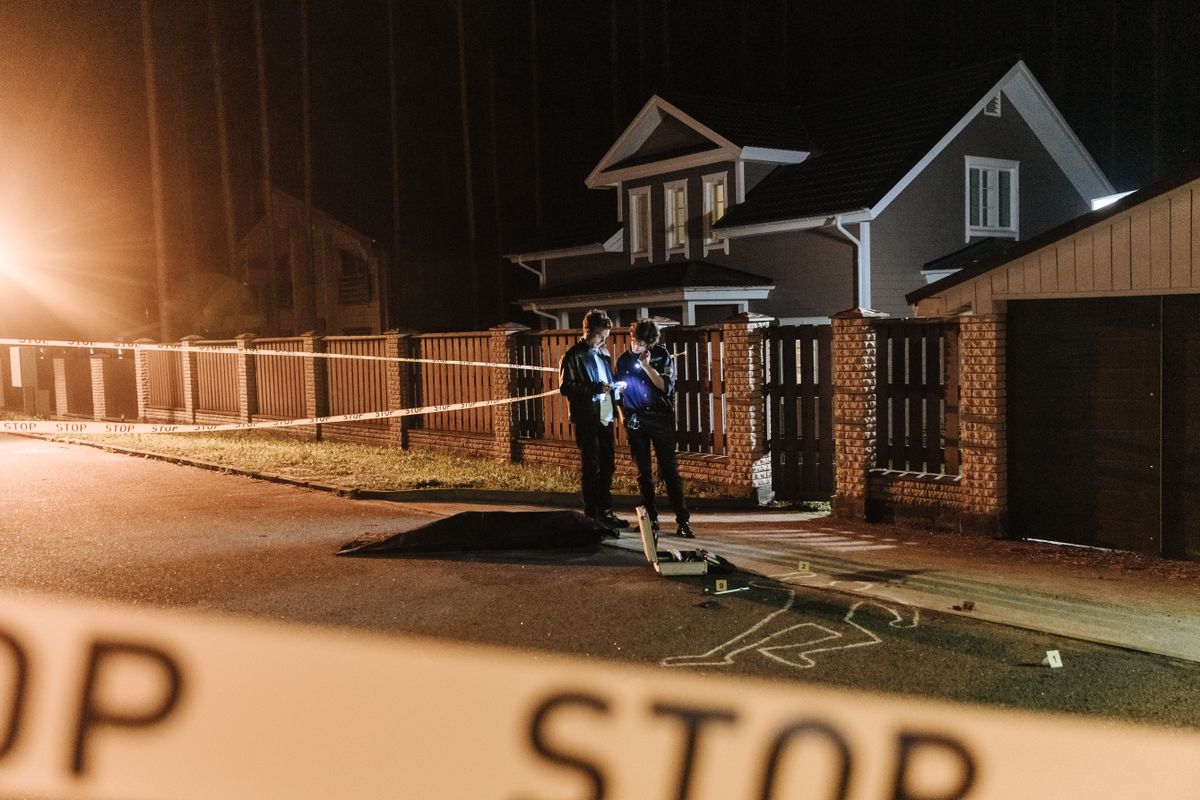
Deputies from the Loudoun County Sheriff’s Office responded to a reported shooting in the 20000 block of Northpark Drive in Ashburn, Virginia. They found an adult woman suffering from multiple gunshot wounds and arranged her immediate transport to a nearby hospital.
The sheriff’s initial statement did not publicly identify the woman. The Associated Press, Reuters, ESPN, and other outlets later identified her as 57-year-old Mia Bieniemy, the wife of one of the NFL’s most recognizable assistant coaches.
Mia was reportedly wounded in the chest and arm. Authorities initially described her injuries as serious, although Kansas City head coach Andy Reid later said she was in stable condition. The most disturbing detail came from Loudoun County Sheriff Mike Chapman.
Mia reportedly made the emergency call herself after being shot, meaning she had to seek help while injured inside her own home. Investigators have not explained what allegedly happened in the moments before the gunfire. They have not identified a motive, described an argument, or released the 911 recording.
Chapman said detectives were still trying to determine where everyone was, what each person did, and what prompted the shooting. He also said authorities had no record of previous incidents at the residence. WJLA reported the sheriff’s latest account of the investigation.
Elijah Bieniemy was arrested as his mother remained hospitalized.
Deputies arrested Elijah Zion Bieniemy in connection with the shooting. Authorities charged him with malicious wounding, use of a firearm in the commission of a felony, and discharging a firearm inside an occupied dwelling. He was transported to the Loudoun County Adult Detention Center and held without bond.
The sheriff’s office said investigators did not believe there was a continuing threat to the surrounding community. That assurance may calm neighbors, but it does little to reduce the horror confronting the Bieniemy family. One family member was recovering in a hospital while another was being processed through the criminal justice system.
The case also carries the painful uncertainty familiar to many American families affected by serious violence. Medical recovery, police interviews, court hearings, and unanswered questions can stretch for months or years. No plea has been publicly reported. Elijah Bieniemy has not been convicted, and he must be presumed innocent unless prosecutors prove the allegations beyond a reasonable doubt.
The charges reveal the severity of the accusations.
Malicious wounding is among the most serious nonfatal assault charges available under Virginia law. Prosecutors generally must prove that an accused person caused bodily injury with the intent to maim, disfigure, disable, or kill.
Under Section 18.2-51 of the Virginia Code, malicious wounding is classified as a Class 3 felony. The word “malicious” carries legal significance because it distinguishes the alleged act from unlawful conduct committed without malice.
The firearm count is separate from the underlying malicious wounding allegation. Virginia law provides a mandatory minimum prison term of three years for a first conviction for using a firearm while committing certain felonies.
The third charge concerns the discharge of a firearm inside a dwelling. Virginia law allows different classifications depending on the circumstances and the alleged intent behind the shooting. Authorities have not released every statutory subsection associated with the filed counts.
We should therefore avoid calculating a total possible sentence until more complete court documents become available. What we can say is that these are not minor allegations. They describe an act of gun violence inside an occupied home that left a woman with multiple wounds.
A bleak story Americans have seen too many times
The Bieniemy name gives this shooting national attention, but the underlying fear is painfully familiar. American families regularly discover that money, professional success, and respected public status offer no guaranteed protection from violence inside the home.
The United States recorded 44,447 firearm deaths in 2024, according to the Centers for Disease Control and Prevention. That total included homicides, suicides, accidental shootings, and other firearm-related deaths.
Mia Bieniemy survived the initial shooting and was reported in stable condition, so her case is not part of that fatality statistic. Still, the national figure reveals the scale of the country’s continuing relationship with gun violence.
Behind every statistic sits a hospital room, a traumatized family, and a set of questions that may never receive satisfying answers. In this case, those questions are especially cruel because the accused person is the victim’s own adult son.
The shooting also destroys the comforting idea that gun violence belongs only to unfamiliar streets or distant communities. Authorities say this gunfire erupted inside a family residence in Ashburn, a prosperous Northern Virginia community.
When violence enters a home, it changes more than one evening. It can permanently reshape relationships, finances, careers, and the emotional health of everyone connected to the people involved.
Eric Bieniemy received the news from nearly 1,000 miles away.
Eric Bieniemy was in St. Joseph, Missouri, as the Chiefs began training camp. He attended the team’s Sunday practice but was absent from Monday’s workout after the shooting. The geographical distance adds another painful layer to the story. Bieniemy was preparing players for a football season while his family’s life was about to change in Virginia.
Anyone who has received a frightening late-night call about a spouse, parent, or child can understand the helplessness of that distance. Flights, practices, and professional obligations become meaningless when a loved one is rushed into emergency care.
The Chiefs have not announced when Bieniemy will return. Reid made it clear that the offensive coordinator should take the time necessary to care for his family. “Real life” must come first, Reid told reporters. It was a simple observation, but it cut through the machinery of professional football.
Andy Reid’s words exposed the emotional weight inside the Chiefs.
Reid began his Monday remarks by expressing support for Bieniemy and his family. He confirmed that Mia was stable, calling that development a positive sign. The Chiefs coach also described Mia in deeply personal terms, calling her a saint and one of life’s great blessings.
His comments suggested that she is far more than the spouse of an assistant coach to people inside the organization. “Our hearts go out to Eric Bieniemy and his family,” Reid said. The Chiefs published Reid’s training camp press conference. Kansas City also issued a written statement acknowledging the incident.
The organization declined to comment further out of respect for the family’s privacy. The careful response reflects an uncomfortable balance. The Chiefs are a public institution followed by millions, but the shooting is a deeply private tragedy involving a victim who now faces intense attention because of her husband’s career.
Football continues while a family struggles to absorb the damage.

The Chiefs will continue preparing for the season without Bieniemy for as long as necessary. Pass game coordinator Joe Bleymaier and offensive line coach Andy Heck are expected to manage his duties during his absence.
That solution may keep the offense functioning, but it should not be confused with resolving the real crisis. Coaching assignments can be rearranged. A shattered family cannot be repaired with a revised practice plan.
Bieniemy’s return to Kansas City had been one of the team’s biggest offseason stories. The Chiefs officially rehired him as offensive coordinator in January after he spent three seasons working for the Washington Commanders, UCLA, and the Chicago Bears.
From 2018 through 2022, the Chiefs averaged 30.1 points and 406.2 yards per game under Bieniemy, according to the team’s announcement of his return. Kansas City reached three Super Bowls during that period and won two. Before the shooting, discussion centered on whether his demanding style could restore an edge to the Chiefs’ offense.
Those questions suddenly appear trivial. Bieniemy is no longer simply a coach preparing Patrick Mahomes and his teammates. He is a husband facing his wife’s painful recovery and a father watching his son enter a potentially life-changing criminal case.
The Virginia home connects the family to Bieniemy’s difficult career journey.
The family maintained its Ashburn residence after Bieniemy worked as offensive coordinator for the Washington Commanders in 2023. Ashburn also serves as the location of the Commanders’ headquarters and training facilities.
Bieniemy left Kansas City for Washington after repeatedly being passed over for NFL head coaching jobs. The move was supposed to demonstrate that he could run an offense outside Reid’s system and strengthen his case for a top position.
The Commanders struggled, and Ron Rivera’s staff was dismissed after the season. Bieniemy then spent one year at UCLA and another coaching running backs for the Bears before returning to Kansas City. His professional journey has included championships, rejection, criticism, and constant scrutiny.
None of those experiences could have prepared him for an emergency involving his wife and son. The career details matter because they explain why the family still had a Virginia home while Bieniemy was back with the Chiefs. They do not explain the shooting.
The silence surrounding a motive makes the story even more unsettling.
Investigators have not said what triggered the violence. That unanswered question now hangs over every report about the case. There is no confirmed evidence of a longstanding dispute, previous police calls, or earlier violence at the home. Sheriff Chapman specifically said his office had no reported history of incidents at the residence.
That absence of a known warning makes the case more frightening, but it does not prove that no problems existed. Families often keep private struggles hidden, and investigators may uncover information that was never visible to neighbors or the public.
We should resist the urge to diagnose strangers from a distance. No verified information has been released about Elijah Bieniemy’s mental health, personal relationships, or alleged state of mind. Inventing an explanation would be irresponsible and potentially defamatory. The strength of this story lies in the facts already confirmed, because those facts are disturbing enough.
A court hearing may provide the first real answers.
WJLA reported that a Monday court appearance was continued and that a public defender was listed as Elijah Bieniemy’s attorney. A preliminary hearing was scheduled for August 31 at 10 a.m. At that hearing, a judge may consider whether prosecutors have presented sufficient probable cause for the felony charges to move forward. The proceeding will not determine guilt.
Before then, prosecutors may review medical records, witness interviews, firearm evidence, emergency communications, and evidence collected from the residence. Defense counsel will also begin examining the state’s allegations and identifying possible challenges. Charges can be amended, reduced, or dismissed as a case develops.
Prosecutors could also pursue additional allegations if new evidence supports them. Until court documents reveal more, the public should remain cautious about rumors circulating online. Social media can turn an unverified claim into an accepted story long before investigators establish what actually occurred.
The darkest part of the story has nothing to do with the NFL.
The Chiefs will eventually resume full practices. Players will compete for roster spots, coaches will install plays, and the NFL schedule will move forward with its usual urgency. The Bieniemy family cannot move forward so easily. Mia faces a physical and emotional recovery, Elijah faces the possibility of a lengthy prosecution, and Eric stands between two devastating realities involving the people closest to him.
That is why this story resonates beyond Kansas City or Virginia. Many Americans understand how one violent moment can divide a family’s life into everything that happened before and everything that came afterward.
The uniforms, Super Bowl rings, and national recognition cannot change that truth. Behind the famous name is a wounded mother, an accused son, and a husband confronting a nightmare no professional achievement could prevent.
Authorities are still searching for the full story of what happened inside the Ashburn home. Until those answers emerge, one fact remains painfully clear: an ordinary Sunday evening ended with gunfire, an emergency call, and a family facing damage that may last far longer than any criminal proceeding.