Would You Support AOC for President in 2028? New Poll Puts Her in the Democratic Spotlight
Alexandria Ocasio-Cortez has spent years near the center of America’s loudest political debates. Now, a new poll has placed the New York congresswoman somewhere even more interesting: at the front of an early 2028 Democratic presidential field.
There is one rather important catch. Ocasio-Cortez has not announced that she is running for president. After being asked about the possibility, she replied that “polls are polls” and said she was “deeply humbled” by the support. She stopped short of accepting or rejecting the idea, saying her immediate focus was helping Democrats win the House in the 2026 midterm elections.
Still, presidential speculation rarely waits for permission. With Democratic voters searching for the party’s next national leader, the congresswoman better known as AOC is becoming increasingly difficult to leave out of the conversation.
A New Hampshire Poll Gives AOC an Early Boost

A University of New Hampshire survey released July 22 placed Ocasio-Cortez at 22 percent among likely Democratic primary voters in the state. Former Transportation Secretary Pete Buttigieg followed at 21 percent. Sen. Mark Kelly received 9 percent, Gov. Gavin Newsom had 8 percent, Sen. Bernie Sanders had 6 percent, and former Vice President Kamala Harris received 5 percent.
That does not make AOC the national front-runner. It is one poll from one state, conducted nearly two years before the first presidential votes are expected to be cast. Political fortunes can change before a campaign even prints its first yard sign.
The findings are still notable because they show that Ocasio-Cortez already possesses something many would-be candidates spend years trying to build: a committed political base and near-universal name recognition. The poll found that much of her support came from voters who identified as progressive or socialist, while Buttigieg’s backing was more evenly divided among progressives, liberals and moderates.
Political insiders are noticing. Axios recently placed AOC second in its informal ranking of potential Democratic contenders, behind Harris and ahead of Newsom. The outlet argued that Ocasio-Cortez occupies a unique position as a possible successor to Sanders’ progressive movement, though she could choose a Senate campaign instead.
Sanders has also spoken positively about her prospects. Asked whether she would be a formidable presidential candidate, he replied, “I think she would.” He praised her ability to connect with people, describing her as “genuine and open” in face-to-face encounters.
Rep. Ilhan Omar offered a more cautious assessment. She said Ocasio-Cortez was being strategic and carefully examining her options rather than allowing outside pressure to push her into a race she may not want.
Her Progressive Record Would Be Both an Asset and a Target
AOC’s appeal is not mysterious. She entered Congress in 2019 after defeating a powerful Democratic incumbent in a primary campaign powered by volunteers and grassroots contributions. Her official biography says she continues to reject corporate campaign donations.
She has built her national profile around proposals including Medicare for All, stronger worker protections, climate investments and the Green New Deal. Her supporters see a politician who states her positions clearly, confronts wealthy interests and speaks directly to younger voters frustrated with traditional party leadership.
A presidential campaign would test whether that progressive energy can become a much broader coalition.
Ocasio-Cortez’s identification with democratic socialism would almost certainly become a central issue. A July Reuters/Ipsos poll found that only 49 percent of Americans said they understood democratic socialist policies. Just 27 percent believed democratic socialists had at least some good ideas, while 51 percent said the movement had few or none. The poll measured views of the movement, not AOC’s personal approval, but it highlights the difficult political terrain she could face.
She would also need to prove that enthusiasm in New Hampshire can travel. The Democratic National Committee’s Rules and Bylaws Committee has selected South Carolina to open the proposed 2028 nominating calendar, pending approval from the full DNC. Nevada would follow, with New Hampshire among the next group of early states.
South Carolina would present a very different electorate from New Hampshire, particularly because Black voters play a much larger role in the state’s Democratic primary. A successful national campaign would therefore require Ocasio-Cortez to expand beyond her strongest base and demonstrate appeal among Black voters, moderates, suburban Democrats and working-class voters in competitive states.
That challenge is hardly unique to her. Every potential Democratic candidate will need to show that online excitement, fundraising power and packed rallies can translate into victories across a long and diverse primary calendar.
Would Voters Actually Put AOC in the White House?
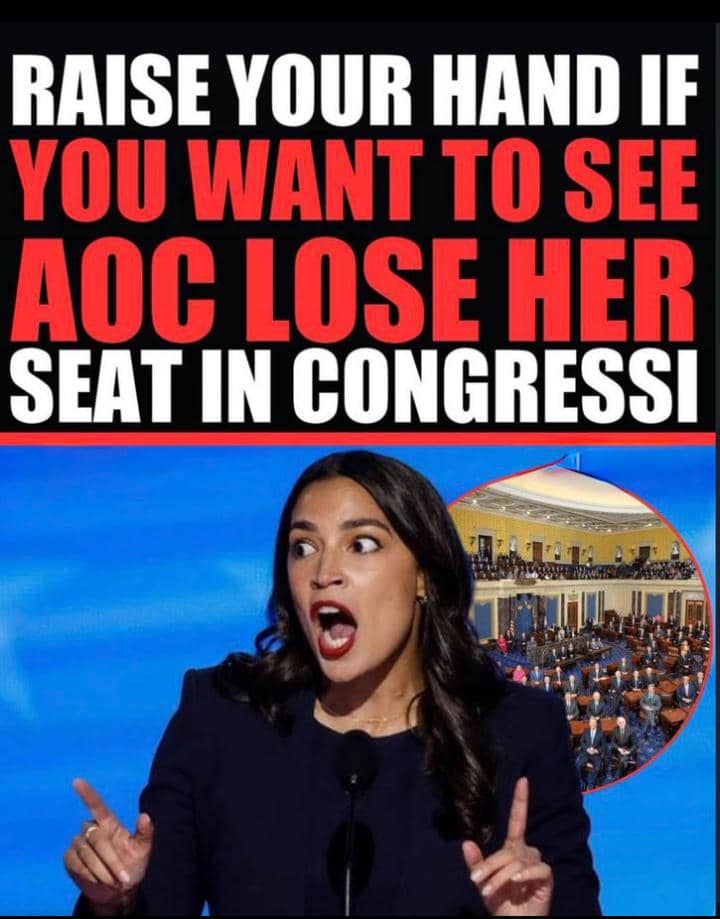
For now, the honest answer is that nobody knows, including apparently Ocasio-Cortez herself.
She has the visibility, fundraising network and loyal supporters needed to launch a serious campaign. She can attract attention without begging for television coverage, and she represents a clear ideological direction at a time when Democrats remain divided over the party’s future.
She also carries substantial risks. Her progressive label would motivate Republican opposition, her policies would face intense financial scrutiny, and her experience has been concentrated in the House rather than in a governorship, Cabinet department or statewide office.
None of those concerns automatically disqualifies her. Presidential campaigns have a habit of rewarding candidates who understand the mood of their party better than political professionals do. AOC’s original congressional victory was itself a reminder that the supposed long shot sometimes knows something the establishment has missed.
The 2028 race remains distant, and there is no official AOC campaign to support or oppose. Yet the latest poll has moved the question from social-media fantasy into legitimate political discussion.
Would you support Alexandria Ocasio-Cortez for president in 2028, or should Democrats choose a more moderate candidate with broader general-election appeal?