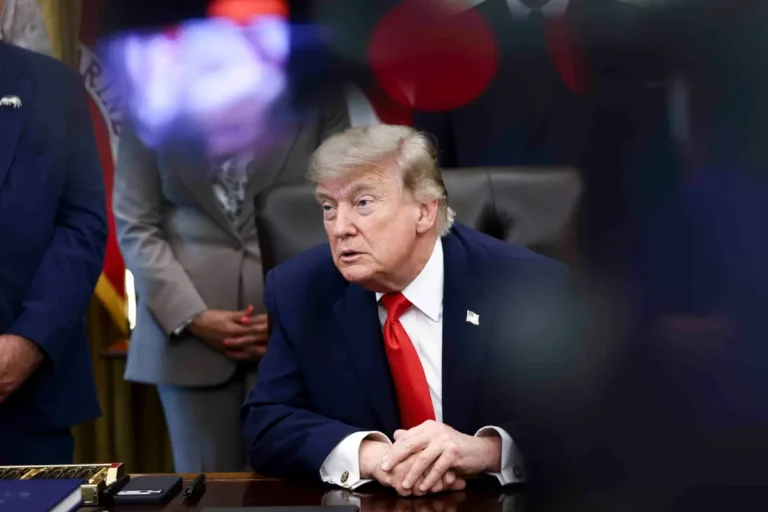
Trump’s Patriot Passport turns America’s travel document into a personal billboard.
Americans already pay steep fees, wait weeks, and navigate a maze of federal rules to obtain a passport. Now the government has found a new complication to add: the sitting president’s face and gold signature.
The State Department is expanding its limited-edition “Patriot Passport,” a commemorative U.S. passport featuring President Donald Trump, to locations across the country. Beginning August 8, applicants can attend appointment-only events for a chance to receive one of 250,000 additional Trump-branded passport books.
Nothing about this passport makes international travel easier. It does not reduce application fees, shorten processing times, provide more pages, or offer stronger security than the standard book. Its principal addition is Trump himself, placed over the words of the Declaration of Independence.
That decision turns a document meant to represent more than 340 million Americans into another display of one politician’s image. At a moment designed to commemorate 250 years of national independence, the federal government has chosen to place the sitting president at the center of the celebration.
America’s 250th birthday is becoming another Trump tribute.
A U.S. passport should speak for the nation. It should represent Americans from California to Maine, including citizens who voted for the president, voted against him, or want nothing to do with partisan politics when they cross an international border.
The Patriot Passport breaks with that principle. Its inside front cover features a large portrait of Trump surrounded by an American flag and text from the Declaration of Independence. His signature appears in gold beneath his picture. Trump is the first living president to receive such a placement in a U.S. passport, according to the Associated Press.
The imagery is difficult to separate from personal promotion. The Declaration of Independence announced a break from monarchical rule and rejected the idea that national power belonged to one person. Placing the face and signature of a sitting president over that text creates a visual contradiction too obvious to ignore.
America’s birthday could have showcased the people who built the country, the movements that expanded freedom, the landscapes that define the continent, or the constitutional principles that survived 250 turbulent years. Instead, applicants receive the stern face of the man currently occupying the White House.
Previous commemorative passports celebrated history, not the sitting president.
The United States has issued special passport designs before. According to a letter from five U.S. senators, a Bicentennial-era passport featured the Liberty Bell. A 1993 green passport honored Benjamin Franklin and 200 years of U.S. consular service. Those designs commemorated national history. They did not turn the sitting president into the visual centerpiece of a federal identity document.
The standard U.S. passport already includes presidential imagery, but the context is historical. George Washington, Thomas Jefferson, Theodore Roosevelt, and Abraham Lincoln appear together in an illustration of Mount Rushmore. Other pages feature Independence Hall, the Statue of Liberty, the Liberty Bell, American landscapes, and quotations from major national figures.
The Patriot Passport discards that distance between living political power and national symbolism. Trump does not appear as one former leader among many. He dominates the inside cover while he remains in office and actively shapes the government issuing the document.
Rep. Mike Levin of California offered a blunt assessment after the design emerged: “This is not patriotism. It is vanity.” His criticism, reported by Time, captures why the design has generated such hostility.
Americans face more bureaucracy for a passport with no added travel benefit.
The government is not making the Trump passport available through the easiest application channels. Applicants cannot request it online. They cannot obtain it by mailing a renewal. They cannot receive it at a regular passport acceptance facility, such as a post office or library. Americans living abroad cannot request it through a U.S. embassy or consulate.
Instead, an applicant must call 1-877-487-2778, select option 9, speak with the appointment system, and secure a place at a designated in-person event. Appointments cannot be booked online. That is an oddly outdated process for an administration that regularly celebrates efficiency.
Americans accustomed to managing bank accounts, tax returns, airline bookings, and medical appointments online must use a telephone menu to pursue a passport design created around the president. The commemorative version follows regular processing times and is generally mailed after the appointment. Applicants go through additional scheduling trouble without receiving faster service.
The price feels familiar because Americans still pay full passport fees.
The State Department does not charge applicants a special Trump portrait surcharge. That does not mean the book is free. Americans still pay the government’s full passport fees. For a family of four with two adults and two children applying for the first time, standard passport book fees can reach $600 before photographs, travel to an appointment, parking, expedited service, or faster delivery.
The current charges are published on the State Department’s passport fee page. Against that backdrop, a federal agency devoting design work, printing capacity, staff time, and nationwide events to a president-centered edition is unlikely to feel like a meaningful public service.
Families struggling with grocery bills, rent, insurance premiums, and summer travel costs receive no financial relief from the commemorative artwork. They receive the same passport function at the same price, only with more political branding.
The production cost remains an unanswered public concern.
There is no extra charge for choosing the commemorative book, but someone still pays for redesigning, preparing, printing, and distributing a separate run of government documents. The State Department’s public rollout page does not provide a total production-cost figure.
In May, Sen. Angus King, Jeff Merkley, Chris Van Hollen, Jacky Rosen, and Tim Kaine asked Secretary of State Marco Rubio to disclose the production cost, explain how the design was selected, and identify whether alternative artwork had been considered.
The senators warned that the program could produce “unnecessary and wasteful costs to the American taxpayer.” They also argued that the anniversary risked becoming a “vehicle for personal promotion.”
Those questions have grown more important since the original Washington release expanded to another 250,000 books and a nationwide series of special events. A small commemorative print run has become a much larger federal operation.
Americans are entitled to know what that operation costs. They are also entitled to ask why the government considered it important enough to organize while passport applicants continue paying $130 for a standard adult book and waiting weeks for delivery.
“Overwhelming demand” arrives without public numbers.
The State Department says it expanded the Patriot Passport because of “overwhelming demand.” Yet its public announcement does not provide application totals, waiting-list figures, survey results, or another measurement showing how that demand was calculated.
The government’s limited-edition strategy helps create its own excitement. A product becomes more desirable when officials announce that only a fixed number will exist, restrict it to selected locations, and tell people they must attend on specific days. That approach may work brilliantly for sneakers, concert tickets, or collectible coins. It is much harder to defend when applied to a federal identity document.
The artificial scarcity also rewards those with the time and money to participate. An applicant may need to call during operating hours, rearrange work, travel to a passport agency, pay for transportation, and attend a one-day event. Hourly workers, caregivers, and residents living far from participating cities face a much heavier burden. A government passport should not feel like a limited merchandise drop.
Where the Trump passport events will take place
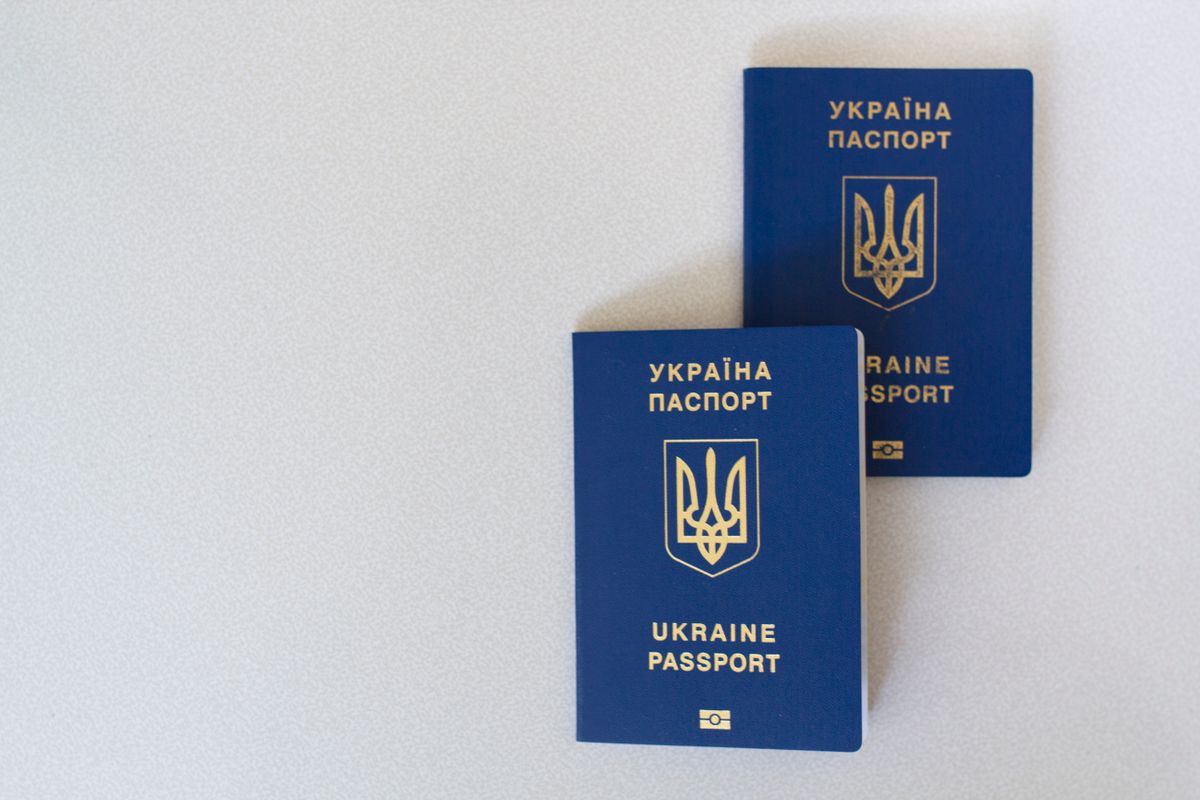
As of July 31, the State Department lists appointment-only opportunities in 25 locations. Some cities have more than one event date. Applicants must call ahead. These are not open walk-in events. The department’s live Patriot Passport schedule provides addresses, event hours, and appointment instructions.
The schedule illustrates another weakness in the rollout. Americans living hundreds of miles from a participating agency may have no realistic opportunity to apply unless more locations are announced. The passport is national in symbolism but uneven in accessibility.
The 26-page limit makes the commemorative passport less useful for frequent travelers.
The Patriot Passport contains 26 pages, the same as a regular-size passport book. Travelers who need the 52-page large book cannot obtain it with the commemorative artwork. That creates a practical choice. A frequent traveler can pursue the Trump design or request the larger and more useful standard passport, but not both.
The limitation exposes the program’s priorities. The government devoted attention to Trump’s portrait, signature, anniversary graphics, and redesigned covers, yet did not produce a commemorative option for citizens who need additional visa and entry-stamp pages. The special edition adds visual spectacle without adding capacity.
Applicants still face ordinary passport waiting times.
The Trump passport does not bypass the usual processing system. Routine processing currently takes four to six weeks. Expedited service generally takes two to three weeks and costs an extra $60.
Mailing time is not included in those estimates. The State Department warns that an application can take up to two weeks to reach processing and another two weeks to arrive after issuance. Current estimates appear on the department’s processing-time page.
Someone attending a commemorative event without imminent international travel should expect the completed passport to arrive by mail. The event is therefore not a same-day printing opportunity for most applicants. Once again, the portrait changes. The service does not.
A passport should not force citizens to carry a politician’s branding.
Passports belong to citizens. Presidents merely oversee the government that issues them. An American should not have to carry the image of a sitting political leader to prove citizenship abroad. The country is not its president, and national identity should not shrink to the size of one administration’s branding campaign.
That concern extends beyond personal dislike of Trump. A Republican may celebrate this design today and resent a future passport dominated by a Democratic president. A Democrat may object now but welcome the same treatment for a favored leader later.
Once the boundary is broken, the precedent remains available to everyone. Federal documents work best when they outlast partisan enthusiasm. The person holding office changes. The meaning of American citizenship should not change with him.
The passport joins a growing collection of Trump-branded federal symbols.
The Patriot Passport is not an isolated design choice. Trump’s likeness is also appearing on a gold-finished commemorative $1 coin. Officials have pursued putting his signature on newly printed paper currency, which would be unprecedented for a sitting president.
His name or image has also been attached to government programs, prominent buildings, and other public projects. Reuters described the passport as part of a wider pattern of connecting Trump’s identity to official federal property.
Taken separately, each project may be dismissed as ceremonial. Taken together, they create something more troubling: a government steadily replacing shared national symbolism with the personal branding of its current leader.
Americans encounter branding everywhere. It follows people through streaming services, grocery aisles, sports arenas, social media, and political advertising. The inside of a U.S. passport did not need to become another piece of branded real estate.
America’s passport should represent the country, not flatter its president.
The State Department could have marked 250 years of independence with an inspiring, politically neutral design. It could have honored the Constitution, the Bill of Rights, the civil rights movement, American service members, Indigenous history, national parks, scientific achievement, or generations of immigrants who became citizens.
Instead, it chose Trump’s face and signature. That choice does not improve security. It does not lower fees. It does not speed up processing. It does not add pages. It does not make international travel easier for a single American.
What it does is transform one of the country’s most serious documents into another tribute to a politician who already occupies the most visible office in the world. Americans deserve a passport that performs one essential task with dignity: proving who we are. It should not be designed to flatter whoever happens to be president when the printing presses start.