10 Things Every ’90s Kitchen Had
Walk into a 1990s kitchen, and there is a good chance something will immediately transport you back in time.
Maybe it is the honey-colored cabinets. Maybe it is the floral wallpaper border running around the ceiling. Or perhaps it is that bulky microwave with the glowing digital clock that someone actually remembered to reset after every power outage.
Not every kitchen had every one of these features, of course. Some were major decorating trends, while others were appliances or household staples that became closely associated with the decade. Still, put a few of them together, and you have a kitchen that practically screams 1996.
Here are 10 features that defined the look and feel of many American kitchens in the ’90s.
Honey-Colored Oak Cabinets
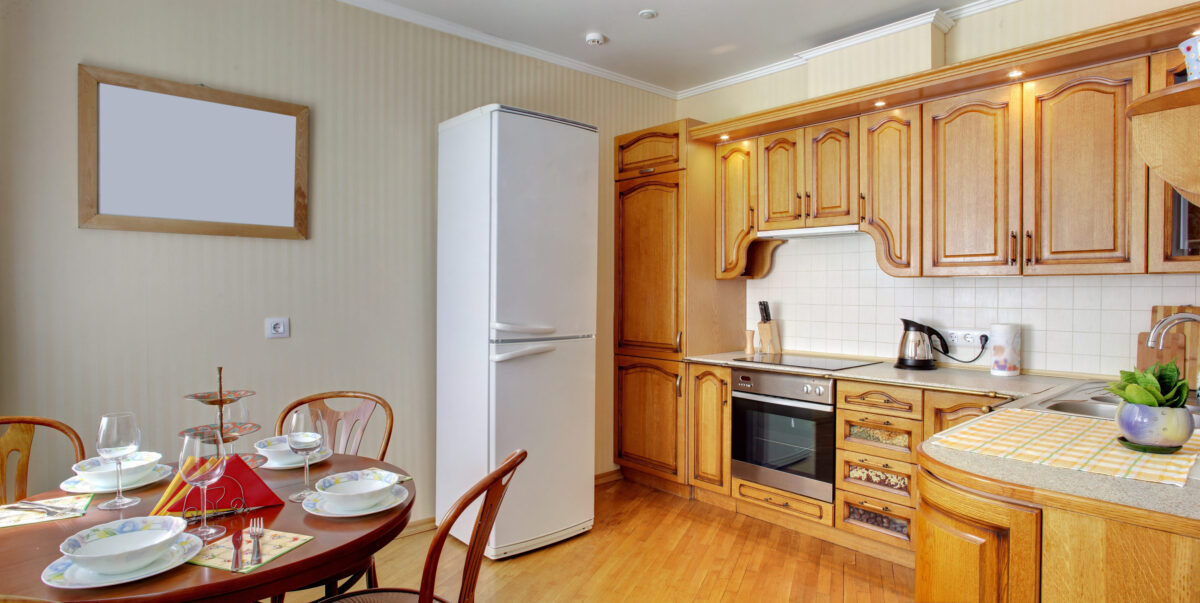
Nothing says “1990s kitchen” quite like warm oak cabinetry.
The decade was a heyday for oak cabinets, particularly golden, honey, amber, and even slightly orange-toned finishes. Raised-panel doors and cathedral-style arches added even more visual weight, and small white ceramic knobs often completed the look.
These cabinets were not trying to disappear quietly into the background. They were a major design feature.
Years later, many homeowners updated them by painting the wood white and replacing the hardware. But if you walk into an untouched ’90s kitchen today, those sturdy golden cabinets may still be standing.
Related: How to Build and Install Shelves Above Kitchen Cabinets
White Appliances
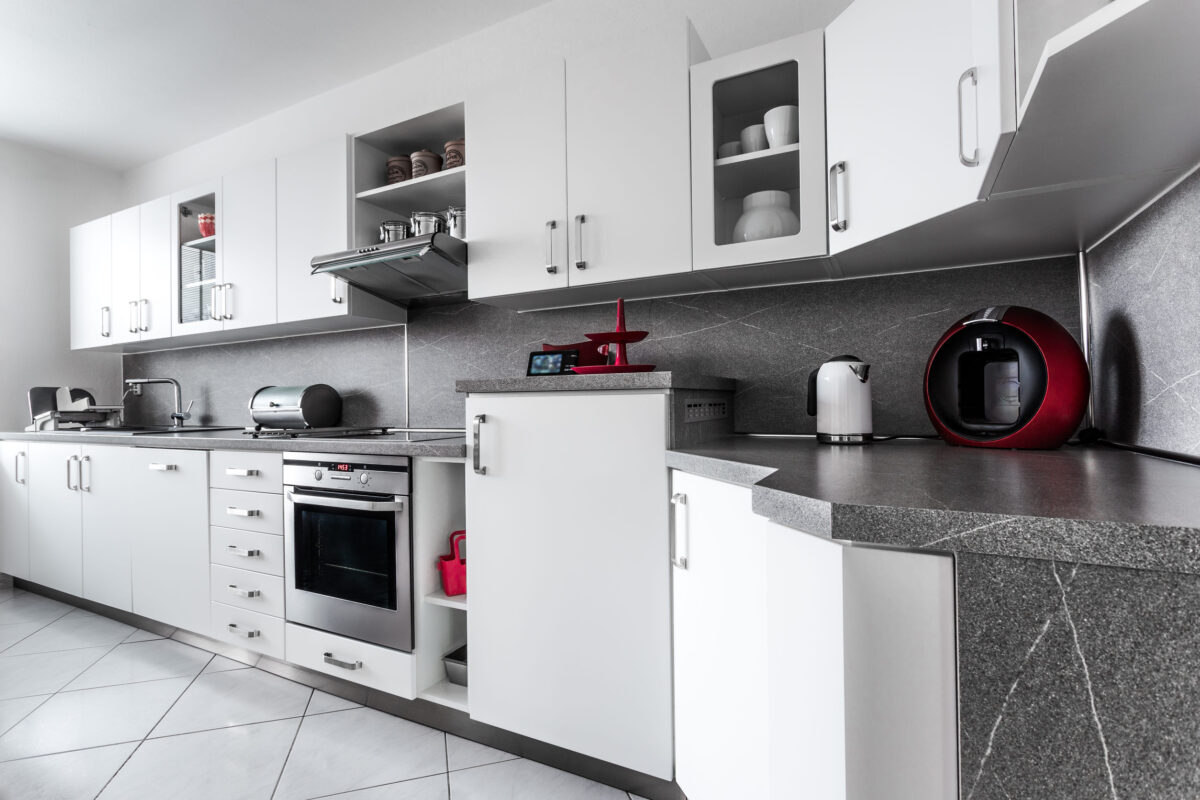
Before stainless steel became the default “updated kitchen” signal, white appliances had their moment.
Refrigerators, ranges, dishwashers, and microwaves often came together in bright white finishes, particularly during the early part of the decade. Black appliances were another neutral option, while stainless steel began gaining more attention later in the ’90s.
Pair white appliances with honey oak cabinetry for one of the decade’s most recognizable kitchen combinations.
It may look dated now, but back then it represented a move away from harvest golds, browns, and other stronger appliance colors associated with earlier decades.
Related: 7 Everyday Appliances That Are Silently Increasing Your Water Costs
Laminate Countertops
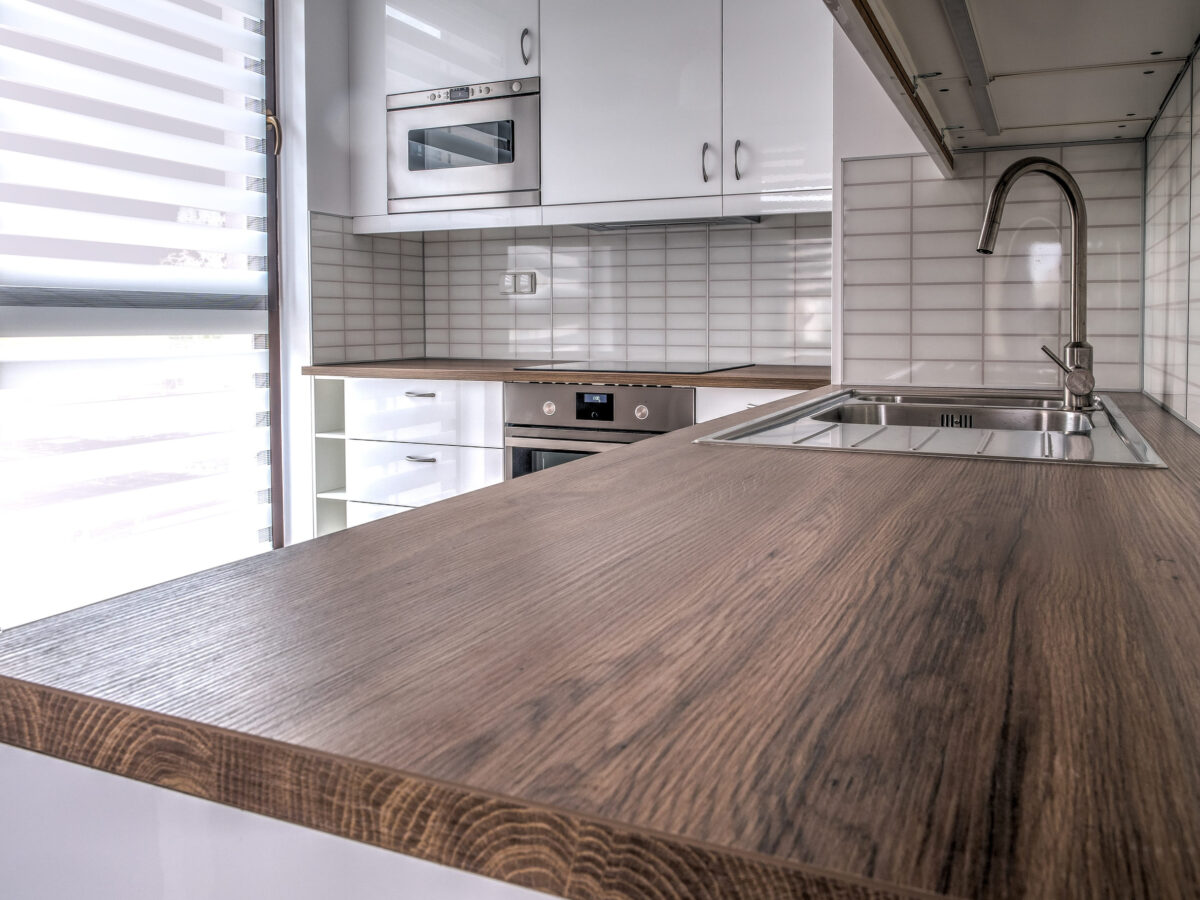
Granite may have been gaining status, but plenty of everyday kitchens were still covered in laminate.
Laminate countertops offered an affordable, easy-to-clean surface that could be manufactured in numerous colors and patterns. Neutral shades were common, although there is no strong evidence that one particular beige tone ruled the decade.
Laminate was hardly a ’90s invention. It had been popular for years before that. Still, it remained a familiar part of the everyday kitchen while stone countertops increasingly became the aspirational upgrade.
And unlike a stone slab, laminate could give you the look of a pattern without giving your renovation budget a heart attack.
Related: 8 Old-Fashioned Cleaning Tricks That Still Work
A Microwave With a Glowing Digital Display
By the 1990s, the microwave was no longer a futuristic appliance. It was becoming a kitchen essential.
By around the end of the decade, more than 90% of U.S. households owned one. Many models came with electronic controls, digital clocks, multiple power settings, and an intimidating collection of buttons nobody completely understood.
Countertop models were especially common, although over-the-range microwaves were available too.
And naturally, the microwave clock was either perfectly accurate or blinking something completely useless after somebody unplugged it.
A Bread Machine
Few countertop appliances capture ’90s optimism quite like the bread machine.
Just pour in the ingredients, push a few buttons, and let the machine handle the mixing, kneading, rising, proofing, and baking.
Bread machines first appeared in Japan in the 1980s before becoming a major American kitchen trend during the following decade. Retrospective reporting suggests millions were sold during the boom years, with ownership reaching roughly one in five American households by 1999.
Then, as happens with many kitchen gadgets, some eventually migrated from the countertop to the cabinet, basement, or thrift store.
But for a while, waking up to the smell of machine-made homemade bread felt wonderfully high-tech.
A George Foreman Grill
By the second half of the decade, another appliance was fighting for precious countertop real estate.
The George Foreman Lean Mean Fat-Reducing Grilling Machine became a major late-’90s phenomenon.
Its simple setup was part of the appeal. Food sat between two heated surfaces, cooking both sides at once, while the sloped grill directed released fat into a collection tray.
Add George Foreman’s unforgettable endorsement and an extremely memorable product name, and the grill became one of the era’s defining kitchen gadgets.
If your family had one, there was probably a period when somebody tried cooking nearly everything on it.
Floral Wallpaper Borders
Why wallpaper the entire room when you could decorate one strip near the ceiling?
Floral wallpaper borders were a recognizable part of traditional and country-inspired ’90s kitchens. They often appeared alongside coordinated curtains, valances, greenery, and strong wall colors.
The result was unapologetically decorative.
Today’s kitchens often lean toward cleaner walls and simpler finishes, so those floral borders can feel instantly nostalgic. Yet design trends have a funny habit of circling back, and wallpaper borders have even begun reappearing in more restrained modern forms.
Hunter-Green Accents
If the ’90s kitchen had a signature dramatic color, hunter green deserves a nomination.
Deep green appeared on walls, cabinetry, and decorative accents, particularly in traditional or country-style spaces. Softer sage treatments were popular too.
Hunter green could be paired with floral borders, substantial fabric valances, and artificial plants sitting above the cabinets, creating the layered look the decade loved.
Green itself never really disappeared from interior design. What changed was everything surrounding it.
Today’s green kitchen might pair streamlined hardware and simple walls with green instead of floral trim and faux ferns.
A Kitchen Landline
Before everyone carried a phone in a pocket, households shared one.
About 95% of U.S. households had a telephone in 1990, though that figure doesn’t tell us how many were specifically mounted in kitchens.
Still, the kitchen wall phone remains a powerful piece of ’90s nostalgia.
You picked up the handset, stretched the curly cord as far as physics allowed, and attempted to have a private conversation while standing within a very non-private distance of the rest of the family.
The ultimate luxury was finding a corner where the cord just barely reached around the doorway.
Patterned Vinyl Flooring
Finally, look down.
Many kitchens relied on practical sheet vinyl flooring printed to resemble tile or other materials. Unlike actual individual tiles, sheet vinyl came in rolls cut to fit the room, giving homeowners a continuous, easy-to-maintain surface.
And despite the habit of calling almost every older resilient floor “linoleum,” vinyl and linoleum are actually different materials.
Like laminate countertops, vinyl flooring existed long before the ’90s and survived long after them. But its patterned sheets became part of the familiar visual vocabulary of everyday kitchens from the era.
Put that flooring beneath honey oak cabinets, white appliances, hunter-green accents, and a floral border, and suddenly it is not just a kitchen.
It is 1995 again, and somebody’s bread machine is working overtime.