Gen. Jack Keane Raises Concerns Over Pakistan, Saudi Arabia and Qatar’s Role in Iran Negotiations
As Washington pushes for a diplomatic path with Tehran, questions are growing over whether the regional powers helping broker talks can truly act as neutral intermediaries or whether their own interests could shape the outcome.
The fragile effort to negotiate with Iran is facing a new challenge after retired U.S. Army Gen. Jack Keane questioned whether Pakistan, Qatar and Saudi Arabia can be trusted to help guide discussions between Washington and Tehran. Keane argued that the three regional partners may be prioritizing stability and their own interests over applying pressure on Iran, leaving the United States and Israel to shoulder the risks of confronting Tehran.
The remarks have opened a broader debate over the role of Middle Eastern mediators in high-stakes negotiations. Supporters of diplomacy argue that countries with communication channels to Iran are essential for reducing tensions, while critics warn that those same relationships could weaken pressure on Tehran and allow Iran to preserve its strategic advantages.
A Battle Over Who Can Be Trusted at the Negotiating Table
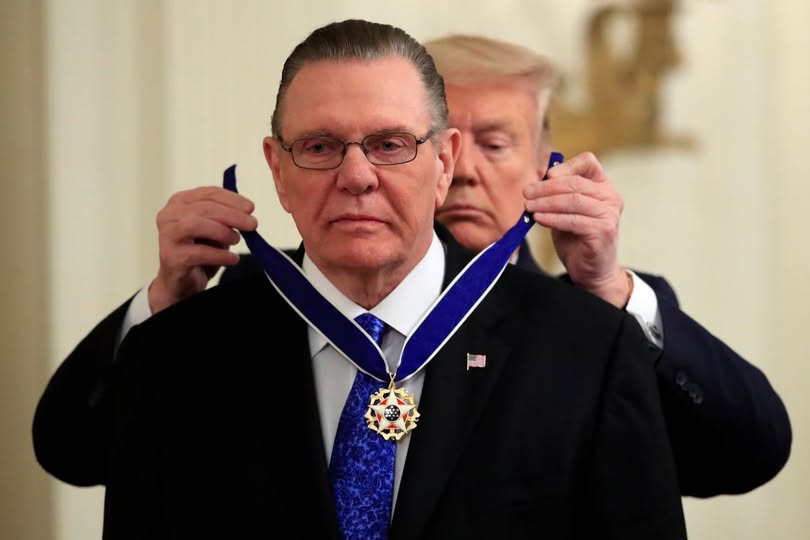
Keane, a Fox News senior strategic analyst and former Army vice chief of staff, said Pakistan and Qatar were compromised as mediators because he believes they have historically maintained relationships with Iran that could influence their approach. He argued that their involvement may have contributed to Washington underestimating Tehran’s intentions.
“It is well known in the Middle East region, by our intelligence services, by all the players, that the Pakistanis and the Qataris are compromised because they favor Iran at the expense of the United States,” Keane said. He described the situation as a longstanding concern rather than a new development.
However, critics of Keane’s assessment argue that effective mediators are rarely countries with no relationship to the parties involved. In many international conflicts, nations with influence and access to opposing sides often become valuable precisely because they can maintain communication when direct negotiations break down.
Raza Rumi, editor at large of Pakistan’s The Friday Times, rejected the idea that Islamabad’s relationship with Tehran makes it unsuitable for diplomacy. He argued that Pakistan’s position is shaped by geography, security concerns and economic realities rather than political alignment with Iran.
“Successful mediators are often those that enjoy channels of communication with all sides,” Rumi said, adding that Pakistan’s long border with Iran forces Islamabad to balance multiple relationships, including ties with the United States, Saudi Arabia and the United Arab Emirates.
Trump Administration Defends Regional Partners
Keane’s criticism contrasts with President Donald Trump’s public support for the countries involved in the diplomatic effort. Trump previously praised Pakistan’s role, saying its officials had worked seriously to advance negotiations with Iran.
After the G7 summit in France, Trump also credited Pakistan and Qatar with helping move discussions forward on a U.S.-Iran memorandum of understanding. The administration has repeatedly emphasized that regional cooperation is necessary to prevent a wider conflict.
White House spokesperson Anna Kelly defended the relationships, saying Trump values his partnerships with leaders in Pakistan, Qatar and Saudi Arabia and appreciates their involvement in negotiations. She added that if Iran fails to reach an agreement, responsibility would fall on Tehran’s leadership.
The disagreement reflects a deeper divide in Washington over how to approach Iran. One side believes diplomatic channels offer the best chance of preventing escalation. The other argues that Iran has repeatedly used negotiations to buy time while maintaining influence over critical regional issues.
The Gulf States Face an Impossible Balancing Act
Saudi Arabia has become one of the most controversial parts of the debate. Keane accused Riyadh of avoiding direct confrontation with Iran and argued that Saudi leaders have discouraged Washington from launching major military operations against Tehran.
According to Keane, Saudi Arabia is unwilling to accept the risks required to push back against Iranian aggression, while expecting the United States and Israel to take on the burden. His comments highlight the long-running tension between Washington’s security expectations and Gulf states’ desire to avoid another devastating regional conflict.
Saudi analysts, however, say Riyadh’s caution should not be confused with weakness. Salman Al Ansari, a Saudi geopolitical analyst, argued that the Kingdom supports confronting Iranian threats but does not want an endless war without clear goals.
“Saudi Arabia supports confronting Iranian aggression, but not an open-ended regional war without clear objectives or an endgame,” Al Ansari said. He added that Riyadh favors diplomacy supported by credible deterrence and wants any agreement to address Iran’s nuclear program, regional proxies and freedom of navigation in the Strait of Hormuz.
Saudi Arabia’s position reflects a difficult reality. The Kingdom remains a major U.S. partner, but it also sits close to Iran and has experienced firsthand the consequences of regional instability, including attacks on energy infrastructure.
The Strait of Hormuz Becomes the Center of the Crisis
The negotiations have become increasingly tied to the future of the Strait of Hormuz, one of the world’s most important energy shipping routes. Mediators have reportedly worked on arrangements focused on reducing maritime tensions while broader disagreements over Iran’s nuclear ambitions continue.
The waterway represents more than a shipping route. For Iran, it is a strategic pressure point that provides influence over global energy markets. For the United States and its allies, keeping the passage open remains a major security priority.
Keane argued that Iran views the Strait of Hormuz as a strategic asset and is unlikely to surrender meaningful control over the area. He warned that reaching a lasting agreement on Iran’s nuclear program would be even more difficult if Tehran refuses to compromise on regional influence.
“The president is not going to make a bad deal here,” Keane said, expressing skepticism that Iran is prepared to accept an agreement that significantly limits its ambitions.
Diplomacy, Pressure or a Risky Middle Ground?
The dispute over Iran negotiations highlights a broader question facing the United States: how much should Washington rely on regional partners whose interests do not always perfectly align with American goals?
Countries like Pakistan, Qatar and Saudi Arabia occupy complicated positions. They maintain security and economic ties with Washington while also managing geographic, political and economic realities that require communication with Tehran.
For supporters of diplomacy, those relationships are an advantage because they create channels that would otherwise disappear. For critics like Keane, they represent a potential weakness that Iran could exploit.
As negotiations continue, the challenge will be determining whether these regional players are acting as bridges toward a solution or whether their competing interests could reshape the agreement before it is even reached. The outcome may determine not only the future of U.S. Iran relations but also the balance of power across the Middle East.