Trump’s Former Lawyer Todd Blanche Wins Attorney General Post in Razor-Thin 50-49 Senate Vote
The Senate confirmed Todd Blanche as U.S. attorney general in a dramatic 50-49 vote, overcoming Republican concerns about his independence, an IRS settlement and a proposed $1.8 billion fund.
Todd Blanche, the former personal defense attorney for President Donald Trump, is officially set to lead the Justice Department after surviving one of the narrowest and most contentious Cabinet confirmation fights of Trump’s second term.
The Republican controlled Senate confirmed Blanche as attorney general early Saturday, August 8, by a 50-49 vote. Republican Sens. Susan Collins of Maine and Lisa Murkowski of Alaska joined every Democrat in voting against him, while Louisiana Republican Sen. Bill Cassidy supplied the crucial support that helped push the nomination across the finish line.
Blanche had already been running the Justice Department as acting attorney general since April, following Trump’s firing of Pam Bondi. His confirmation now removes the “acting” label and gives one of Trump’s former courtroom lawyers permanent control of the federal department responsible for the FBI, federal prosecutors and some of the nation’s most politically sensitive investigations.
A confirmation that nearly fell apart
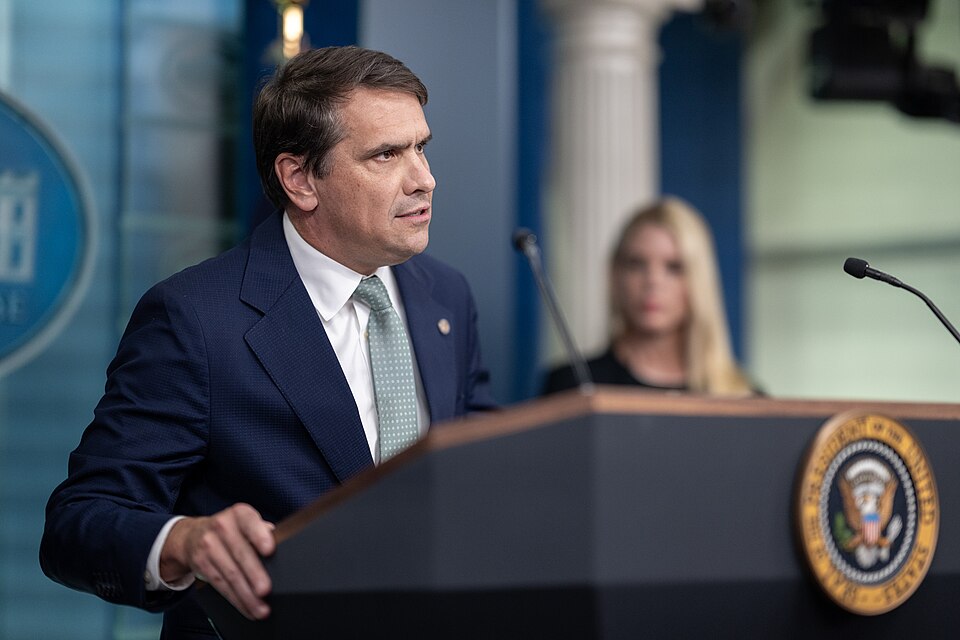
The White House, Public domain, via Wikimedia Commons
Blanche’s path to confirmation was anything but routine.
President Trump formally sent his nomination to the Senate on June 8. Blanche then appeared before the Senate Judiciary Committee on July 15, where lawmakers questioned him for hours about the independence of the Justice Department, his previous representation of Trump and several decisions made while he was serving as acting attorney general.
One of the biggest obstacles involved a controversial settlement stemming from Trump’s $10 billion lawsuit against the Internal Revenue Service.
According to Reuters, the arrangement included a proposed $1.8 billion “anti-weaponization” fund intended to compensate people who claimed they had been mistreated by the justice system. Critics argued the fund could benefit Trump allies, including people prosecuted over the January 6, 2021, attack on the U.S. Capitol.
The settlement also contained protections preventing the IRS from auditing certain previous tax returns belonging to Trump, his sons and the Trump family business.
Those provisions created unusual resistance within Trump’s own party.
Republican Sens. John Cornyn of Texas and Thom Tillis of North Carolina pressed Blanche for stronger guarantees before allowing his nomination to advance. Blanche ultimately agreed in writing to end the proposed compensation fund and narrow the tax protections contained in the agreement.
Those concessions helped unlock his nomination, although questions remain about how legally binding the commitments are.
Bill Cassidy becomes the decisive vote
Even after Blanche addressed Cornyn and Tillis’ concerns, his confirmation remained uncertain.
Murkowski announced that she could not support him, joining Collins in opposition. Murkowski said the United States needed an attorney general capable of checking the administration’s “worst impulses” and indicated she was not convinced Blanche would fill that role.
That put enormous attention on Cassidy.
Earlier in the confirmation process, Cassidy had publicly questioned whether Blanche would behave as the nation’s attorney general rather than continue acting like Trump’s personal lawyer. He eventually decided to support the nominee.
“This is not a referendum on President Trump,” Cassidy said, according to AP. “It is a decision regarding Mr. Blanche in very specific circumstances.”
Cassidy argued that Blanche’s relationship with Trump and understanding of the president could make him capable of explaining legal limits to the White House.
Democrats reached the opposite conclusion.
Sen. Dick Durbin of Illinois, the ranking Democrat on the Senate Judiciary Committee, called Blanche’s confirmation a “serious mistake.”
“If there is ever a moment in history when we need an Attorney General above reproach, who is clearly dedicated to ending corruption, even at the highest level of our government, it’s right now,” Durbin said.
From Trump’s defense table to the Justice Department
Blanche’s career gives the confirmation an unusual political dimension.
He previously worked as a federal prosecutor in New York before becoming a criminal defense attorney. He later represented Trump in several criminal cases, including the New York criminal trial that resulted in Trump’s conviction on 34 felony counts.
After Trump returned to the White House, Blanche joined the Justice Department as deputy attorney general. The Senate confirmed him to that position in March 2025 by a substantially wider 52-46 vote.
Blanche subsequently became acting attorney general after Bondi left the department in April.
His supporters point to his experience on both sides of the courtroom. Senate Judiciary Committee Chairman Chuck Grassley has praised Blanche as qualified and credited him with supporting law enforcement and emphasizing public safety. The White House has also highlighted endorsements from police organizations, state attorneys general and Justice Department officials.
Critics remain concerned that Blanche’s years representing Trump could complicate the traditional expectation that the Justice Department maintain independence from White House political interests.
After the Senate vote, Blanche said he was “deeply honored” by Trump’s trust and thanked senators who stayed late to complete his confirmation.
The vote settles the immediate question of who will lead the Justice Department. It does not settle the larger debate surrounding Blanche.
With a 50-49 confirmation, two Republican defections and months of arguments over Justice Department independence, Blanche enters one of the most powerful positions in Washington knowing that nearly half the Senate opposed putting him there.
What happens next will determine whether the tense confirmation fight was merely an introduction or a preview of the battles that will define his tenure.