America is at a political breaking point as Trump’s faith message and Stephen Miller’s warning frame a high-stakes future.
American politics is increasingly being defined by two competing narratives that speak to the same underlying anxiety: what happens next and who gets to define the country’s future.
On one side, former President Donald Trump recently used a Faith & Freedom Coalition gathering to lean into themes of religion, national identity, and America’s founding story. On the other hand, White House Deputy Chief of Staff for Policy Stephen Miller, in a Fox News interview, issued a stark warning about what a Democratic return to power could mean for the country’s core institutions.
Though the settings and subjects are different, both messages reflect a political climate in which every major shift in power is described not as routine but as historic and potentially irreversible.
Trump leans into faith, founding values, and American identity.
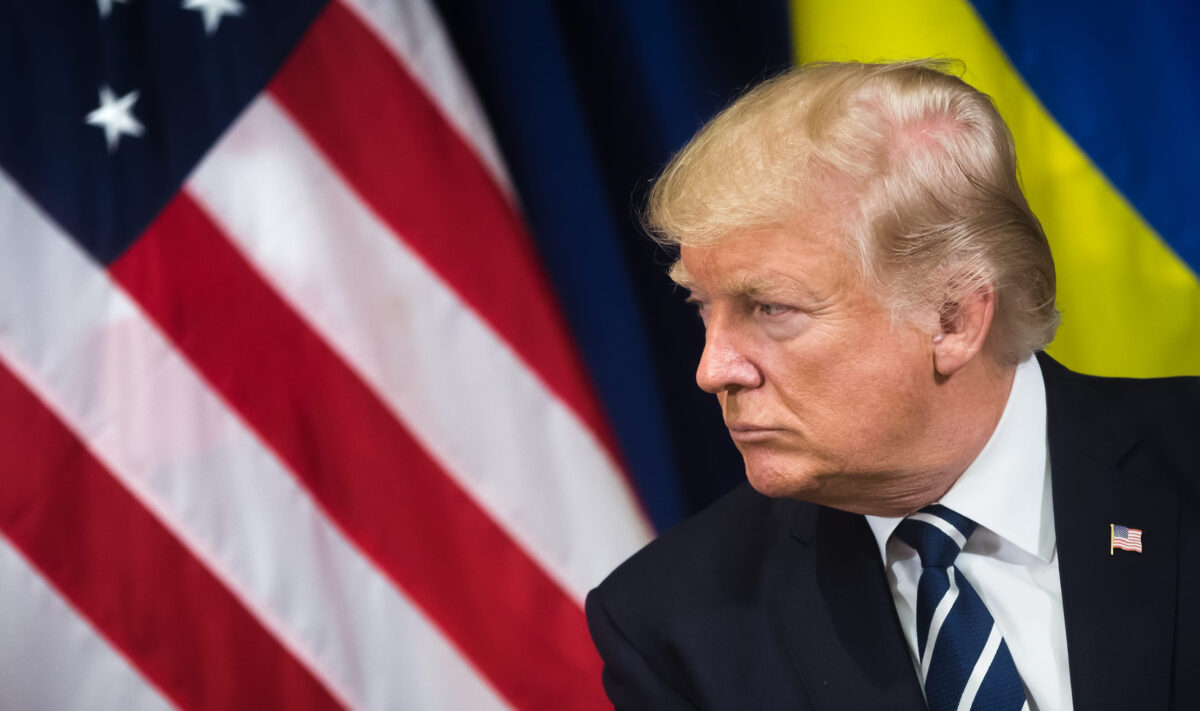
At the Faith & Freedom Coalition conference, Trump delivered remarks that blended humor, history, and political symbolism in a way that has become familiar in his public speeches.
He highlighted the role of faith in the nation’s founding, pointing to the Declaration of Independence and its references to the Creator. In a moment that quickly gained online attention, he joked that the founders had mentioned God multiple times, while he himself was not mentioned at all and was “very upset.”
The line drew laughter, but it also reinforced a broader message running through his speech , that America’s identity is deeply rooted in religion, tradition, and the principles of its founding documents.
Beyond the humor, Trump framed the upcoming 250th anniversary of the United States as a moment of renewal. His message suggested that the country is not just celebrating history but reaffirming it, returning to what he described as the values that built the nation in the first place.
In this framing, America’s past is not distant history. It is a living guide for the present.
Stephen Miller issues a warning about structural political change.
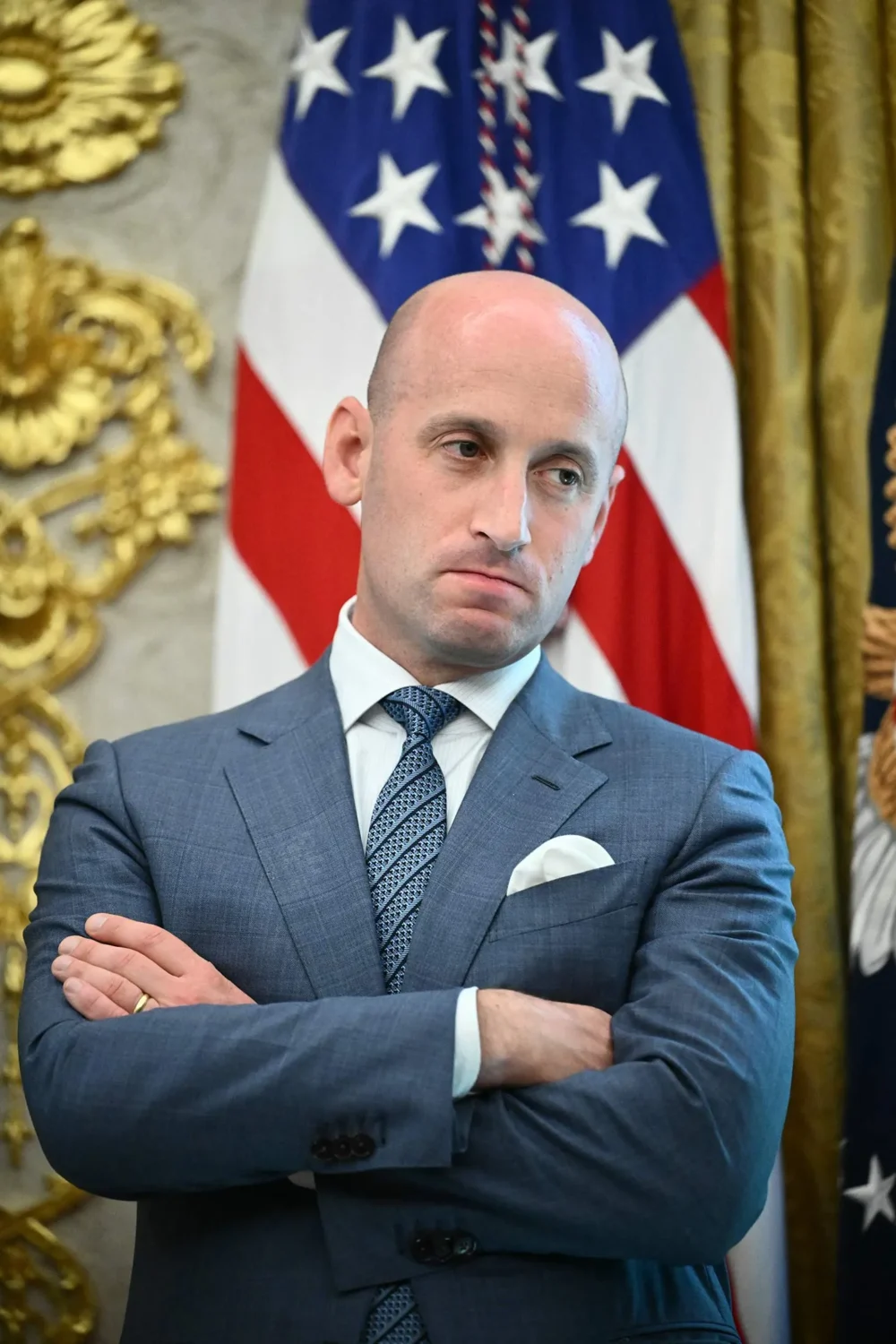
While Trump’s message leaned into symbolism and national identity, Stephen Miller’s message focused on the mechanics of power.
In a Fox News interview, Miller warned that a Democratic return to control of the government could bring sweeping institutional changes. He pointed to the possibility of expanding the Supreme Court, admitting new states that would shift political balance in Congress, and dismantling Immigration and Customs Enforcement (ICE).
He described these potential moves as part of a broader transformation of the country’s governing structure, framing the scenario in urgent and dramatic terms. At one point, he characterized the outcome as an existential political threat, saying it would be “game over.”
The tone of his warning reflected a view of politics not just as disagreement over policy, but as a struggle over the fundamental architecture of the U.S. system itself , who controls it, how it is balanced, and how far elected power can go in reshaping institutions.
Two narratives shaping the same national anxiety
While Trump and Miller address different themes, both messages are rooted in the same political environment, one in which trust in institutions is strained, and every election cycle feels increasingly consequential.
Trump’s approach centers on cultural and historical identity. It emphasizes continuity, faith, and the idea that America’s strength comes from returning to foundational principles.
Miller’s approach centers on structural risk. It emphasizes how quickly political control can translate into institutional change, and how those changes could reshape the balance of power for years to come.
One narrative speaks to belonging and heritage. The other speaks to power and consequence. Together, they form a broader picture of a political system in which both sides increasingly see themselves as defending the country against fundamentally different kinds of threats.
The politics of urgency and escalation
A defining feature of both messages is urgency. Neither is framed as ordinary political debate. Instead, both suggest that what is at stake goes beyond typical policy disagreements.
In Trump’s case, urgency is expressed through cultural renewal , the idea that America must actively reclaim its identity, values, and faith to remain strong.
In Miller’s case, urgency is expressed through institutional warning , the idea that a shift in political control could permanently alter the structure of government.
This shared sense of high stakes reflects a broader trend in American political communication, where persuasion is increasingly driven by emotional framing rather than technical policy detail.
For supporters, this style reinforces clarity and motivation. For critics, it can feel like an exaggeration or escalation. But in both cases, it is effective because it simplifies complex political realities into more immediate, emotionally charged narratives.
A country heading toward its next defining moment
As the United States approaches major political milestones and another election cycle, these competing narratives are likely to become even more pronounced.
One vision emphasizes restoration , a return to foundational values, national pride, and cultural cohesion. The other emphasizes transformation and warns that shifts in power could reshape the country’s institutions in lasting ways.
Neither perspective exists in isolation. Together, they reflect a political system in which disagreement is no longer just about direction but about definition , what America is and what it is allowed to become.
And in that tension lies the defining question of the moment: not just who will lead the country next, but what kind of country they will inherit.