6 Simple Coffee Habit Most People Skip Without Knowing It
Making pour-over coffee at home does not require a complicated setup, but small changes in the way you measure and prepare your brew can make the process easier to repeat. One common habit is relying only on scoops to measure coffee. While a spoon is not necessarily wrong, it can make it harder to recreate the same recipe from one brew to the next.
For home coffee drinkers who want a more consistent routine, weighing coffee and water provides a clearer starting point. From there, a few simple pour-over habits can help bring more structure to each cup without turning the kitchen into a science experiment.
Swap the scoop for a scale
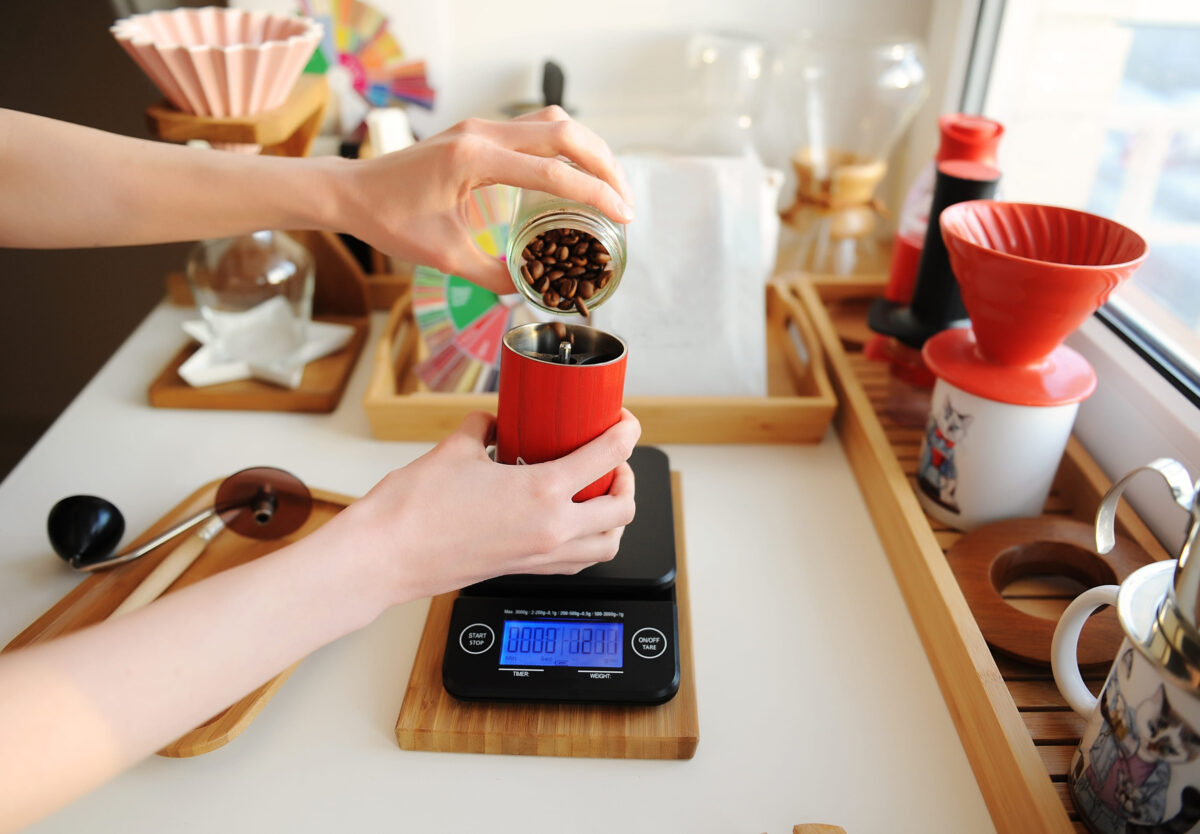
A digital kitchen scale allows you to measure both coffee and water by weight instead of relying only on volume. This matters because a scoop does not always give a precise measurement when you are trying to repeat a recipe exactly. The Specialty Coffee Association Golden Cup standard uses 55 g of coffee per 1,000 g of fresh water, while a simple home starting point can be 17 g of coffee with 300 g of water.
Using a scale does not make a spoon useless; it simply gives you a more repeatable reference point. If you are adjusting your coffee routine and want to know what changed, measuring by weight makes those changes easier to track.
Keep one coffee-to-water ratio.
Once you start weighing coffee and water, using a consistent ratio can make your brewing routine easier to follow. A ratio gives you a relationship between the amount of coffee and the amount of water, rather than depending on a loose estimate.
For example, a ratio of about 1:18 can mean using 20 g of coffee with 360 g of water, while 20 g of coffee with 320 g of water is approximately 1:16. Keeping one ratio for several brews before changing it gives you a useful baseline. It is not a universal formula for every person’s preferred cup, but it helps remove some guesswork while you find what works for you.
Grind only what you plan to brew
If you use whole beans, grind the measured amount you intend to brew rather than guessing the dose after grinding. Measuring the coffee before grinding keeps the amount you use connected to the recipe you are following.
An adjustable burr grinder is the relevant tool type when you want control over grind size. Focusing on measuring your coffee and adjusting your grind settings makes it easier to repeat the same brewing approach from one preparation to the next.
Give pour-over grounds a short bloom
Blooming is a specific pour-over step that happens before the main pour. It involves adding a small amount of water to pre-wet the coffee grounds and waiting briefly before continuing the brew.
A practical starting point is using roughly two to three times the coffee’s weight in water, followed by a wait of 30–45 seconds. For 20 g of coffee, that first pour is approximately 40–60 g of water. This step is part of a pour-over routine and is not a general instruction for every coffee brewing method.
Pour steadily rather than all at once
Pour-over brewing involves adding water gradually and at a controlled pace instead of emptying all the water in one quick pour. This helps you follow the recipe you have chosen and keeps the process more consistent from brew to brew.
A slim-spout kettle can help control the amount and speed of water during the pour. This tip applies specifically to pour-over coffee, where the way water is added is part of the brewing process, rather than being a requirement for every type of coffee maker.
Use appropriately hot water
Water temperature is another part of a repeatable pour-over routine. A commonly cited brewing guideline places water around 195–205°F (90–96°C). The Specialty Coffee Association standard specifies 93°C ± 3°C, or 200°F ± 5°F, when water comes into contact with coffee.
The goal is not to create a complicated measuring routine, but to have a practical temperature range to work from. A temperature-controlled kettle is not necessary to understand this step; the important idea is recognizing that water temperature is one more variable you can keep consistent.
Building a more repeatable pour-over routine starts with reducing guesswork. A scale creates the foundation, while a steady ratio, measured coffee, careful blooming, controlled pouring, and appropriate water temperature help make each brew easier to recreate.