Bird’s Nest Soup Sounds Strange, But the Story Behind This Delicacy Is Even More Fascinating
The famous Chinese soup is made from something far more unusual than noodles or herbs: a nest built almost entirely from a swiftlet’s hardened saliva.
Bird’s nest soup is one of those foods that can make people stop mid-conversation when they first hear what is actually in the bowl. The name sounds harmless enough, until you learn the prized ingredient isn’t a conventional bird nest made from twigs and grass. Certain swiftlets build their nests largely from their own secretions, which harden into pale, delicate structures that can eventually be cleaned and cooked.
For centuries, these nests have been prized in Chinese culinary and medicinal traditions, particularly as a luxury associated with wealth and status. Today, the dish remains especially associated with China, Hong Kong and Southeast Asia, while much of the commercial supply comes from Indonesia, Malaysia, Thailand and neighboring countries.
The “Nest” Is Nothing Like a Robin’s Nest
The first surprise is what these tiny birds actually use to build their homes.
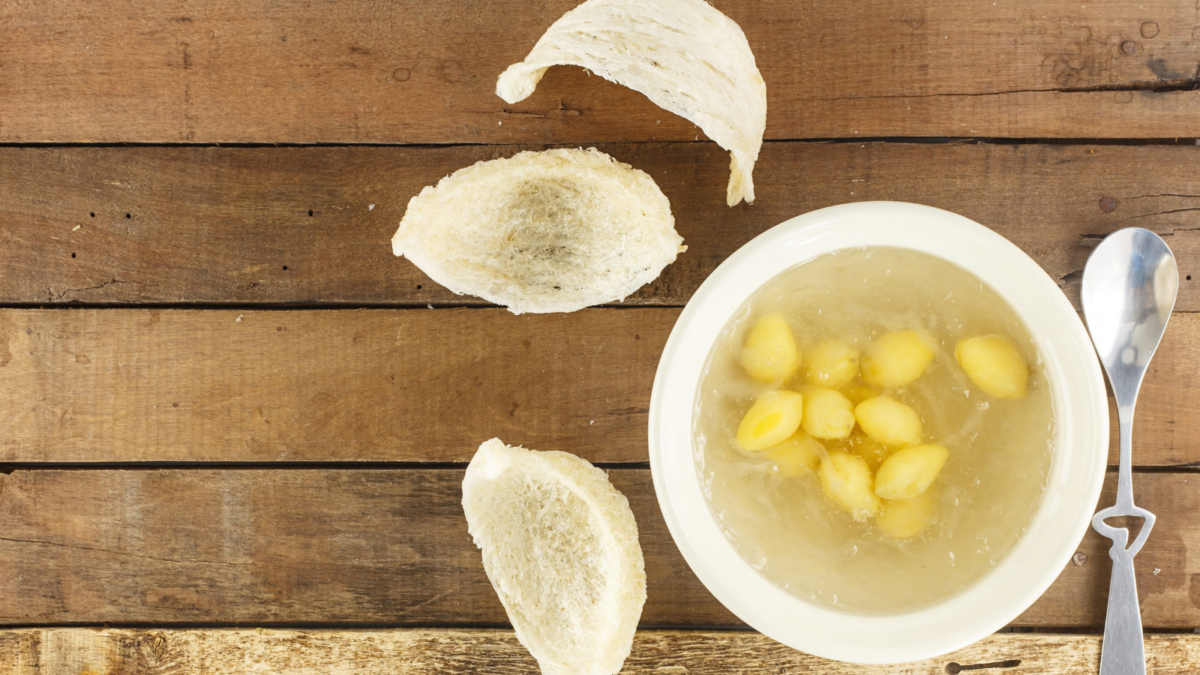
The white-nest swiftlet and black-nest swiftlet are among the species whose nests enter the food trade. Instead of gathering branches and leaves, the birds produce sticky material from glands beneath the tongue, forming it into strands that harden as they dry. The result is a small, cup-like structure that can look almost like a delicate web when cleaned.
The Smithsonian describes the white-nest swiftlet as an edible-nest species whose pale nests are harvested across Southeast Asia, with the birds often building them on cave walls. Its account of these remarkable nests notes that a single nest can take roughly 39 to 55 days to construct.
That makes the ingredient even more unusual: someone is essentially collecting a piece of bird-made architecture and transforming it into food.
Why Would Anyone Pay So Much for It?
The answer is not really flavor—it is texture, history, and the cultural meaning attached to the ingredient.
Edible bird’s nest has long been treated as a luxury food, and its reputation grew through its association with wealthy households, special occasions, and traditional Chinese medicine. Historical accounts and modern reporting describe it as a prestige ingredient rather than an everyday pantry staple.
Its flavor is surprisingly mild. The South China Morning Post notes that edible bird’s nest is valued largely for its texture and its ability to absorb surrounding flavors. Once prepared, the nest develops a soft, gelatinous quality that is often compared with egg white.
That means the expensive ingredient doesn’t necessarily overwhelm the soup with a strong taste. Instead, it adds the unusual mouthfeel diners are paying for.
What Does Bird’s Nest Soup Actually Taste Like?
If you are expecting something intensely savory, the reality may be much gentler.
Traditional preparations can be surprisingly simple. The cleaned nest is often simmered or double-boiled with water and rock sugar, creating a delicate sweet soup. Other versions use chicken broth, ginger, or additional ingredients to build a more savory flavor around the nest.
This is one reason the dish can seem mysterious to outsiders: the ingredient itself is subtle, so much of the experience comes from texture and presentation rather than a dramatic flavor.
Some preparations also appear as desserts or in other dishes rather than as a standalone soup. The same edible nest can therefore move between sweet and savory cooking depending on the culinary tradition and recipe.
There Is More to the Tradition Than the Soup
Behind every bowl is an industry built around some remarkably difficult bird behavior.
Historically, collectors climbed into caves and reached nests attached high on walls, making harvesting physically dangerous. Modern production has changed considerably, with swiftlets now commonly encouraged to build nests in specially constructed buildings in parts of Southeast Asia.
That shift has created a complicated relationship between food production and conservation. CITES has specifically recognized the need for sustainable management of edible-nest swiftlets, noting the commercial value of their nests and concerns about disturbance of wild colonies. Its conservation guidance on swiftlet nest harvesting calls for research and sustainable harvesting practices.
So the story is not simply about an expensive Chinese delicacy. It is also about wildlife, farming, trade, and the ways human demand can reshape an animal’s habitat.
What About the Health Claims?
This is where tradition and modern evidence need to be kept separate.
Bird’s nest has traditionally been associated with various health and beauty claims, including benefits for skin, immunity, and general vitality. However, those claims should not automatically be treated as established medical facts. Healthline’s evidence-based review notes that research on many of the supposed benefits remains limited, despite the ingredient’s long history in traditional medicine.
That distinction does not make the food less culturally interesting. In fact, it makes the history more revealing: people have valued the ingredient for generations for reasons that combine taste, texture, tradition, status, and beliefs about wellness.
A Bowl With an Unusually Long Story
Bird’s nest soup is fascinating precisely because the food itself is only one part of the story.
From the swiftlet constructing a nest strand by strand to the workers who harvest and clean it, the ingredient passes through an unusually intricate journey before reaching a dining table. It also shows how food can become valuable for reasons that go far beyond calories or flavor.
For anyone who enjoys discovering familiar foods that make everyday meals more interesting, bird’s nest offers the opposite experience: a food so unfamiliar to many diners that simply learning where it comes from changes how the entire dish looks.
And if you appreciate simple kitchen habits, this ingredient proves cooking traditions can become remarkably elaborate when history, culture, and craftsmanship enter the picture.
Would you try a bowl of traditional bird’s nest soup if you had the chance, or is knowing where the main ingredient comes from enough to make you pass?